Not Quite Out of the Woods: Risk for Lyme Disease Prevails in Suburban Environments

When many people think about places associated with tick exposure and risk for getting Lyme disease, they may picture a hike in the country or a camping trip in the woods. But encounters with infected ticks that can cause Lyme disease can happen doing routine activities around the yard, and common outdoor activities in your everyday life can put you at heightened risk for tick bites and, in turn, contracting Lyme disease.1
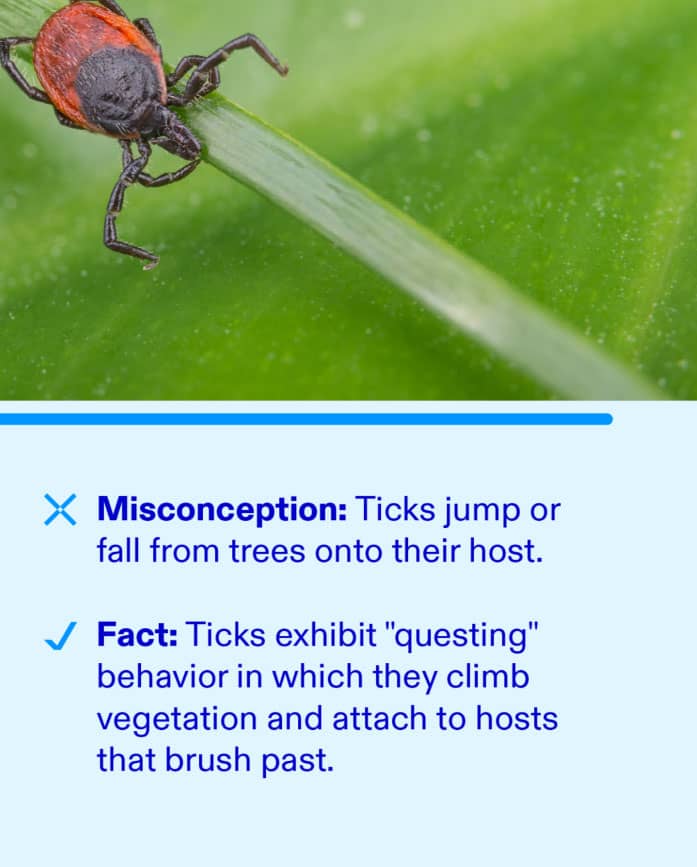
Lyme disease is a bacterial infection transmitted to humans through a bite by an infected tick (the Ixodes tick, also known as the blacklegged or deer tick).2 Ticks can range from 0.5 to 15mm in size, making them easy to miss if you aren’t looking carefully.3 In the U.S. alone, an estimated 476,000 cases of Lyme disease are diagnosed and treated every year.4 And due to eco-disruptions like climate change, the risk of tick exposure has substantially increased across several geographical regions.5,6 For instance, persistent warm weather has extended the tick season beyond its typical window and changes in animal host populations are contributing to an increased spread of Lyme disease across North America and Europe.6
People who develop Lyme disease risk hospitalization, and some may develop other serious health issues, even after receiving treatment.7,8 While the common belief is that infected tick encounters mostly happen in deep forested or rural areas, the truth is you are also at risk of getting bit by an infected tick – and contracting Lyme disease – through simply spending time outdoors in your backyard in an endemic area.1 Endemic areas to be aware of in the U.S. are 15 states across the Northeast, Upper Midwest, and Mid-Atlantic regions and Washington D.C., as well as smaller pockets along the Pacific coast.9 Fortunately, you can take preventive measures to help draw the line against Lyme disease and protect yourself.
Tick Encounters Can Take Place in Your Own Backyard
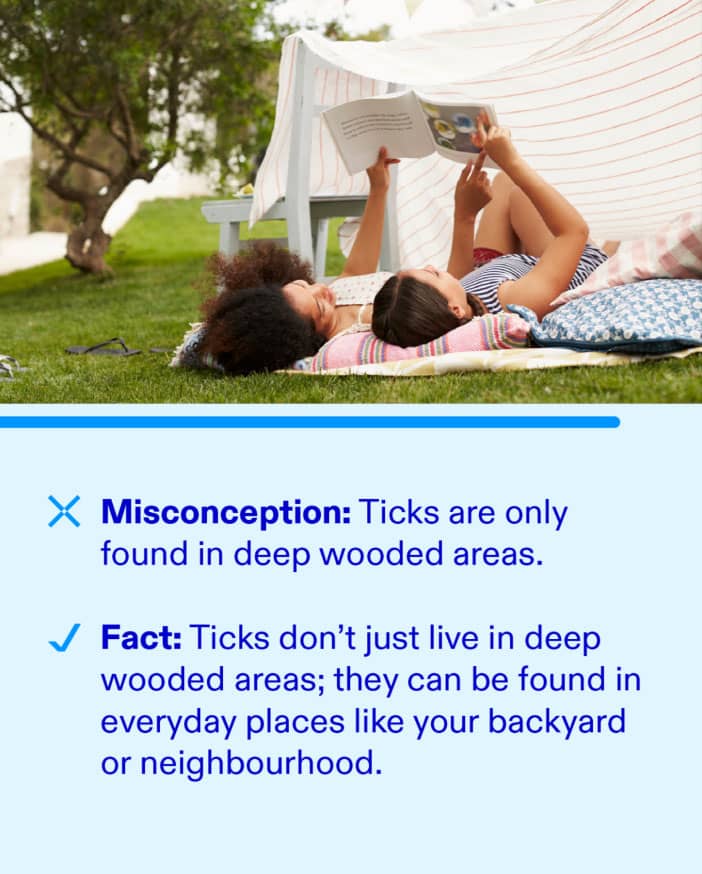
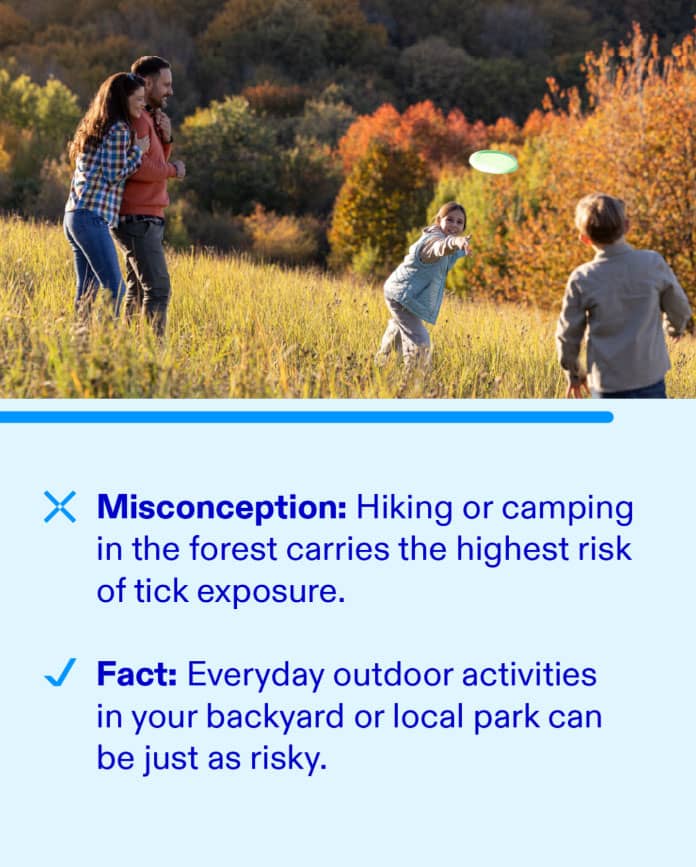
Your risk for developing Lyme disease isn’t exclusive to hiking, camping or spending time in wooded or rural areas. “Infected ticks can thrive just as well in any grassy environment, including those surrounding suburban homes and city parks,” says Raphael Simon, PhD, Senior Director of Vaccines Research and Development at Pfizer. “In fact, tick encounters can happen while you are going about your everyday life, like gardening or spending time at a local park.” What’s more, Dr. Simon adds that approximately 70% of tick exposures occur when doing routine activities around the home, including simply spending time in your own backyard, playing with your pet outside, running, walking and even barbecuing.
Infected ticks that can cause Lyme disease may be lurking in garden beds and shrubs, anywhere moisture can collect near your home, woodpiles that attract rodents, local walking trails where the grass isn’t closely maintained, leaf piles that gather in peak fall season, or any city park with grassy or wooded areas.1,9,10
Helping to Protect Yourself Against Lyme Disease
The best way to protect yourself against Lyme disease is to be mindful of daily risk factors and take preventive measures – before, during, and after spending time outdoors. In tick-prone areas, be sure to wear long sleeves and tuck pants into socks to ensure that exposed skin is covered. Wearing lighter colors can also make it easier to spot ticks before they reach the skin.11 Other tick avoidance measures include applying effective insect repellent and showering within two hours after spending any time outdoors.1
For families living in high endemic areas, and particularly for those who have children or pets that often play outside, including a two-minute tick check in your evening routine can help you find ticks and any tick bites on the body. Dr. Simon explains, “Lyme disease is usually transmitted 36 to 48 hours after being bitten by an infected tick, so locating and removing it promptly can help prevent Lyme disease from developing. It’s important to be as thorough as you can and pay close attention to areas of the body where ticks can easily hide, such as the armpits, back, groin, hairline, or behind the ears or knees.”
Lyme Disease Leads to Serious Health Complications
Not only is Lyme disease more prevalent than many realize, many also don’t know it can pose a serious health threat to those infected. It is estimated that over 2,000 people are hospitalized due to Lyme disease in the U.S. each year.7 Further, if left untreated, Lyme disease can lead to serious health issues like arthritis, irregular heartbeat, and facial paralysis.12
Even after administering treatment, up to 13.7% of patients with Lyme disease experience post-treatment symptoms, including body aches, fatigue, or cognitive impairment.13,14,15,16 On top of the everyday health risk for Lyme, such complications emphasize the critical need to spread awareness and take greater preventive measures.
Lyme disease can be treated with antibiotics, but with limited options for prevention, incidence rates for Lyme disease will continue to rise. This is why it is essential that a safe, effective vaccine for Lyme disease be introduced that can proactively help protect those at risk.
Our Commitment to Drawing the Line Against Lyme
Pfizer is committed to addressing the ongoing and increasing public health challenge of Lyme disease. We are working diligently to raise awareness and provide education about the everyday places where people are most at risk, which includes places close to home.
We have also partnered with Valneva to advance research and develop a vaccine candidate for Lyme disease, to help combat and provide protection against this pervasive threat. To date, our Lyme disease vaccine has advanced further in clinical development than any other candidate, with two significant Phase 3 trials completed and the potential to become the only human Lyme disease vaccine available and first to help protect individuals aged 5 and older – helping us truly draw the line against Lyme disease.17
Common Lyme Disease Misconceptions