The Hidden Infrastructure Behind Every Pfizer Medicine
Getting a medication can seem as simple as a trip to the pharmacy. In reality, that moment is the last step in a complex, rigorous, and largely invisible process.
Behind every dose, an extraordinarily complex manufacturing operation helps produce medicines consistently, regardless of where they’re made or where they’ll be used. From qualifying raw material suppliers to monitoring production in real time, pharmaceutical manufacturing depends on thousands of coordinated decisions, rigorous oversight, and a culture of continuous improvement.
“It’s not something we take lightly,” says Bina Nair, Vice President of Quality, Safety and Environmental Operations Systems and Compliance at Pfizer. “So many things have to be aligned for us to get to the point where we say, ‘Yes, we’re confident this will work, and it will work consistently.’”
As medicines become increasingly sophisticated and demand changes around the world, maintaining consistency isn’t simply about following a recipe. It’s about building systems that continuously learn, adapt, and improve.
More to manufacturing than meets the eye
The manufacturing process starts long before production. It’s critical that every ingredient comes from thoroughly vetted, qualified suppliers. All raw materials must meet detailed specifications and undergo rigorous evaluation before they enter the manufacturing process.
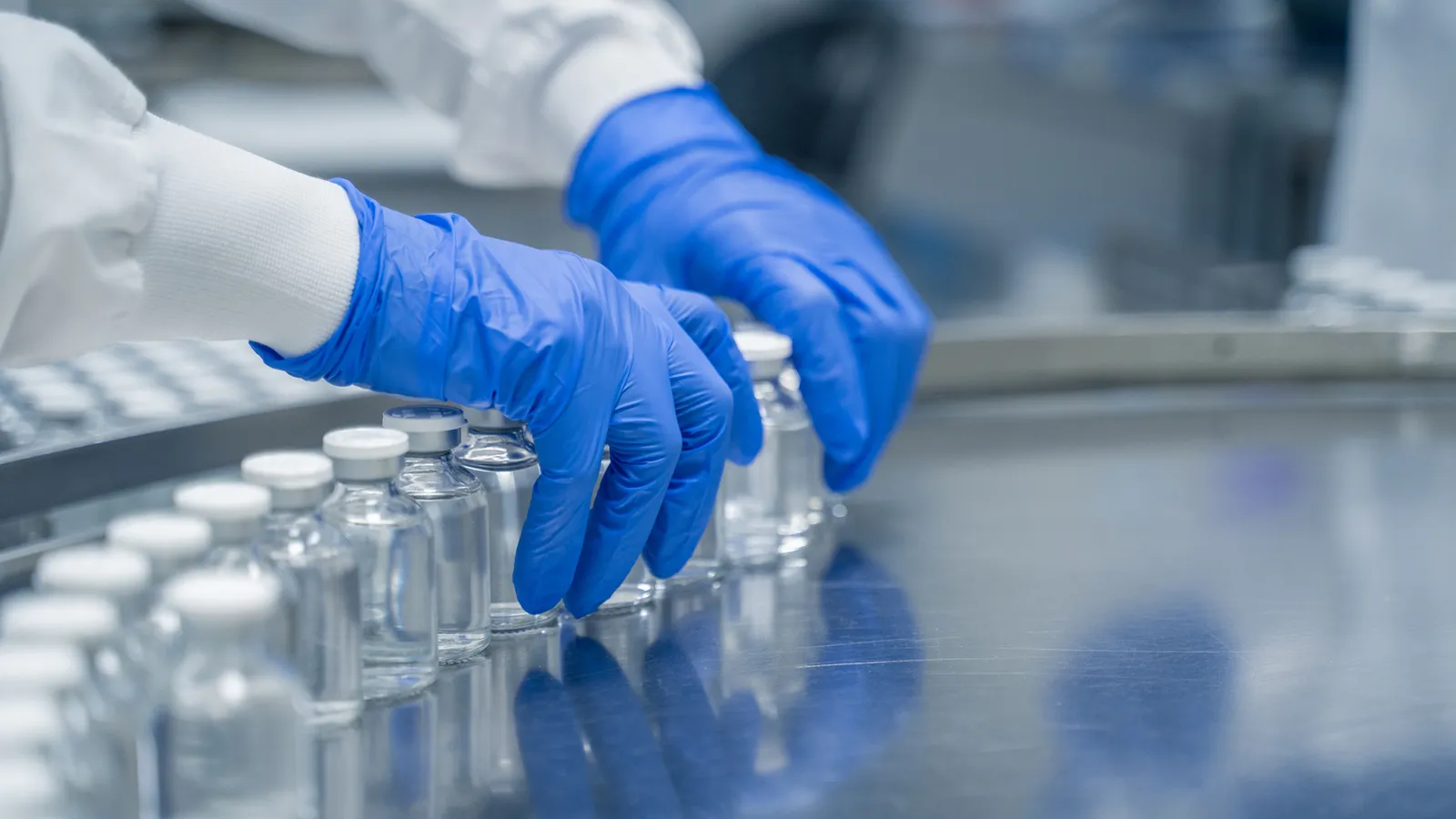
After materials are received, sampled, tested, stored, and prepared, the manufacturing process can begin. Complex equipment continuously monitors process parameters, and samples are collected throughout production to verify that each stage stays within tightly controlled specifications. Once manufacturing is complete, the finished product undergoes additional testing before it moves to storage and distribution.
The result is a process filled with checkpoints, with each one designed to protect the quality and integrity of the finished medicine.
Consistency is more challenging at a global scale
Producing millions of doses for patients around the world introduces challenges that extend far beyond any manufacturing facility. Global supply chains are increasingly complex, and manufacturers must navigate changing geopolitical realities, evolving regulatory expectations, and the need for more resilient, diversified supply chains.
Even small differences can matter. Raw materials that meet the same specifications can still have some variability between batches. Manufacturing processes that perform perfectly at one facility may require adjustment if transferred somewhere else. And oftentimes, documentation or regulatory submissions differ from one country to the next.
Taken together, these variables make consistency an ongoing effort rather than a one-time achievement.
The role of culture
The use of advanced manufacturing technologies is becoming more common across the pharmaceutical industry. Automated production systems, digital manufacturing records, electronic quality systems, and artificial intelligence help manufacturers collect more information and make faster, data-driven decisions.
But technology alone isn’t what differentiates a manufacturing organization. “Everything we do within Pfizer — testing raw materials, in-process controls, post-manufacturing testing, policies, procedures, digital systems — most companies do these things,” says Nair. “The differentiator is in the culture.”
“Systems and technology can only take us so far,” says Kenya Edmondson, Vice President of Global Hospital & Biosimilars US Operations at Pfizer. “Our most important capital is people: our colleagues working on the manufacturing floor, in the labs, and across our supply chain who show up every day to make sure patients get safe, effective medicine, as fast as we can safely get it to them.”
A culture of continuous improvement encourages employees across manufacturing sites to identify opportunities to enhance processes, solve problems collaboratively, and share knowledge across the organization. Programs focused on operational excellence use Lean Six Sigma principles and data analysis to identify inefficiencies, reduce variation, and strengthen process control.1
It’s also important to ensure improvements aren’t isolated to one location. By creating standardized ways of working and encouraging collaboration across manufacturing sites, organizations like Pfizer can spread successful innovations more quickly throughout their global network.
Speaking the same language
One of the largest transformations in recent years has been the effort to harmonize quality systems across Pfizer’s global manufacturing network. Historically, different manufacturing sites could interpret the same regulatory requirements in slightly different ways. While each approach might satisfy local requirements, variations in processes made collaboration and knowledge sharing across sites more difficult.
To address this, Pfizer has built upon its quality management systems by creating standardized global procedures supported by shared digital platforms. “We’re contemporizing our quality management systems and driving harmonization of quality standards across our sites,” Nair explains.
Rather than sites developing their own approaches, Pfizer has established common processes that still accommodate necessary local adaptations. When sites operate using the same procedures and digital systems, employees collaborate more easily across locations. Expertise can be shared more quickly, and innovative ideas can spread throughout the network without requiring teams to relearn different systems.
Precision in every detail
Some manufacturing environments prove just how much precision pharmaceutical production requires. Sterile injectable medicines, for example, are manufactured in highly controlled aseptic environments designed to minimize potential risks to products. Pfizer team members undergo specialized training and qualification before working in these facilities. Nair says, “Even the way [people] move is important, because if [someone] moves too fast and the airflow changes, there’s a risk to the final product.”
Environmental monitoring is continuous. Air, surfaces, equipment, and personnel are routinely tested for impurities using sophisticated monitoring systems. If monitoring detects conditions outside expectations, production pauses while teams investigate and address the issue. These practices reflect the extensive engineering and operational controls required throughout pharmaceutical manufacturing.
Always working to be better
As manufacturing processes continue to evolve, one constant remains: Every improvement, whether in technology, processes, or collaboration, is aimed at helping ensure patients receive medicines produced with the same high standards of quality and consistency. Not just once, but each and every time.
Behind each of those improvements, says Edmondson, are people who see the bigger picture. “With every checkpoint and test, there's someone behind it who understands that a patient is waiting on the other end and they deserve our very best."