
Then vs. Now: Flow Chemistry
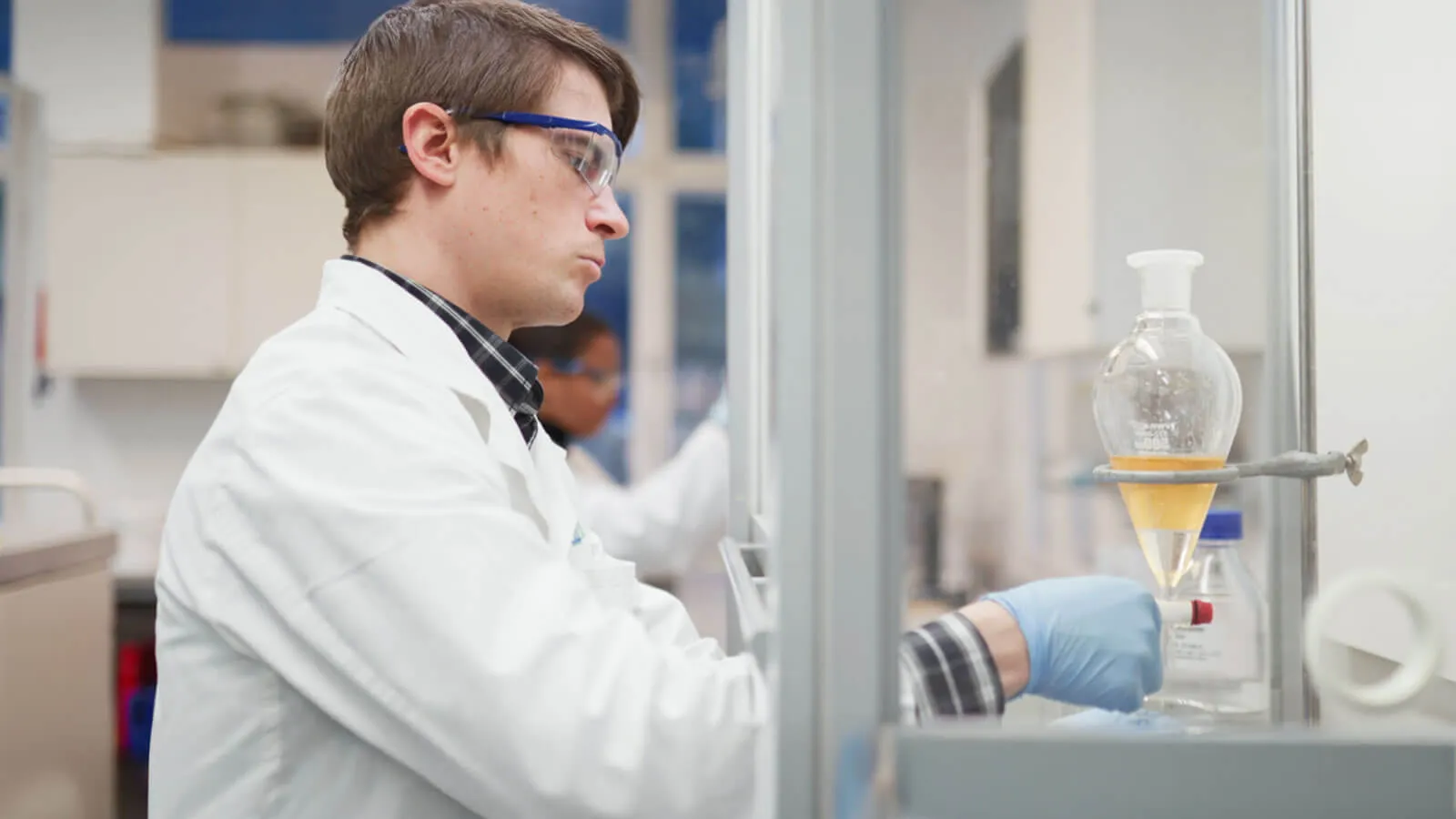
The way medicines are made has changed significantly over time. Many of today’s drug molecules are larger and more complex than those developed decades ago and the methods for synthesis have evolved accordingly. As chemists design increasingly sophisticated molecules, they also need more precise and flexible ways to carry out the reactions that produce them.
For much of history, chemists have carried out reactions in static vessels such as flasks in the lab or large reactors in manufacturing. While these batch processes have played a vital role in creating important medicines, they can be difficult to control, particularly as the scale of the reaction increases. These challenges have increased the need for reaction methods that offer greater control, improved safety, and consistent results when scaled up.
Flow chemistry offers one approach. Instead of combining all reagents into a single vessel, they are continuously pumped through narrow channels or tubes, where temperature, mixing, and reaction time can be precisely controlled. This is especially helpful for reactions that require low temperatures, such as minus 78 degrees Celsius, or that generate high-energy intermediates. Because only small amounts of reactants are present at any given time in the flow reactor, flow chemistry can reduce safety hazards, improve consistency, and enable the scale-up of reactions that would be difficult to carry out in a traditional batch reactor.
At Pfizer, flow chemistry is used alongside conventional batch methods and has been applied in many situations for improved safety, yield, and reproducibility. This includes reactions that may release heat quickly, cryogenic processes, or high-temperature reactions where the product has poor stability. By providing tighter control over reaction parameters, flow chemistry can also improve reactions that do not perform well in traditional batch mode. This allows Pfizer to scale reactions more reliably, helping accelerate the development and delivery of promising medicines to patients.
Watch the video below to learn more about how flow chemistry accelerates science.