
Why Cancer Patients Are Prime Targets for Drug Counterfeiters
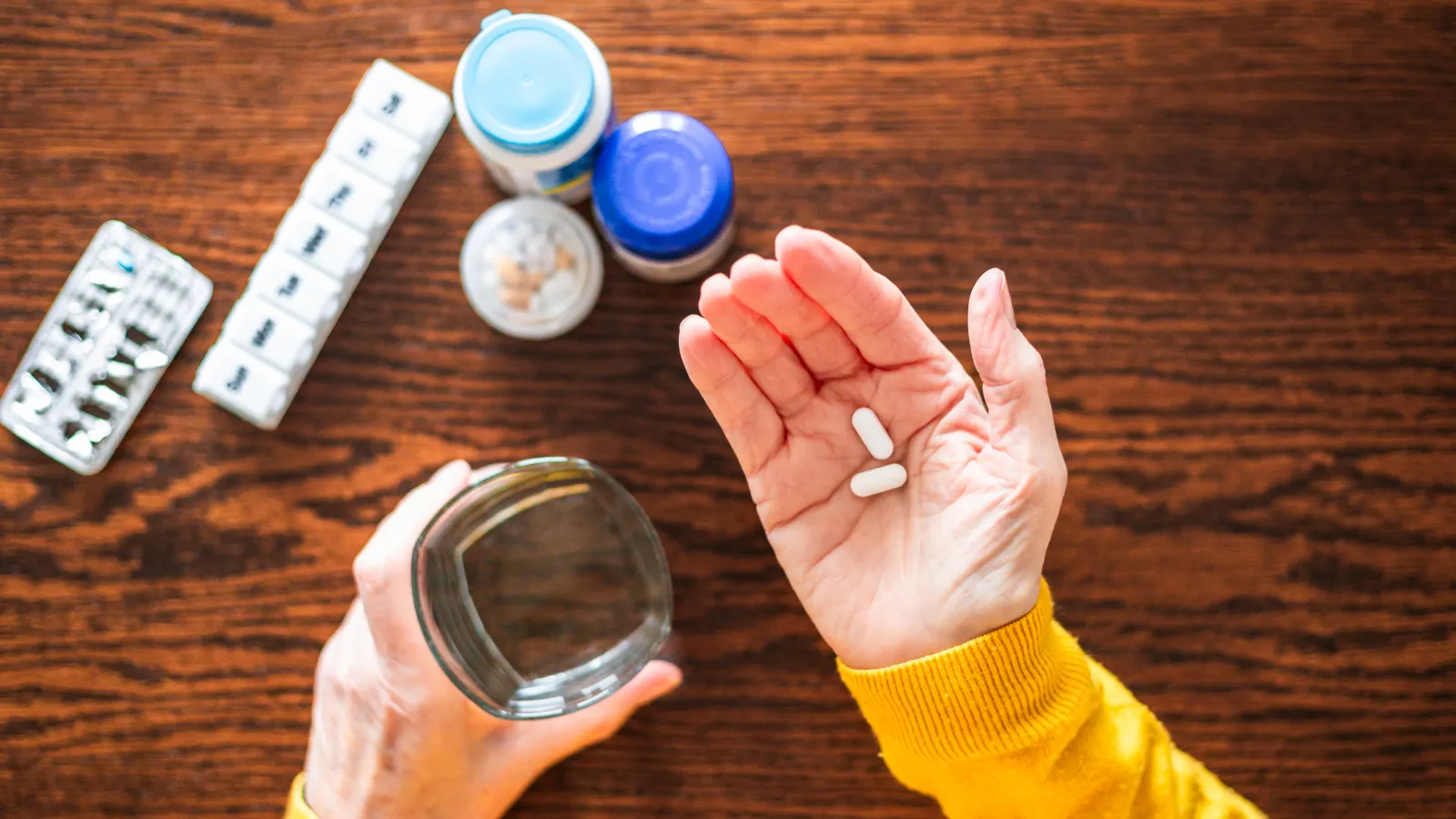
All fake drugs pose a risk to public health. Although they’re designed to look legitimate, they’re made in unsafe and unsanitary conditions. Beyond simply not working, they can lead to treatment failures or, in the worst case, death.
For patients living with cancer, though, a mix of intersecting clinical and market dynamics make counterfeit oncology medication especially dangerous — and especially profitable for global criminal trafficking networks.
“It’s easy to see that the climate is ripe for criminals to find opportunity,” says Pfizer’s Chief Oncology Medical Officer Karin Tollefsen. “Growing demand, the high value of life-saving therapies, drug shortages, and a culture of willingness to look for alternative sources, really does create a fertile ground for criminals to take advantage.”
It’s so fertile, in fact, that trafficking rings are pivoting operations from illicit to prescription drugs in the pursuit of lucrative margins and lower risk of detection, according to the Global Security Director for North America Michael Comeaux. The result is “the growth of very sophisticated transnational criminal organizations."
To combat counterfeits, Pfizer’s Global Security team works with law enforcement agencies around the world and runs a dedicated forensic lab to trace and intercept fake drugs before they reach patients (learn more in the first article in this series, “Inside Pfizer’s Fight Against Counterfeit Medicine”). But spreading awareness among patients and clinicians about what to watch for is just as important.
By better understanding how counterfeit cancer drugs are manufactured and spread, you can help protect yourself and others from fakes.
A Ripe Market for Counterfeiters
One in five people will develop cancer at some point in their lives. In 2024, 20.6 million people were diagnosed with the disease, a figure WHO projects will rise 70%, to 35 million annually by 2050.1
For counterfeit traffickers, those staggering numbers represent a swelling market of would-be victims.
Illegal online pharmacies supplied 416 million prescriptions to patients between January 2017 and December 2022, according to an IQVIA estimate. Of those, cancer drugs were the most common, almost double the volume of the next-highest therapeutic category.2
And those rates are on the rise. Criminal incidents involving cytostatics, or drugs used primarily for treating cancer, increased 60% between 2022 and 2025, according to the Pharmaceutical Security Institute.3
While those cases of theft, diversion, and counterfeiting surge, the stakes for cancer patients are uniquely high.
“You’ve got someone in one of their most vulnerable states,” Tollefson says. “Receiving an adulterated or fake medicine creates a situation where it could be life-threatening.”
For a cancer patient who needs therapy to maintain control of their disease, or whose disease might be progressing, staying on schedule is essential. If they receive the wrong ingredient, the wrong dose, a diluted active ingredient, or a drug that contains no active ingredient at all, “it costs them precious time,” Tollefsen says. “They're relying on this medicine to fight to save their life.”
Hiding in Plain Sight
Cancer treatment is carefully choreographed by each patient’s medical team. Medicine, doses, and recovery periods are timed according to a precise schedule to help maximize efficacy while minimizing harm to healthy cells.4 Not all cancer medicines work for all patients, so treatment plans must be continuously adapted to how the disease responds.
Counterfeits, though, can derail those fine-tuned plans, all while remaining obscured by the inherent uncertainties of cancer treatment, according to Tollefsen. “You normally would attribute a lack or loss of effectiveness, or even toxicity, to the natural progression of the disease,” she says. “This makes it particularly challenging to attribute the cause to a counterfeit medicine.”
If a patient receives medication containing a diluted active ingredient, for instance, lower-strength drugs can result in a suboptimal response, or their cancer developing resistance to treatment; creating false data points that might lead healthcare providers to abandoning a therapy that could have otherwise worked.
What’s more, medicines most likely to succeed are typically used as first-line therapy, early in the course of a disease.5 That means a counterfeit can rob a patient of their best chance of beating cancer.
Some fakes, meanwhile, contain no active ingredient whatsoever. In those instances, a patient might complete a prescription and draw the wrong conclusion that there was no benefit. They might “assume it’s because the medicine didn’t work when actually you may never have received active treatment at all,” Tollefson says. Counterfeits, then, “don’t only impact the patient’s current treatment, but treatment decisions that doctors will make later down the line as well,” she adds.
Even a patient’s death might offer no obvious clue that something was wrong. “In most cases,” Tollefson says, "the cancer itself would be blamed sooner than attributing the lack of response to a fake medicine.”
Yes, It’s a Problem In the U.S., Too
Most healthcare providers in the U.S. believe “this is only a problem in other parts of the world,” Tollefson says. That high confidence in the integrity of the system can breed complacency. Research shows that higher-income countries are also where awareness is lowest.6
A 2024 survey of 320 U.S. healthcare providers conducted by John Hopkins University found that more than 80% of respondents didn’t think counterfeits were a serious concern, and only 11% knew what they should do to help prevent them. Fewer than 4 percent reported speaking to patients about the threat.7
Initiating a conversation, though, can be a critical line of defense for oncologists, according to Tollefson. Asking where a patient got their medicine, for instance, or reaffirming trust in safeguarded channels, as well as encouraging honesty if they go outside them, can go a long way in protecting patients.
So can asking patients a simple question: How do you feel?
If a patient’s been on a course of medication for some time, they’ll likely be accustomed to its appearance, texture, and smell — perhaps even the font and color of the packaging. But as criminals armed with AI and 3D printers become increasingly skilled at replicating those markers, changes in how a medicine makes a patient feel can offer valuable clues. Did it taste different, did they feel different, or did they experience any side effects they hadn’t encountered before?
Those are questions worth asking for reasons beyond fighting counterfeits: They make for good clinical practice. The more that patients can be intuitive about how they respond to medication, says Tollefson, the better opportunity doctors will have to devise effective treatment plans when the drugs are genuine. “It’s always good to be telling doctors about signs and symptoms, and if there’s something untoward, it could prompt an investigation.”
Breaching a Secure Supply Chain
In the U.S., the legitimate supply chain is robust. Medicines obtained through licensed pharmacies and authorized distributors move through a tightly controlled system protected by intensive physical security as well as sophisticated technology that monitors where they go.8
Pfizer’s dedicated Global Security team partners with law enforcement agencies around the world. Tollefsen says Pfizer operates a laboratory that can quickly test suspicious products to root out the rare cases where a drug has been adulterated or diverted from closely watched distribution channels. (Since 2004, that team’s Detect, Disrupt, Deter, and Impact campaign has kept more than 300 million counterfeit doses from reaching patients worldwide.8)
To penetrate those safeguards, criminal gangs enlist co-conspirators on the inside.
“We're dealing with organized crime,” Vice President, Global Security Operations Angel Melendez says. “When there are collaborators within the pharmaceutical or healthcare environment that are willing to conspire with these organizations, [that’s when] you’ll see openings in the supply chain."
Such breaches are “very minimal,” in the U.S., Melendez says, but the rare incidents that do occur are made possible by “facilitators that were part of the ecosystem that supported criminal activity.”
Medicines acquired in bulk in the U.S. can be shipped abroad to criminals who dilute or otherwise alter them, before relabeling and infusing them back into the overseas black market supply chain, according to Tollefson. Sophisticated packaging features, such as replica holograms, logos, and even serial numbers, can make counterfeits hard to spot.9 Criminals might even root through trash for empty vials to repurpose, Tollefson says.
Last year, two brothers from India were sentenced in Seattle to 30 months in prison for shipping what buyers believed was life-saving oncology medication. Instead of any active ingredient, though, the vials were full of over-the-counter heartburn drugs.10
“The defendants made hundreds of thousands of dollars while defrauding people who were clinging to hope that a late-stage cancer medication could extend their life,” Acting U.S. Attorney Teal Miller said of the incident.10
Why Patients Look Elsewhere
Facing a cancer diagnosis, fear can drive patients outside of safeguarded channels.11 Patient purchasing behaviors are another factor. “We’ve had the luxury of a highly regulated healthcare system and supply channels,” Tollefson says. But “patients are finding more ways to find treatments outside traditional channels, particularly online. And where there is demand, there will come the opportunity for fraudulent and criminal behavior.”
Scarcity can also push patients toward unauthorized vendors. One study found that more than 93 percent of oncology drugs listed on the FDA’s Drug Shortage Database could be purchased without a prescription — and that three-quarters of those online pharmacies ship products to patients’ doorsteps without any clinical oversight.6
“Patients may be very willing to find a non-traditional healthcare channel,” Tollefson says. “And you can find that online.”
There, though, they can fall victim to a glut of misinformation and unscrupulous vendors. Cancer patients are highly informed about their disease, which can actually become a risk factor: “They do a lot of research, and in doing so, they may also get exposed to a lot of misinformation,” Tollefson says.
One study found that more than 70% of respondents living with cancer reported seeing misinformation on social media.12 It’s little wonder that patients can be misled when AI is turbo-charging that environment. “The falsification of medical information can be incredibly compelling in a situation where you’re overwhelmed,” says Tollefson. Fraudsters are even using so-called deepfake videos, generated by AI, to imitate high-profile doctors and health experts.13
Marketing techniques can also be decidedly low-tech. Out in the real world, Tollefson has noticed a new trend of emboldened criminals brazenly running ads in small-town newspapers in rural America, promising cheaper medication.
Cancer patients might go online in search of community and the emotional support of finding other people facing the same challenge. If they do, they should be mindful that “there’s a lot of fake accounts out there,” Tollefson says. “All of that sets you up for solicitation from untoward sources.”
Go to any social media platform, Comeaux says, and you are likely to be able to find purported oncology medications for sale without a prescription. That’s where drug traffickers advertise counterfeits. After a buyer makes the initial contact, dealers guide them to encrypted communication apps such as WhatsApp, Signal, or Telegram, before finally completing the transaction on popular payment platforms.14
On one side of those illicit exchanges is a patient whose life could depend on what medication they receive. “I personally find this to be an incredibly emotional topic,” Tollefson says. “It's all the more egregious to be doing this to someone who is facing a cancer diagnosis.”
To combat a threat that’s become so diffuse takes a coordinated response, Tollefson shares. That’s why she’s been rallying other industry partners behind the cause and raising awareness so that, across healthcare, “we've got more eyes on how medicines actually reach patients.”
“Fear is not helpful,” Tollefson says. “We don’t want people to distrust or be afraid of their medicines. But we need healthcare professionals to have enough caution, savviness, and a lot of awareness.”
For a closer look at how Pfizer’s Global Security team investigates and disrupts counterfeit networks to protect patients, read the first article in this series, “Inside Pfizer’s Fight Against Counterfeit Medicine.”

