Inside Pfizer’s Fight Against Counterfeit Medicine
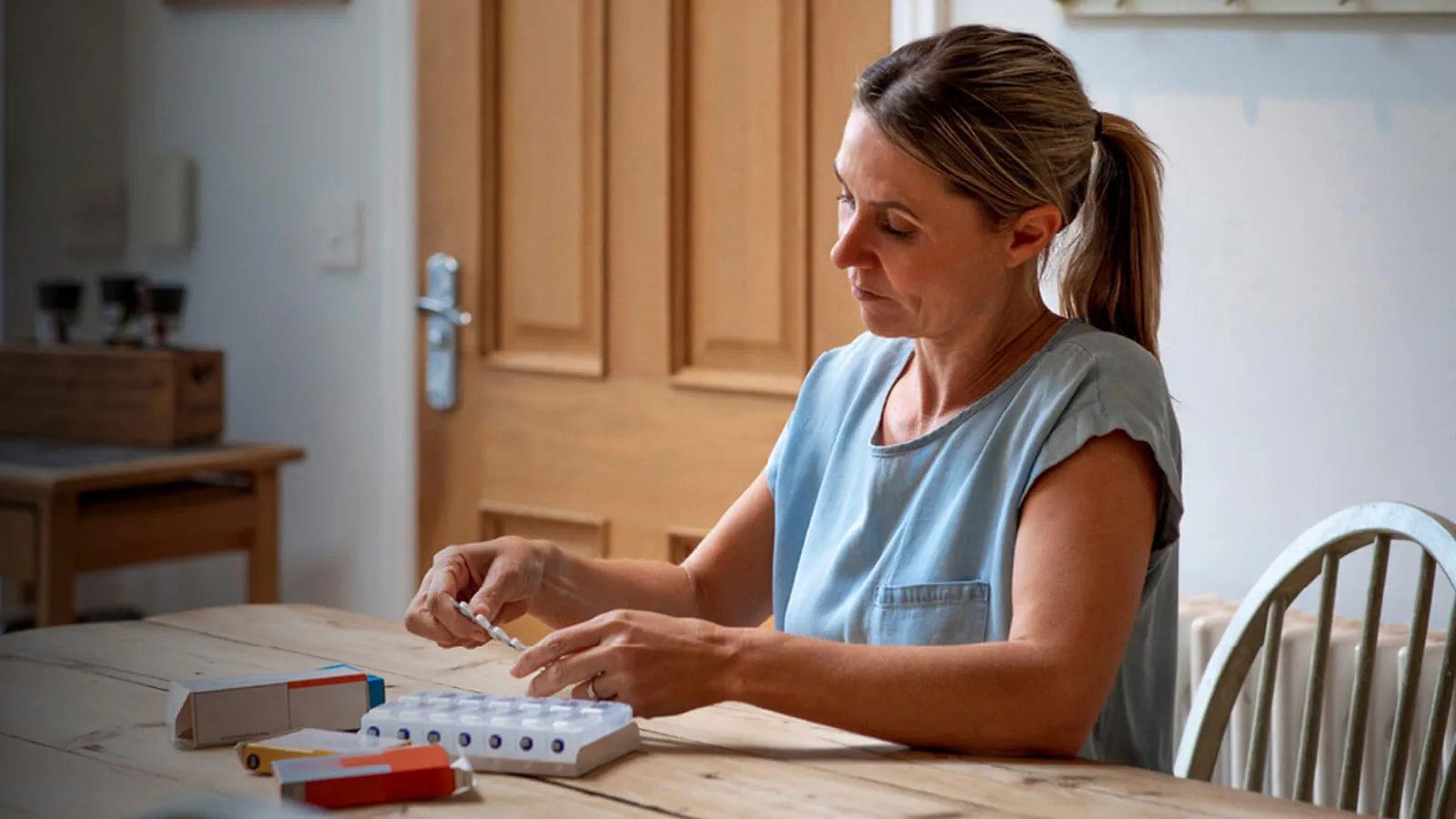
When Pfizer’s Vice President, Global Security Operations, Angel Melendez raises the issue of counterfeit medicine — deliberately mislabeled to pass off as genuine — he usually gets the same offhand reply: “But it’s not really a problem here in the U.S. though, is it?”
Melendez’s response often surprises even seasoned professionals: “Yes, it is.”
He recently took part in a panel discussion with top law enforcement executives from across the country. When he discussed the scale and prevalence of domestic counterfeits, there were audible gasps from the audience.
“This is as much of an issue in developed countries like the United States [as] any other market,” Melendez said in a recent interview. “This could happen to anyone who sources their medicines outside established distribution channels and does not take steps to protect themselves.”
A bigger problem than people think
The U.S. and Canada combined accounted for more than 2,000 incidents involving counterfeit, diverted, and stolen medicines last year, according to the Pharmaceutical Security Institute (PSI). PSI documented more than 7,000 such cases across 142 countries in 2025.1 That’s the highest number since reporting began 23 years ago.2 And because some countries’ surveillance networks remain patchy, that figure is most likely an underestimate, according to Melendez.
Because of these surveillance and reporting gaps, Pfizer’s Global Security team has provided counterfeit and diverted product awareness training to law enforcement agencies in more than 183 countries, including the U.S. “That’s something that Pfizer brings to the table, helping build capacity across different markets,” Melendez says.
Pfizer’s 2025 Impact Report describes the global counterfeit network as “vast, adaptive, and relentless,” one that spans multiple therapeutic areas, including cancer drugs.3 It’s a highly lucrative illicit trade that’s driving the expansion of organized criminal networks over the world while threatening patient safety, clinical outcomes, and public trust in medication. According to WHO, an estimated $30.5 billion is spent on substandard and falsified products every year.4
During its 2025 “Operation Pangea,” INTERPOL revealed the “alarming scale” of the market. Coordinating police, customs, and health regulatory authorities across 90 countries and territories, the crackdown led to the seizure of 50 million illegal doses, worth $65 million.5
Harder to spot than ever
In a best-case scenario, counterfeit medication will be ineffective. At worst, though, it can lead to health risks, treatment failures, or even death. Globally, fake medicines kill hundreds of thousands of patients a year.6
Fakes are dangerous because they’re not manufactured under safe or sanitary conditions, nor are they inspected by regulators. That makes it impossible to know what’s actually in them without laboratory testing. Sometimes, counterfeiters will even add some of the key active ingredients to formulas, complete with branding to match, in order to make it as difficult as possible to distinguish from the real thing.
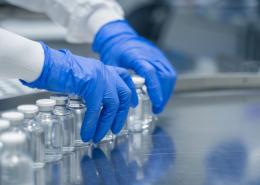
And they’re getting increasingly sophisticated, making detection harder than ever. AI is helping fraudsters replicate packaging ever more convincingly and empowering them to imitate a wider range of therapeutics. “It’s not just pills,” Melendez says. “It’s vials, it’s intravenous, it’s every type that you can imagine.”
Even veteran investigators in Melendez’s line of business have to double-check to be certain. “We have to have our laboratory conduct a thorough analysis with our own instruments.”
Detect, Disrupt, Deter, and Impact
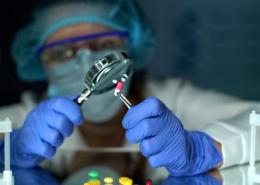
Acting on leads from sources—including patients, healthcare professionals, confidential informants, and law enforcement—Pfizer’s investigators can send suspected samples to the lab. They check the packaging for clues that are invisible to the naked eye, using infrared and ultraviolet light to look for any anomalies in its colors.7
Then, lab scientists test the product itself. They fire a laser at a sample, generating a unique chemical fingerprint that’s compared against a database of authentic Pfizer products.7 Pfizer and law enforcement can use the same test in the field where the product is first identified. A negative field test outcome can help provide justification for law enforcement to make a product seizure and can be used to help develop probable cause that can lead to an arrest. After seizure by law enforcement, the product is taken back to the lab to build even more evidence to help the prosecution.
There, scientists further probe the fake medicine’s composition with techniques that can reveal both the inactive and any active ingredients. Pfizer’s experts have found counterfeits containing ingredients such as: boric acid, multiple incorrect active ingredients in a single product, floor polish to make tablets “shiny,” leaded highway paints, and printer inks to give color to tablets.
Every chemical clue and packaging anomaly uncovered by the lab makes counterfeits harder to produce and easier to spot, says Melendez. Those data points are also used to build intelligence that he and his team, working proactively with law enforcement, can use to connect cases, identify fraudsters, and thwart criminal networks.
Since 2004, Pfizer’s Detect, Disrupt, Deter, and Impact campaign has successfully prevented more than 302 million counterfeit doses from reaching patients.
How to protect yourself as a patient
Despite the global reach and lethality of this criminal enterprise, the risk to consumers varies markedly by country. To put things into perspective, in high-income countries such as the U.S., thousands of annual counterfeit incidents comprise less than 1 percent of medicines sold, according to the CDC.8
Still, according to the National Association of Boards of Pharmacy, a staggering 95 percent of websites offering prescription-only drugs operate illegally,9 while legitimate online pharmacies require a prescription and are licensed by state regulators.
That’s why it’s essential to exercise extreme caution when buying online and to use available tools to ensure sellers are legitimate, according to Melendez.
For most patients who live in the U.S., the probability of a counterfeit medicine finding its way through the legitimate supply chain into the palm of their hand is relatively low. But the stakes increase significantly when medicines are obtained through unregulated online pharmacies or other unauthorized channels. In 2025, the DEA seized more than 47 million fentanyl-laced counterfeit pills at the border, each a potentially lethal dose.10
“That’s why patients should always look to protect themselves,” Melendez says. Understanding where a medicine was sourced is therefore critical. If obtained through an online pharmacy or other non-traditional channel, patients should first verify the legitimacy of the seller. There are also a number of common-sense steps they can take to be fully confident: Does it look and smell the same as what they’re used to? Are there any spelling mistakes on the packaging? If it’s oral medication, are the tablets broken or damaged?
“If patients do run into any red flags, they should, first off, not take the medication. Then they should notify the manufacturer as well as law enforcement,” Melendez says. At Pfizer, a complaint is addressed by the quality team, and if there are any indications of a counterfeit, the issue is escalated to the attention of Melendez and the Pfizer Global Security team. Then they begin an investigation.
Pfizer’s Global Security team
That responsibility falls to a team with deep investigative know-how. Melendez spent 23 years in what he considered “the best job in government,” retiring as the Special Agent in Charge of Homeland Security’s New York division, the largest field office for the agency. And what lured him away from his dream job was the opportunity to protect patients.
Prior to that role, he served in the Persian Gulf War, so Melendez alone has four decades serving on the frontlines of combat and counterfeiting. Collectively among his team, though, he estimates there are “a couple of centuries of combined experience in law enforcement, military intelligence, and corporate security.”
Partnering to stay ahead
Through strategic public-private partnerships, Melendez’s team is lending expertise to and strengthening intergovernmental organizations’ ability to combat criminal gangs. Since 2021, Pfizer has been an active participant in a landmark intelligence-sharing agreement between the U.S. Customs and Border Protection and the U.S. Chamber of Commerce that enforces intellectual property rights, helping investigators intercept counterfeit goods.11
The partnership was groundbreaking, marking the first time the federal government entered into such an agreement with the private sector.
Pfizer’s anti-counterfeiting forensic lab in Groton, Connecticut, is “a critical component of our program,” Melendez says. As well as handling Pfizer’s internal investigations, some of the lab’s resources are devoted to helping law enforcement tackle the issue more broadly, and since 2025, 15 percent of the suspected counterfeit samples of Pfizer products assessed arrive from worldwide law enforcement agencies, including the U.S., according to Melendez.
Melendez is proud to put his hard-earned investigative skills to use protecting patients. “That’s the level of support we provide. It’s an incredible lab that we have.”
Melendez’s team also has a close relationship with many nonprofit organizations who are committed to raising awareness in tandem. Pfizer’s partnership with Johns Hopkins University (JHU) is “critical to the work that we’re doing in educating healthcare providers,” Melendez says.
Research shows that promoting vigilance is much-needed work. A 2024 BESAFE survey administered by JHU found that more than 80 percent of U.S. healthcare providers didn’t consider counterfeits a serious concern and 89 percent were unfamiliar with effective prevention strategies.12
What Melendez loves most about his work is that when it comes to security in the pharmaceutical industry, competition fades in comparison to bigger common causes. “It’s an opportunity to collaborate, because what one company sees as a risk is going to show up to another company’s doorstep pretty soon.”
The global criminal enterprise of counterfeit medicine might always be hard at work finding ways to evade authorities, but Melendez is confident he and his team will help Pfizer stay a step ahead. “It's a continuous evolution,” he says. “It’s challenging. But we thrive on challenges.”