Pfizer School of Science
What is Pfizer School of Science?
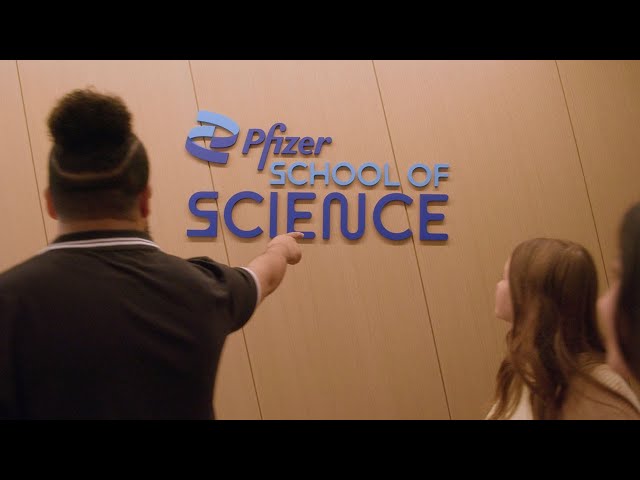
Welcome to Pfizer School of Science, a program designed to inspire the next generation of scientists at an early age
As a company founded in New York City, we’re thrilled to invite NYC middle school students to our headquarters in Hudson Yards to learn about the life sciences and Pfizer. Registered students will participate in a half-day field trip at our office for a hands-on, science-based learning experience where they will be exposed to a multi-national company, meet colleagues, and learn about what we do. The visit is centered around a 90-minute instructional course on topics like Drug Discovery, Microbiology, Immunology and more.
Why Pfizer?
At Pfizer, discovery is at the heart of everything we do
For more than 170 years, we’ve made it our mission to advance science and make life-changing progress to help people live longer, healthier lives. Our vision is to awaken students to the endless possibilities a career in the life sciences can achieve, and reinforce Pfizer’s commitment to NYC and science education. Through Pfizer School of Science, we’re making it happen!
Science Course Options
Pfizer School of Science currently offers the following courses that your students can explore during their field trip:
- Biotechnology
This course introduces students to foundational laboratory techniques used in the development of medical, environmental, and industrial innovations. Students begin by learning to measure small volumes with a micropipette. They then explore restriction enzymes, and the incredible role they play in genetic engineering. Finally, students perform gel electrophoresis and examine how this technology is applied in paternity testing, crime-scene investigations, and the research and development of medicines.
- Central Dogma
Students are introduced to DNA as a cookbook containing the instructions for making essential proteins. Throughout the course, they explore the structure of DNA, extract DNA from wheat germ, review the processes of transcription and translation, investigate their unique traits, and learn how genetics influences human health. Students then connect the central dogma to medicine by examining the role of mRNA in gene therapies used to treat a variety of diseases. This advanced course is recommended for 8th grade students or advanced 7th grade students who have already been introduced to DNA.
- Drug Discovery and Manufacturing
Students learn about drug discovery, development, and the various career opportunities involved in bringing biomedical innovations from concept to market. Students then play a board game where they run their own pharmaceutical company and encounter some of the same challenges and successes that researchers face as their drug moves along the drug development pipeline. Once their drug is approved, students learn about the manufacturing and quality control processes by making sugar pills that represent their final drug product.
- Immunology
Students train as immunologists by participating in mini games to learn about innate and adaptive immunity. Students then try to diagnose patients by matching their symptoms to those of an infectious disease. After hypothesizing their diagnosis, they analytically verify their hypothesis by running a mock ELISA test. Throughout the experience, students learn about the importat role immunology plays in treating diseases.
- Microbiology
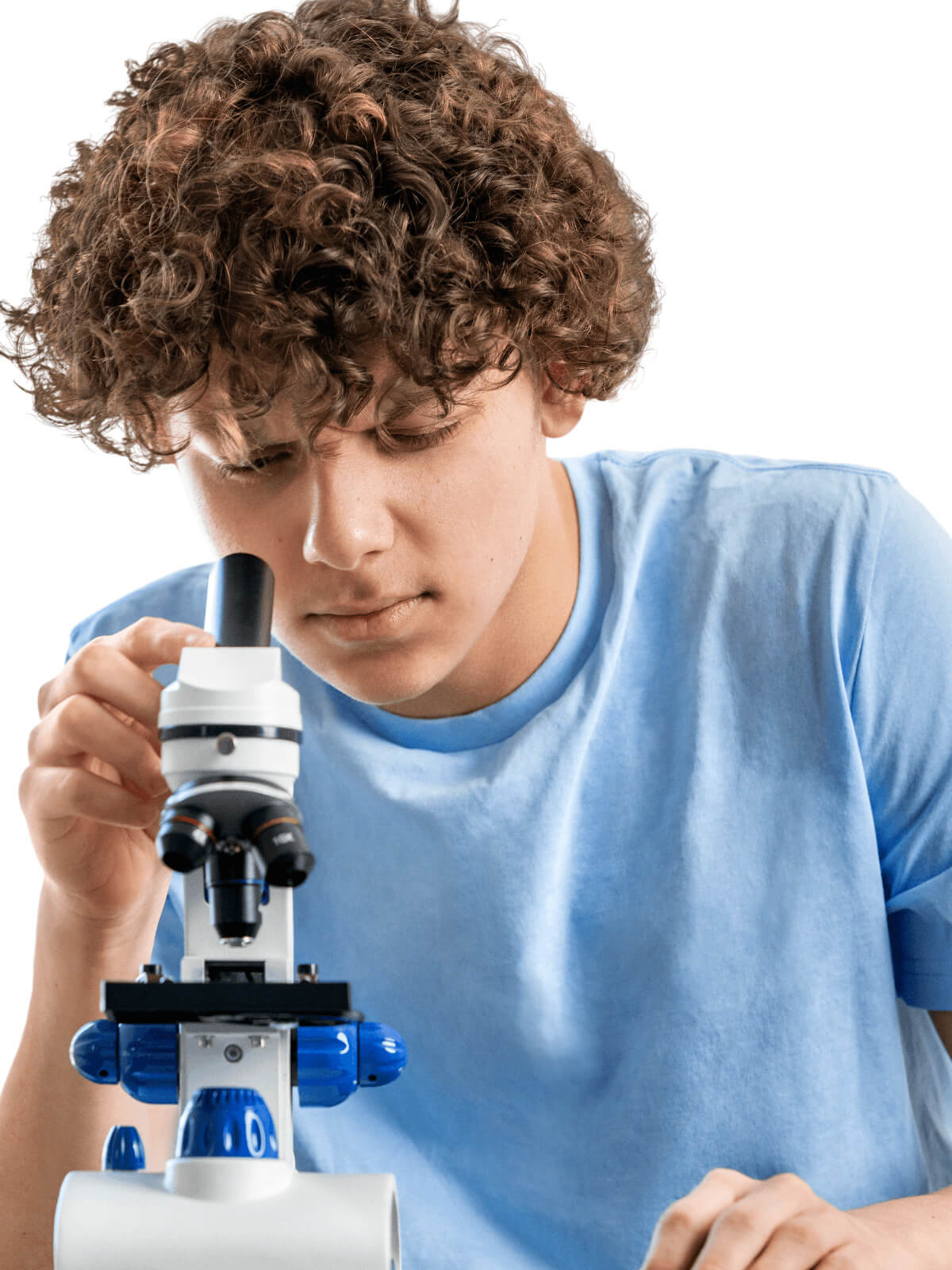
Students are introduced to microorganisms and the environments in which they live while learning the techniques scientists use to observe and study them. Following an introduction to microscopy, students use microscopes to investigate a variety of microorganisms. They then learn how to culture bacteria, replicating the work of microbiologists in a laboratory setting. Throughout the course, students explore how these techniques contribute to the development of medicines.
- Neuroscience
A survey of our senses, this course explores how the body and brain work together to shape our experiences of sight, hearing, taste, and touch. Students learn how to “trick” their perception of taste, conduct experiments to investigate receptor density and reaction time, and test their hand-eye coordination while discovering the important role the brain plays in overall health.
- Vaccines
Through a series of mini-games and challenges, students explore the history of vaccines, the different types of vaccines, and how they help protect communities from viral and bacterial epidemics. Students then perform a liquid chromatography activity to isolate a yellow compound from a mixture, mirroring how chromatography is used in laboratories to purify medicines and vaccines.
- Virtual Experience: Hypothesis Testing

Students join a scientist-led virtual investigation into a coastal bird die-off, applying the scientific method — from observation and hypothesis to data interpretation and conclusions — to a science-based mystery. Teachers then bring the science off screen with a hands-on hypothesis-testing lab using LB agar plates, supported by a complete teacher resource kit.
Ready to join us? Or have questions?
Teachers and educators can enroll their students in Pfizer School of Science in New York City by filling out this inquiry form.
If you have questions or want more information, please contact us at [email protected].
Pfizer School of Science Mobile Experience
Pfizer School of Science is hitting the road, ready to captivate young minds and inspire a passion for scientific exploration!
Step into our state-of-the-art double expandable trailer and embark on a scientific adventure like no other! Every 10 minutes, teams of future scientists aged 9-14 will enter the mobile experience – which mimics an ‘escape room’ – to decode riddles, crack codes, and solve problems.
Do you have what it takes to develop the next breakthrough?