

- Healthcare Facilities & Delivery
- Workforce Pathways
- Research & Data
- Policy
- Learning Series
- Home
- About
- Responsibility
- Global Impact
- Action Guide
All people deserve the opportunity to pursue their best health. Yet, far too often historically marginalized and underserved communities face systemic barriers to better health—like income inequality, high rates of pollution, bias and discrimination in application of policy solutions, or a lack of access to healthy food.
The Pfizer Multicultural Health Equity Collective (‘The Collective’), in partnership with more than 30 experts, co-authored ‘An Action Guide to Disrupt Inequitable Health Outcomes’ outlining key considerations and steps to help address health inequities across four areas: Healthcare Facilities & Delivery, Research & Data, Workforce Pathways, and Policy. With a focus on actionable solutions, the guide features real life examples from organizations addressing issues of inequity in their own communities.
Brought to you by, Pfizer Multicultural Health Equity Collective, National Minority Quality Forum, National Association of County and City Health Officials, Morehouse School of Medicine, and The Century Foundation.
Healthcare Facilities and Delivery
Building community-centered healthcare delivery systems is crucial for closing care gaps and making services more accessible, responsible, and tailored to the specific needs of diverse and rural communities. To ensure all people have the opportunity to pursue their best health, we must ensure people can obtain high-quality care when and where they need it.
Read a summary of actions and resources here.
- Addressing social determinants of health
Social determinants of health, including housing conditions, economic status, and food access, have a significant impact on health outcomes. Implementing "Health in All Policies" approaches, such as investing in affordable housing initiatives and forming cross-sector partnerships to improve food security, can help address the underlying factors that negatively impact health.
- Solutions Spotlight: Learn more about Boston’s interdisciplinary Health in All Policies Task Force here, which aims to better equip City departments to address racial justice and health equity in their sectors.
- Expanding accountable board governance
To address health inequities, healthcare facilities can take a closer look at the frameworks, policies and structures guiding board governance—ensuring they intentionally consider the perspectives and needs of underrepresented populations.
Boards play a critical role in setting up health equity strategies and monitoring and evaluating progress. Increasing board diversity is also key to incorporating community perspectives into decision-making processes. These diverse perspectives may reflect differences in race, ethnicity, gender, socioeconomic status, and lived experiences.
By adopting comprehensive and inclusive governance models, healthcare facilities can begin to mend systemic disparities and enhance the quality of care for all. This approach fosters a more equitable approach to developing policies and practices, bridging service gaps, and ensuring that all voices are heard and valued where they matter most.
- Solutions Spotlight: Check out The Black Directors Health Equity Agenda suite of playbooks, which are designed for board directors across the healthcare ecosystem seeking to bring health equity into their governance roles.
- Delivering equitable healthcare
Equitable healthcare delivery ensures that all individuals have access to healthcare services and resources, regardless of their physical, financial, or geographical limitations. Healthcare services can be made more accessible in many ways, from training staff on how to provide culturally humble and competent care, to offering transportation, accommodating disabilities, and utilizing telemedicine and AI tools. Multi-lingual healthcare services are also vital to ensure patients with limited English proficiency can receive clear, accurate care through interpreters and translated materials.
- Solutions Spotlight: Consider the use of AI-powered telehealth platforms, such as ThinkAndor®, which may enable clinicians to streamline workflows, enhance care collaboration, and improve patient care for vulnerable populations.
- Preventing healthcare provider burnout and supporting wellness
Healthcare provider burnout – characterized by emotional exhaustion, depersonalization, and a sense of reduced accomplishment – is closely linked to health equity. Providers in underserved communities often face a range of systemic barriers in delivering patient care, which leads to higher levels of frustration and can eventually impact quality care and even the health of providers themselves. Some strategies like encouraging team-based care, mindfulness, and early career burnout prevention training have shown positive results to address burnout and promote provider well-being.
- Solutions Spotlight: Learn about The American Medical Association (AMA) AMA Steps Forward® Practice Innovation Strategies, which offers evidence-based approaches to helping understand and address physician burnout in health systems.
- Community insights
Watch this discussion from the 2024 Health Equity in Action Summit to learn more about enhancing partnerships between healthcare providers and Indigenous communities.


Workforce Pathways
Building a more representative healthcare workforce is recognized as vital to addressing the unique challenges of diverse patients and improving care for marginalized communities. Research shows that when the racial and ethnic identities of patients and their clinicians align, it tends to increase patient satisfaction, trust in providers, quality of care, and health outcomes.i
Read a summary of actions and resources here.
- Supporting community health workers
Supporting community health workers (CHWs) is essential to bridging gaps in healthcare access and delivery for underserved communities. As trusted members of the communities they serve, CHWs facilitate access to health services, improving cultural responsiveness and quality of healthcare delivery. Their diverse backgrounds—including representation from refugee, immigrant, and migrant communities, for example—enable them to connect with populations that might otherwise remain disconnected or mistrust the healthcare system.
It is essential to train, support, and empower CHWs by providing professional development, networking opportunities, and policy advocacy support to strengthen their role in the healthcare system.
- Solutions Spotlights:
- Explore how Community Health Worker Coalition for Migrants and Refugees is providing training, resources and advocacy for CHWs from migrant and refugee backgrounds.
- Learn about the National Association of Community Health Workers networking opportunities, professional development and policy advocacy.
- Solutions Spotlights:
- Investing in government, tribal and territorial programs
Developing a sustainable, diverse healthcare workforce requires coordinated efforts across multiple sectors. No single entity can solve workforce diversity challenges alone—educational systems, healthcare institutions, government bodies, and community organizations must work together.
- Solutions Spotlight: Explore government programs, such as National Health Service Corps, Nurse Corps and Rural Health Clinic Program which focus resources on Health Professional Shortage Areas and Medically Underserved Areas/Populations.
- Community insights
Watch this panel discussion to hear about some of the most effective recruitment, training, and support approaches to foster diversity in the healthcare workforce.
Research & Data
Advocacy organizations have long recognized the need to address racial bias embedded into algorithms and improve the collective of and expand access to disaggregated data. Yet, a persistent disconnect between policy, practice, and research has prevented comprehensive action. Today, artificial intelligence (AI) offers powerful tools to bridge these gaps and help providers detect bias, personalized care, and uncover hidden disparities. Improved data sharing among government, academic, and private institutions may also enable researchers to identify intersectional health disparities and better inform efforts to advance health equity.
Read a summary of actions and resources here.
- Leveraging big data
Big data—characterized by its variety, volume, and velocity—offers multiple pathways to address healthcare inequities through advanced analytics capabilities. Big data analytics, such as machine learning and AI examine intersections of identity to see where racial and ethnic disparities are exacerbated by other marginalized identities. AI algorithms can uncover hidden patterns of inequity and can be programmed to continuously learn and adapt. However, these algorithms are not inherently objective and can perpetuate biases if the underlying data collection is based on biased assumptions.
- Solutions Spotlight: Learn about Pfizer’s AI in healthcare core principles and discover how AI has the potential to drive scientific breakthroughs, aid in diagnosis, treatment, and management of diseases, accelerate drug development and delivery, control costs, and support health equity.
- Collaborating through data lakes
Community data lakes are a powerful collaborative solution for patient advocacy organizations facing challenges with limited resources for data management. A community data lake functions as a centralized repository collecting and storing various types of data from multiple sources, enabling sharing, collaboration, and analysis to derive meaningful insights.
Improved data sharing among government, academic, and private institutions will help enable researchers to identify intersectional health disparities and advance health equity in underserved communities.
- Solutions Spotlight: Examine NMQF’s private cloud, which was launched in the summer of 2023 to operate as a community data lake. It is a cloud computing environment that is dedicated to promoting health equity.
- Designing research studies
To effectively address racial health inequities, prioritizing both data accessibility and fairness in research design is incredibly important. Cultivating a diverse research community and supporting community-engaged research are vital complementary actions. To prevent worsening inequities, embedding health equity principles from the beginning of research is essential, especially given the risks associated with algorithms using racial data.
- Solutions Spotlight: Explore The American Indian Health Commission’s four core principles of tribal data sovereignty and other parameters to help facilitate tribal-state collaboration on health policies and programs.
- Community insights
Learn how the latest data-driven strategies are helping deliver disease-specific information and design community programming to improve health outcomes for underserved communities.


Policy
Effective policy solutions must be proactive, inclusive, and multifaceted. Engaging directly with communities helps policymakers identify real challenges and craft targeted solutions—helping to ensure access to healthcare, affordable housing, quality education, good jobs, and strong community infrastructure. When equity is embedded at every stage of the policymaking process, we lay the foundation for transformative change that advances justice, fairness, and healthier outcomes for all.
Read a summary of actions and resources here.
- Driving comprehensive policy solutions
The Aspen Institute describes systemic racism as a network of policies, practices, cultural norms that perpetuate racial group inequity. These interconnected systems reinforce discriminatory beliefs and resource distribution, calling for multi-sector policy interventions.
In the fight against systemic racism in healthcare, partnering with the quad legislative caucuses—representing African American, Hispanic, Asian Pacific American, and Native American communities—offers a powerful path forward for advancing inclusive policy solutions. These caucuses play a critical role in advancing inclusive policies, amplifying marginalized voices, and mobilizing legislative support for equity.
- Solutions Spotlight: See how The Century Foundation’s framework for health equity identifies five key pillars to health policy: affordability, sustainability, accountability, comprehensiveness, and inclusivity.
- Prioritizing community-led initiatives
Community-based participatory research and collaborative governance models are instrumental in shaping policies that resonate with the lived experiences of those affected. Community-based organizations, tribal communities, and grassroots groups are doing some of the most impactful work, despite being chronically underfunded, and should be prioritized and included in the policy process.
- Solutions Spotlight: Read more about “Raising the Bar”, supported by the Robert Wood Johnson Foundation, and explore how it “provides an actionable framework for the entire healthcare sector to embed equity and excellence throughout its work and help achieve optimal health for all.”
- Protecting and expanding Medicaid
Medicaid plays a critical role in filling insurance coverage gaps, particularly for historically marginalized communities, however there are major areas requiring reform to advance health equity. Medicaid expansion is an urgent priority to support those that fall within the “coverage gap” and residing immigrants that face a waiting period for enrollments.
- Solutions Spotlight: Explore NACCHO’s Roots of Health Inequity Course, a free, web-based 6-unit resource for cultivating a shared understanding of health equity to inform public health practice.
- Focusing on maternal health
The U.S. maternal mortality rate exceeds that of other wealthy nations by more than three timesii, with the latest CDC data showing nearly 19 deaths per 100,000 live birthsiii. Within these numbers, racial disparities are even more severe—Black women face nearly 3 times the risk of dying compared to all women in the U.S., with a rate of nearly 50.3 deaths per 100,000 live births compared to 18.6 deaths per 100,000 live births overall. Over 80% of pregnancy-related deaths are preventable, making this both a moral imperative and a solvable problem.iv
- Solutions Spotlight: The Black Maternal Health Momnibus is working to address multiple causes of the maternal health crisis, including social determinants of health, the perinatal workforce, community-based organization support, and environmental health factors.
- Community insights
Explore the power of community mobilization and how community-based and faith-based organizations are informing and promoting equitable policies on local, state, federal and tribal areas.
Health Equity In Action Learning Series
The 2024 Health Equity in Action Summit: Communities Forward convened public health professionals, advocates, policymakers, and community organizations to learn from past efforts, identify healthcare gaps, and develop sustainable solutions for health equity in marginalized U.S. communities. Explore the learning series below to hear more from health equity leaders on these critical issues.
Read More in the Action Guide
A community-led tool that provides cases, actionable steps, and practical resources for all aiming to move the needle on health equity.
Related Articles
Pfizer Awards $1.75 Million to Support Community Forward Solutions to Address Health Disparities
To help address systemic health disparities, The Pfizer Multicultural Health Equity Collective (The Collective) is awarding $1.75 million to seven U.S. non-profit...
Pfizer Awards $2M to Nonprofit Organizations Addressing Systemic Health Inequities
Equity is a core value at Pfizer, and we have a longstanding commitment to helping resolve deeply ingrained systemic health inequities.

Bringing Together Diverse Organizations to Strive for Health Equity
As a Black woman who grew up living in subsidized housing in the U.S., I know what it means to live in a world where healthcare is not equal, and not trusted.
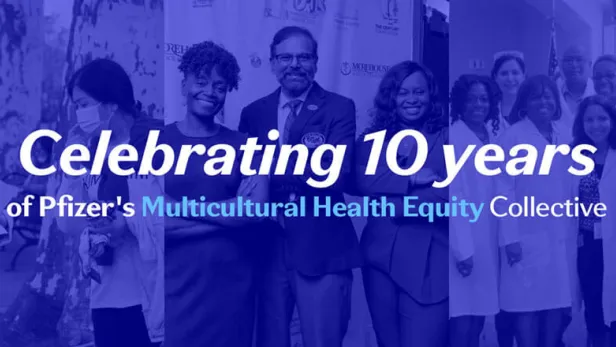
Pfizer's Multicultural Health Equity Collective Marks 10 Years of Progress
Marginalized communities in the United States have faced generations of health inequities due to systemic discrimination embedded into our healthcare system.
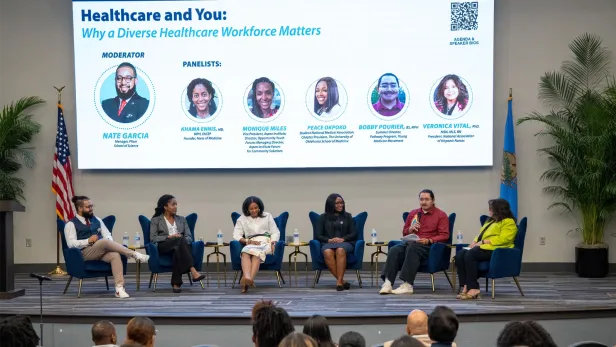
2024 Health Equity in Action Summit: Communities Forward
“We’re in a moment of unprecedented progress, an ever-expanding movement to achieve racial and health equity,” stated Dr. Gail Christopher, Executive Director of...
- References
ihttps://pmc.ncbi.nlm.nih.gov/articles/PMC2384992/
iihttps://www.commonwealthfund.org/publications/issue-briefs/2024/jun/insights-us-maternal-mortality-crisis-international-comparison#:~:text=In%202022%2C%20there%20were%2022,deaths%20per%20100%2C000%20live%20births.
iiihttps://www.cdc.gov/nchs/data/hestat/maternal-mortality/2023/Estat-maternal-mortality.pdf
ivhttps://www.yalemedicine.org/news/maternal-mortality-on-the-rise