- Home
- Science
- Diseases & Conditions
- Non-Hodgkin Lymphoma
What is Non-Hodgkin Lymphoma?
Non-Hodgkin lymphoma (NHL) is a type of cancer that starts in the lymphatic system. In healthy individuals, the lymphatic system helps the body fight bacteria and other infections.1
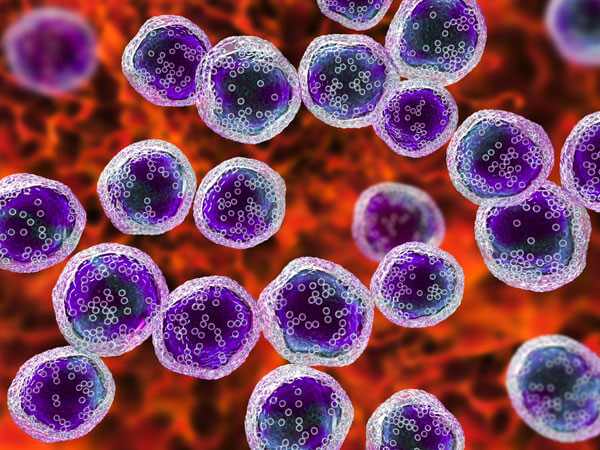
Lymph nodes, the spleen, thymus gland, bone marrow, and tonsils all help make up the lymphatic system.1 Thin tubes running throughout the body connect parts of the lymphatic system to each other. Within this system, lymphocytes, a type of white blood cell, circulate freely in a fluid called lymph.13 There are two main types of lymphocytes: B lymphocytes (B cells) and T lymphocytes (T cells). Most forms of non-Hodgkin lymphoma begin in B cells.1 NHL may also begin in cells called natural killer cells.2
Non-Hodgkin lymphoma is one of two main types of lymphoma. The other is Hodgkin’s lymphoma (HL).1 NHL isn’t one single disease—instead, research suggests there are at least 86 different subtypes of NHL. This type of cancer may be slow-growing (indolent) or fast-growing (aggressive).3 Treatment depends heavily on the type of NHL that’s diagnosed.1
In most cases, NHL affects people aged 65-74. The median age at diagnosis is 67 years, but anyone, including children, can develop this form of cancer. When diagnosed in children, it’s usually between the ages of 4 and 7 years old.2
A variety of risk factors may increase a person’s likelihood of developing the disease, including:5
- Age
- Biological sex
- Race/ethnicity
- Geographical location
- Family history
- Exposure to certain drugs, chemicals, or radiation
- Weakened immune system
- Certain types of infections
- Body weight
- Breast implants
Treatment for NHL depends on the type of non-Hodgkin lymphoma that’s diagnosed. In most cases, treatment includes one or more therapies, such as chemotherapy, radiation therapy, immunotherapy, stem cell transplant, and, in rare cases, surgery.2
Prevalence of Non-Hodgkin Lymphoma
In the U.S., non-Hodgkin lymphoma is the seventh most common cancer among adults.3 It’s also the fifth most diagnosed cancer occurring in children under the age of 15.2 According to the American Cancer Society, an estimated 80,350 people will receive a diagnosis of NHL in 2025.4
Since 2015, incidence rates for NHL have declined by about 1 percent. From 2013 to 2022, the death rate from the disease dropped about 2 percent each year.4
Causes and Risk Factors
What Causes Non-Hodgkin Lymphoma?

The exact causes of NHL are unknown, but scientists theorize that it results from certain genetic changes. It may also result from immune system changes, such as a weakened immune system, chronic infections, or a coexisting autoimmune disease.6
Non-Hodgkin Lymphoma and Genetics
Research suggests that a family history of NHL may increase a person’s risk of the disease. However, most individuals who develop this type of cancer don’t have any family members who also have it.6
Instead of being inherited, or passed on through families, genetic changes usually occur on their own throughout life. This may happen due to exposure to radiation, or certain chemicals or infections. In many cases, there is no clear reason for these changes.6
Non-Hodgkin Lymphoma Risk Factors
A risk factor is something that increases the likelihood of developing a specific medical condition like NHL. However, just because a person has a risk factor, it’s not a guarantee they will develop that condition. Known risk factors for non-Hodgkin lymphoma include:5
- Age
- Biological sex
- Race
- In the U.S., white people are more likely to develop NHL compared to those of African or Asian descent
- Ethnicity
- Geographical location
- NHL occurs more frequently in developed countries. The U.S. and Europe have some of the highest rates of NHL.
- Family history
- Exposure to certain drugs, chemicals, or radiation
- Autoimmune disorders
- Weakened immune system
- Certain infections
- Human T cell lymphotropic virus (HTLV-1)
- Epstein-Barr virus (EBV)
- Human herpes virus 8 (HHV-8)
- HIV/AIDS
- Hepatitis C virus (HCV)
- Some bacterial infections (Helicobacter pylori, Chlamydophila psittaci, and Campylobacter jejuni)
- Body weight
- Breast implants
Non-Hodgkin Lymphoma and Environmental Risk Factors
Scientists are still exploring the possible link between NHL and various environmental risk factors. Although evidence is limited, some environmental risk factors that might increase the risk of certain subtypes of NHL include:
- Alcohol consumption7
- Cigarette smoking7
- Hay fever7
- Use of hair dye7
- Consumption of red and processed meat7
- Exposure to certain chemicals such as benzene, trichloroethylene, and pesticides8
- Exposure to radiation9
Non-Hodgkin Lymphoma Prevention
Unfortunately, there is no guaranteed way to prevent non-Hodgkin lymphoma. However, you can lower your risk by maintaining a healthy immune system, staying at a healthy weight, exercising regularly, and eating a well-balanced diet.9
Types of Non-Hodgkin Lymphoma
Doctors determine which NHL subtype a person has by looking at specific histological information, including the lymphoma cells’ appearance, genetic features, and the presence or absence of certain proteins on the cancer cells’ surface. NHL subtypes are classified according to the type of cell the cancer originated from (B cells, T cells, or natural killer cells).10 Around 85 percent of NHL cases in the US first start forming in B cells.11
Doctors further classify subtypes into two main categories, indolent and aggressive. The type depends on how the cancer grows.10
- Indolent lymphomas are typically slow-growing and people usually have fewer symptoms at diagnosis. They account for around 40 percent of NHL cases. Follicular lymphoma (FL) is the most common indolent NHL subtype.10
- Aggressive lymphomas grow quickly and make up about 60 percent of NHL cases. Diffuse large B cell lymphoma (DLBCL) is the most common aggressive NHL subtype.10
B cell lymphomas are the most common type of non-Hodgkin lymphoma diagnosed. Some examples of indolent B cell lymphoma include:11
- Follicular lymphoma
- Chronic lymphocytic leukemia (CLL)
- Small lymphocytic lymphoma (SLL)
- Marginal zone lymphoma
- Mucosa-associated lymphoid tissue (MALT) lymphoma
- Nodal marginal zone B-cell lymphoma Splenic marginal zone B-cell lymphoma Lymphoplasmacytic lymphoma
- Hairy cell leukemia
Examples of aggressive B cell lymphoma include:10,11
- Diffuse large B cell lymphoma
- Burkitt lymphoma
- Primary central nervous system lymphoma
- Lymphoblastic lymphoma
- Primary mediastinal large B cell lymphoma
- Mantle cell lymphoma
Lymphomas may also arise from T cells and natural killer (NK) cells. However, these forms of NHL are rarer, accounting for only 10-15 percent of diagnoses in the U.S. Some examples include:10,12

- T-lymphoblastic lymphoma/leukemia
- Peripheral T cell lymphoma
- Anaplastic large cell lymphoma
- Hepatosplenic T cell lymphoma
- Cutaneous T cell lymphoma
Non-Hodgkin Lymphoma Symptoms

Symptoms of NHL vary from person to person, and some symptoms resemble those of other, less serious medical conditions. If you have any concern about symptoms you may have, you should check with your doctor. Common symptoms include:13
- Unexplained fever
- Fatigue
- Itchy skin
- Drenching night sweats
- Skin rash
- Swollen lymph nodes in the neck, armpit, stomach, or groin
- Unexplained pain in the abdomen, chest, or bones
- Unexplained weight loss
Some people also experience long-term complications of NHL even after the disease has been cured. Complications may happen due to the disease itself or from the various treatment options. Common complications include:13,14
- Heart or lung disease at a younger age than normal
- Infertility
- Loss of bone density
- Neuropathy
- Secondary cancers
- Weakened immune system
Diagnosis and Treatment
Non-Hodgkin Lymphoma Diagnosis
Doctors use several different types of tests to accurately diagnose NHL, including a physical examination and a lymph node biopsy.13,15 During a lymph node biopsy, doctors remove a portion or all of a lymph node, which is then examined for cancer cells in a laboratory.13 This is the only test that confirms a non-Hodgkin lymphoma diagnosis.15
If a lymph node biopsy reveals cancer cells, other tests may be ordered, such as:13
- Immunohistochemistry
- Cytogenetic analysis
- Immunophenotyping
- Fluorescence in situ hybridization (FISH)
Your doctor may deem it necessary to perform other tests to help in the diagnostic and staging process. Those tests may include:13
- Blood tests to check for coexisting medical conditions
- Bone marrow aspiration and biopsy
- PET and/or CT scan
Staging non-Hodgkin Lymphoma
Following a diagnosis, doctors work to determine the stage of the cancer. The stage helps the care team know if the cancer has spread beyond its origin point and, if so, how far it’s advanced.16
The Lugano classification system describes each stage non-Hodgkin lymphoma could be. There are four stages:16
- Stage I: Non-Hodgkin lymphoma is only in one lymph node, in one lymph organ like the tonsils, or only in one area of a single organ that doesn’t belong to the body’s lymph system.
- Stage II: NHL is present in two or more lymph nodes on the same side of the diaphragm, a muscle separating the chest cavity from the abdomen. NHL may also be Stage II if it’s in a group of lymph nodes and in one nearby organ.
- Stage III: NHL is in lymph nodes above and below the diaphragm. Or, doctors find NHL in the lymph nodes above the diaphragm and in the spleen.
- Stage IV: The most advanced stage of NHL occurs when lymphoma cells have spread widely into another organ that’s not part of the lymphatic system, such as the liver, lungs, or bone marrow.
Doctors also determine whether to classify NHL as bulky. This term refers to large tumors inside the chest. For people with Stage II NHL, knowing whether the disease is bulky or not can help guide treatment decisions.16
Non-Hodgkin Lymphoma in Children
While this type of cancer primarily affects older adults, NHL can also develop in children. In most cases, a child receives a NHL diagnosis between the ages of 4 and 7 years. NHL is also the fifth most commonly diagnosed childhood cancer in children under 15 years old.2
Just as there are several subtypes of NHL in adults, there are subtypes of NHL that occur in children. The most common variants of NHL in pediatric populations are:17
- Lymphoblastic lymphoma (LBL): LBL makes up about 20 percent of childhood NHL cases. People assigned male at birth are about twice as likely to develop LBL.
- Burkitt lymphoma: This subtype makes up about 40 percent of NHL cases in children and teens. People assigned male at birth are more likely to develop Burkitt lymphoma.
- Diffuse large B cell lymphoma (DLBCL): This subtype of NHL accounts for approximately 15-20 percent of childhood cases. It’s more likely to occur in older children and teens.
- Anaplastic large cell lymphoma (ALCL): ALCL makes up about 10 percent of childhood NHL cases, but it tends to develop in older children and teens. It’s usually slower growing and isn’t as likely to spread to the bone marrow or brain.
Doctors consider each of these subtypes as aggressive forms of NHL. They must be treated quickly.17 Because it can reach cancer cells anywhere in the body, chemotherapy is usually the main treatment recommended for a child with NHL. Other kinds of treatments, like surgery or stem cell transplant, may be used in certain situations.18
Non-Hodgkin Lymphoma Treatment
When deciding how to treat non-Hodgkin lymphoma, the subtype that’s diagnosed is especially important for determining which therapies might work best. There are several different treatment options used for NHL, such as chemotherapy, radiation therapy, immunotherapy, targeted therapy, stem cell transplant, surgery, and watchful waiting.13
- Chemotherapy
A mainstay of treatment, chemotherapy may be used alone or in combination with other therapies. This type of treatment uses powerful medicines to kill cancer cells or prevent them from growing.19
There are many different chemotherapy medications, and the ones used depend on the type and stage of NHL. Some examples of chemotherapy drugs for NHL include:19
- Alkylating agents like cyclophosphamide and bendamustine
- Corticosteroids like prednisone or dexamethasone
- Platinum drugs like cisplatin and oxaliplatin
- Purine analogs such as fludarabine and pentostatin
- Anti-metabolites such as cytarabine and gemcitabine
- Anthracyclines including doxorubicin and liposomal doxorubicin
- Other medications that might be used include vincristine, mitoxantrone, etoposide, and bleomycin
- Radiation therapy
As a treatment, radiation therapy uses high-energy particles to kill cancer cells. This type of treatment might be used as a main form of treatment if certain types of NHL are found early enough. In most cases, people receive external beam radiation (radiation delivered from a source outside the body). A typical treatment course is five days a week over the span of several weeks.20
- Immunotherapy
This type of treatment helps boost the body’s own immune system, allowing it to better identify and attack cancer cells. There are several different types of immunotherapy medications.21
- Monoclonal antibodies: These human-made proteins help the immune system fight cancer. They attack specific cellular targets, such as certain proteins on the cancer cell’s surface.
- Bispecific antibodies: A newer form of immunotherapy treatment, these medicines target both T cells, a part of the immune system, and cancer cells. These medications then bring the two together, allowing the T cells of the immune system to mount an attack against the cancer cells.
- Immune checkpoint inhibitors: In the immune system, certain proteins act as “checkpoints” to either start or stop an immune system response. Some types of NHL take advantage of these checkpoints and turn them on or off to prevent an immune system attack.
- Immunomodulating drugs: Doctors don’t know exactly how these medications work, but it’s thought that they work against cancer by affecting part of the immune system.
- Chimeric antigen receptor (CAR) T-cell therapy: For this type of treatment, doctors remove some of the patient’s own T cells to add specific receptors (CARs) onto the cells’ surface. CARs, in turn, attach to proteins located on the surface of cancer cells. Scientists multiply the changed T cells and then give them back to the patient intravenously (IV). This prompts an immune system response against cancer cells.
- Antibody-drug conjugates: This newer form of cancer therapy combines monoclonal antibodies with specific chemotherapy drugs. When used, the antibody delivers chemotherapy directly to cancer cells by binding to certain cell surface proteins.22
- Targeted therapy
Researchers developed these medications to specifically target changes in lymphoma cells that help them grow. There are many different types of targeted therapy medications. Some examples include:23
- Proteasome inhibitors like bortezomib
- Histone deacetylase (HDAC) inhibitors like belinostat
- Bruton tyrosine kinase (BTK) inhibitors like ibrutinib and acalabrutinib
- Phosphatidylinositol 3-kinases (PI3K) inhibitors such as duvelisib
- EZH2 inhibitors such as tazemetostat
- Nuclear export inhibitors like selinexor
- Stem cell transplant
A stem cell transplant is a complex procedure that uses stem cells collected either from the patient (autologous transplant) or a donor (allogeneic transplant). After collection, the stem cells are frozen and stored until they are eventually given back to the patient through an IV. In most cases, stem cell transplants are autologous. This procedure may also allow doctors to use higher doses of chemotherapy and, in some cases, radiation therapy.24
- Surgery
Typically, doctors only use surgery when lymphomas begin to grow outside the lymphatic system, such as in the thyroid or stomach. However, it’s only used when cancer hasn’t spread beyond those organs.25
- Watchful waiting
Some types of NHL don’t grow quickly and may not cause any noticeable symptoms or other issues. If this occurs, your doctor may suggest watchful waiting to help avoid side effects commonly associated with other treatments like chemotherapy. During watchful waiting, you’ll have regular checkups with your healthcare team to closely monitor whether NHL is growing faster or spreading. These checkups may include physical examinations or blood work as needed.26
- Plasmapheresis
This treatment isn’t directed at NHL itself: instead, doctors suggest plasmapheresis to help reverse some of the acute symptoms, like hyperviscosity (thickening of the blood), that can occur in certain subtypes of NHL. If recommended, doctors separate a blood component called plasma from the rest of the blood, which is then returned to the patient.27
- Antibiotic therapy
Doctors use antibiotics alongside proton pump inhibitors (which prevent stomach acid secretion) for early-stage gastric MALT lymphomas.28

Global Impact of Non-Hodgkin Lymphoma

Currently, Non-Hodgkin lymphoma is the fifth to ninth most common cancer occurring in most countries around the world. NHL is more common in developed countries, with the highest incidence rates occurring in the United States, Australia, the United Kingdom, Israel, and Belgium.29
Scientists have linked certain subtypes of NHL to infections that commonly occur in specific parts of the world, such as Japan, the Caribbean region, and parts of Africa. An estimated 779,000 new cases of NHL will be diagnosed globally in 2040, representing a 43 percent increase from 2020.29
Frequently Asked Questions About Non-Hodgkin Lymphoma
- What is lymphoma?
Lymphoma is a type of cancer that forms in the lymphatic system. Non-Hodgkin lymphoma is one of the two main types of lymphoma: the other is Hodgkin’s lymphoma.1,2
- What is Non-Hodgkin lymphoma?
Non-Hodgkin lymphoma (NHL) is a term for a broad group of blood cancers that arise in the lymphatic system. There are many different subtypes of NHL, some of which are slow-growing while others are more aggressive.1
- What are the symptoms of non-Hodgkin lymphoma?
Some of the more common symptoms of NHL include:13
- Unexplained fever
- Fatigue
- Itchy skin
- Drenching night sweats
- Skin rash
- Swollen lymph nodes in the neck, armpit, stomach, or groin
- Unexplained pain in the abdomen, bones, or chest
- Unexplained weight loss
- If I’m diagnosed, where do I begin?
Doctors use several different kinds of tests to accurately diagnose and stage NHL. These tests also help plan treatment. Your doctor may recommend blood tests, biopsies, bone marrow aspiration, PET and/or CT scan, physical examination, and tests for infections like HIV and hepatitis.13,15
A lymph node biopsy is essential for accurately diagnosing what subtype of NHL a person has.15 Treatment is highly dependent on the subtype. While chemotherapy is a mainstay of treatment, other options may include radiation therapy, immunotherapy, targeted therapy, stem cell transplant, surgery, and watchful waiting.13
- How do I get screened for non-Hodgkin lymphoma?
Currently, there is no widely recommended screening test for NHL.31
- Is non-Hodgkin lymphoma contagious?
No, it is not possible to catch NHL from another person.31
Learn More About Non-Hodgkin Lymphoma
Find a Pfizer trial for non-Hodgkin lymphoma at PfizerClinicalTrials.com
Explore non-Hodgkin lymphoma clinical trials at ClinicalTrials.gov
Area of Focus: Oncology
Non-Hodgkin Lymphoma is a focus area for Pfizer Oncology. To learn more about how we’re accelerating breakthroughs to outdo cancer, visit the Oncology page.
Find resources for those living with cancer and their caregivers at This is Living with Cancer.
- References
- What is non-Hodgkin lymphoma? American Cancer Society. https://www.cancer.org/cancer/types/non-hodgkin-lymphoma/about/what-is-non-hodgkin-lymphoma.html. Updated February 15, 2024. Accessed July 11, 2025.
- Sapkota S, Shaikh H. Non-hodgkin lymphoma. StatPearls. National Library of Medicine. https://www.ncbi.nlm.nih.gov/books/NBK559328/. Updated February 24, 2023. Accessed July 11, 2025.
- Non-Hodgkin lymphoma. Lymphoma Research Foundation. https://lymphoma.org/understanding-lymphoma/aboutlymphoma/nhl/. Accessed July 11, 2025.
- Key statistics for non-Hodgkin lymphoma. American Cancer Society. https://www.cancer.org/cancer/types/non-hodgkin-lymphoma/about/key-statistics.html. Updated January 16, 2025. Accessed July 11, 2025.
- Non-Hodgkin lymphoma risk factors. American Cancer Society. https://www.cancer.org/cancer/types/non-hodgkin-lymphoma/causes-risks-prevention/risk-factors.html. Updated February 15, 2024. Accessed July 11, 2025.
- What causes non-Hodgkin lymphoma? American Cancer Society. https://www.cancer.org/cancer/types/non-hodgkin-lymphoma/causes-risks-prevention/what-causes.html. Updated February 15, 2024. Accessed July 11, 2025.
- Shi X, Zhuo H, Du Y, Nyhan K, Ioannidis J, Wallach JD. Environmental risk factors for non-Hodgkin lymphoma: umbrella review and comparison of meta-analyses of summary and individual participant data. BMJ Medicine. 2022;1(1):e000184.
- Francisco LFV, Silva RN da, Oliveira MA, et al. Occupational exposures and risks of non-hodgkin lymphoma: a meta-analysis. Cancers. 2023;15(9):2600.
- Can non-Hodgkin lymphoma be prevented? American Cancer Society. https://www.cancer.org/cancer/types/non-hodgkin-lymphoma/causes-risks-prevention/prevention.html. Updated February 15, 2024. Accessed July 11, 2025.
- NHL subtypes. Leukemia & Lymphoma Society. https://www.lls.org/lymphoma/non-hodgkin-lymphoma/nhl-subtypes. Accessed July 11, 2025.
- Types of B-cell lymphoma. American Cancer Society. https://www.cancer.org/cancer/types/non-hodgkin-lymphoma/about/b-cell-lymphoma.html. Updated February 15, 2024. Accessed July 11, 2025.
- Types of T-cell lymphoma. American Cancer Society. https://www.cancer.org/cancer/types/non-hodgkin-lymphoma/about/t-cell-lymphoma.html. Updated February 15, 2024. Accessed July 11, 2025.
- Non-Hodgkin lymphoma treatment (PDQ®) – patient version. National Cancer Institute. July 11, 2025https://www.cancer.gov/types/lymphoma/patient/adult-nhl-treatment-pdq. Updated August 22, 2024. Accessed March 1, 2025.
- Complications: Non-Hodgkin lymphoma. National Health Service (NHS). https://www.nhs.uk/conditions/non-hodgkin-lymphoma/complications/. Updated June 20, 2022. Accessed July 11, 2025.
- Diagnosis. Leukemia & Lymphoma Society. https://www.lls.org/lymphoma/non-hodgkin-lymphoma/diagnosis. Accessed July 11, 2025.
- Non-Hodgkin lymphoma stages. American Cancer Society. https://www.cancer.org/cancer/types/non-hodgkin-lymphoma/detection-diagnosis-staging/staging.html. Updated February 15, 2024. Accessed July 11, 2025.
- Types of non-Hodgkin lymphoma in children. American Cancer Society. https://www.cancer.org/cancer/types/childhood-non-hodgkin-lymphoma/about/types-non-hodgkin-children.html. Updated August 10, 2021. Accessed July 11, 2025.
- Treating non-Hodgkin lymphoma in children. American Cancer Society. https://www.cancer.org/cancer/types/childhood-non-hodgkin-lymphoma/treating.html. Accessed July 11, 2025.
- Chemotherapy for non-Hodgkin lymphoma. American Cancer Society. https://www.cancer.org/cancer/types/non-hodgkin-lymphoma/treating/chemotherapy.html. Updated February 15, 2024. Accessed July 11, 2025.
- Radiation therapy for non-Hodgkin lymphoma. American Cancer Society. https://www.cancer.org/cancer/types/non-hodgkin-lymphoma/treating/radiation-therapy.html. Updated February 15, 2024. Accessed July 11, 2025.
- Immunotherapy for non-Hodgkin lymphoma. American Cancer Society. https://www.cancer.org/cancer/types/non-hodgkin-lymphoma/treating/immunotherapy.html. Updated June 18, 2025. Accessed July 11, 2025.
- Sbihi AA, Alasfour M, Pongas G. Innovations in antibody-drug conjugate (ADC) in the treatment of lymphoma. Cancers. 2024;16(4):827.
- Targeted drug therapy for non-Hodgkin lymphoma. American Cancer Society. https://www.cancer.org/cancer/types/non-hodgkin-lymphoma/treating/targeted-therapy.html. Updated January 22, 2025. Accessed July 11, 2025.
- High-dose chemotherapy and stem cell transplant for non-Hodgkin lymphoma. American Cancer Society. https://www.cancer.org/cancer/types/non-hodgkin-lymphoma/treating/bone-marrow-stem-cell.html. Updated February 15, 2024. Accessed July 11, 2025.
- Surgery for non-Hodgkin lymphoma. American Cancer Society. https://www.cancer.org/cancer/types/non-hodgkin-lymphoma/treating/surgery.html. Updated February 15, 2024. Accessed July 11, 2025.
- Watchful waiting for non-Hodgkin lymphoma. Canadian Cancer Society. https://cancer.ca/en/cancer-information/cancer-types/non-hodgkin-lymphoma/treatment/watchful-waiting. Accessed July 11, 2025.
- Treatment for indolent NHL subtypes. Leukemia & Lymphoma Society. https://www.lls.org/lymphoma/non-hodgkin-lymphoma/nhl-subtypes/treatment-indolent-nhl-subtypes. Accessed July 11, 2025.
- Treating B cell non-Hodgkin lymphoma. American Cancer Society. https://www.cancer.org/cancer/types/non-hodgkin-lymphoma/treating/b-cell-lymphoma.html. Updated January 22, 2025. Accessed July 11, 2025.
- Sedeta E., Ilerhunmquwa N., et al. Epidemiology of non-Hodgkin lymphoma: Global patterns of incidence, mortality, and trends. Blood. 2022;140(1):5234-5235.
- What is Hodgkin lymphoma? American Cancer Society. https://www.cancer.org/cancer/types/hodgkin-lymphoma/about/what-is-hodgkin-disease.html. Updated May 1, 2018. Accessed July 11, 2025.
- Can non-Hodgkin lymphoma be found early? American Cancer Society. https://www.cancer.org/cancer/types/non-hodgkin-lymphoma/detection-diagnosis-staging/detection.html. Updated February 15, 2024. Accessed July 11, 2025.
- Causes and risk factors for lymphoma. Lymphoma Action. https://lymphoma-action.org.uk/about-lymphoma-what-lymphoma/causes-and-risk-factors-lymphoma. Accessed July 18, 2025.
The information contained on this page is provided for your general information only. It is not intended as a substitute for seeking medical advice from a healthcare provider. Pfizer is not in the business of providing medical advice and does not engage in the practice of medicine. Pfizer under no circumstances recommends particular treatments for specific individuals and in all cases recommends consulting a physician or healthcare center before pursuing any course of treatment.