Making Progress Against Cancer - From Cancer Research to Prevention and Screening
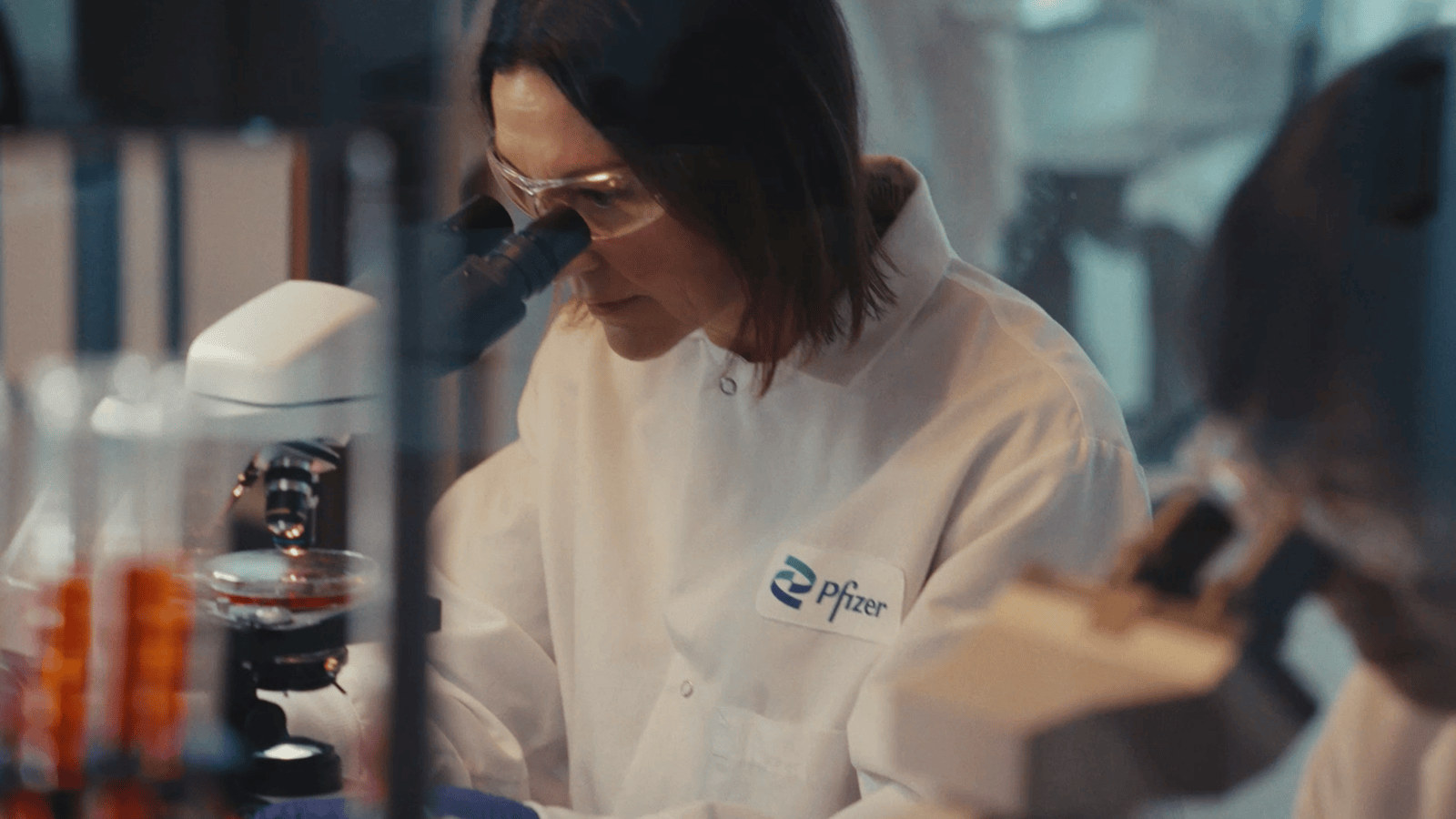
Advances in cancer care often begin with incremental steps in the lab that, over time, have the power to drive transformative breakthroughs. That’s why scientists are working around the clock to develop potential treatments that could help patients live longer, healthier lives. At Pfizer, Sharsti Sandall is one of those scientists.
An executive director in Pfizer’s oncology research division, Sandall leads the antibody drug conjugate (ADC) group, which is a targeted treatment that delivers cancer-killing drugs directly to tumors. “People often think of them as really smart drugs,” says Sandall in a recent Pfizer video.
Sandall went on to share that she and her colleagues think about patients in everything they do, whether they’re reading scientific papers, testing ideas or performing experiments that may lead to new treatments. “I work with an amazing group of people who have dedicated their life to science,” says Sandall. “They show up with a smile on their face every day and stay late at night trying to make those experiments mean something.”
While scientists like Sandall work tirelessly with the goal of developing new and more effective cancer treatments, the most powerful tools in the fight against cancer are lifestyle changes and prevention and early detection through certain screenings.1
In observation of Cancer Prevention and Early Detection Month, April is a fitting time to make an action plan. Here are seven steps to take that may help prevent or reduce your risk of developing cancer and assist in detecting it in its early stages when it may be easier to treat.
- Quit smoking. Nearly 80% of lung cancers and 20% of all cancers are caused by smoking tobacco.2 Tobacco smoke contains thousands of chemicals, at least 70 of which are known to cause cancer.3 If you need help quitting, talk to your doctor, or visit smokefree.gov for support.
- Protect your skin from the sun. Skin cancer is the most common type of cancer in the U.S.4 It’s also highly preventable. Shield your skin by wearing broad-spectrum, water-resistant sunscreen (SPF 30 or higher); seeking shade when the sun’s rays are strongest, especially between 10 a.m. and 2 p.m.; and wearing sun-protective clothing, including sunglasses and a wide-brimmed hat.5 Also, if you notice a spot on your skin that looks different than other areas, or has changed in appearance, or if it itches or bleeds, make an appointment with a dermatologist.6
- Choose healthy foods. How you eat may impact your risk for cancer. Prioritize eating whole grains, beans, vegetables, fruits and lean proteins over highly processed, sugary foods. Also, limit red meat and processed meat (like bacon, hot dogs and lunch meat) in your diet. According to the American Cancer Society, processed meat has been linked to one in eight cases of colorectal cancer; and low fruit and vegetable consumption plays a role in nearly one in three cases of cancers in the mouth, throat, esophagus and voice box.7
- Move your body. Committing yourself to regular exercise may help keep you healthy by lowering your risk for a number of cancers, including those that impact the colon, breast, kidney, uterus, bladder, esophagus and stomach.7 The Physical Activity Guidelines for Americans recommend that adults get at least 150 to 300 minutes each week of moderate-intensity aerobic activity, like brisk walking or cycling, along with two days of muscle-strengthening activities.8
- Limit how much alcohol you drink. Research shows that even light to moderate drinkers may face higher risks of developing certain types of cancer.9 Be mindful of how much alcohol you consume and find ways to drink less of it. Try swapping in flavored sparkling water or non-alcoholic drinks.
- Vaccinate your children against human papillomavirus (HPV). HPV causes most cervical cancers and precancers, along with cancers of the anus, penis, vulva, vagina, mouth and throat.10 The HPV vaccine can help protect people from 90% of cancers that can be caused by an HPV infection as well as 90% of genital warts. It’s recommended for boys and girls ages 9 through 12; however, if your child is older than that, it can still be effective if given before age 26, so be sure to talk to your provider.10
- Schedule your cancer screenings. Being proactive matters: an estimated 30% to 50% of cancer cases may be preventable through lifestyle changes and screenings.1 Cancer screenings can help detect cancer early in areas like the breasts, cervix, colon, rectum, lungs and prostate, often before symptoms start.11 Talk to your doctor to determine when and how often you should be screened.
To date, cancer prevention and screenings have already saved millions of lives.12 Continued awareness is essential for improving health outcomes. As scientists like Sandall research the latest breakthroughs, it’s up to all of us to take steps to improve our health and lower our risks, so we can catch cancer early, when it matters most.
In an effort to do its part to educate on the importance of cancer screenings, Pfizer developed the PfizerForAll screening tool. This tool can help individuals determine what cancer screenings might be right for them based on age and history. Click here to learn more about this Pfizer-sponsored educational information related to cancer screening and care resources.
References:
- Ma, Z.-Q., & Richardson, L. C. Cancer screening prevalence and associated factors among US adults. Preventing Chronic Disease. National Center for Chronic Disease Prevention and Health Promotion. May 11, 2022. https://stacks.cdc.gov/view/cdc/120391. Accessed April 7, 2026.
- American Cancer Society. Health Risks of Smoking Tobacco. November 19, 2024. https://www.cancer.org/cancer/risk-prevention/tobacco/health-risks-of-smoking-tobacco.html. Accessed April 7, 2026.
- American Cancer Society. Harmful Chemicals in Tobacco Products. November 19, 2024. https://www.cancer.org/cancer/risk-prevention/tobacco/carcinogens-found-in-tobacco-products.html. Accessed April 20, 2026.
- MedlinePlus. Skin Cancer. August 9, 2025. https://medlineplus.gov/skincancer.html. Accessed April 7, 2026.
- American Academy of Dermatology. Practice Safe Sun. April 11, 2024. https://www.aad.org/public/everyday-care/sun-protection/shade-clothing-sunscreen/practice-safe-sun. Accessed April 7, 2026.
- American Academy of Dermatology. Find Skin Cancer: How to Perform a Skin Self-Exam. May 15, 2023. https://www.aad.org/public/diseases/skin-cancer/find/check-skin. Accessed April 7, 2026.
- American Cancer Society. How Diet and Physical Activity Impact Cancer Risk. October 21, 2025. https://www.cancer.org/cancer/risk-prevention/diet-physical-activity/how-diet-and-physical-activity-impact-cancer-risk.html. Accessed April 7, 2026.
- Office of Disease Prevention and Health Promotion. Top 10 Things to Know About the Second Edition of the Physical Activity Guidelines for Americans. November 19, 2025. https://odphp.health.gov/our-work/nutrition-physical-activity/physical-activity-guidelines/current-guidelines/top-10-things-know. Accessed April 7, 2026.
- Jun S, Park H, Kim UJ, Choi EJ, Lee HA, Park B, Lee SY, Jee SH, Park H. Cancer risk based on alcohol consumption levels: a comprehensive systematic review and meta-analysis. Epidemiol Health. October 16, 2023. https://pubmed.ncbi.nlm.nih.gov/37905315. Accessed April 7, 2026.
- American Cancer Society. HPV Vaccines. April 30, 2024. https://www.cancer.org/cancer/risk-prevention/hpv/hpv-vaccines.html. Accessed April 7, 2026.
- American Cancer Society. Guidelines for the Early Detection of Cancer. December 4, 2025. https://www.cancer.org/cancer/screening/american-cancer-society-guidelines-for-the-early-detection-of-cancer.html. Accessed April 7, 2026.
- National Institutes of Health. In five cancer types, prevention and screening have been major contributors to saving lives. December 5, 2024. https://www.nih.gov/news-events/news-releases/five-cancer-types-prevention-screening-have-been-major-contributors-saving-lives. April 7, 2026.