8 Lessons I’ve Learned as a Cancer Survivor
For most of my life I’ve lived by the belief that everything happens for a reason. The challenge is that I don’t always know what that reason is. That was certainly the case three years ago, when I was diagnosed with Leiomyosarcoma.
It took a long time for me to learn what was making me sick. After searching for answers, an MRI revealed a large tumor deep in my abdomen. Following surgery to remove it, I learned that I had a rare and aggressive cancer that grows in the body’s soft tissues. Still, it would be months before I used the word “cancer” myself. When I was starting chemotherapy, I explained to my young daughter that I was going to lose my hair. "Mom,” she said, “do you have cancer?" When I saw it in her eyes, it became real, and we both cried.
I’ve since gone through multiple treatments, and I’ve been participating in an immunotherapy clinical trial, where my personal experience has been encouraging so far. But the statistics for this kind of cancer are not favorable, and I’ve lived beyond what I initially expected, recognizing that every patient’s experience is different and personal.
While I’m still not clear on the reason for all of this, I’m finding meaning in sharing my story with others, in hopes that it might help someone navigating a role they never asked to play: cancer survivor. To that end, here are eight things that have helped me since my diagnosis.
- Mapping out my journey and clarifying what I need. Every patient needs different things. For some, it’s community, religion, or a supportive space to talk through their emotional burden. In my case, what really grounds me is my daughter, my family, my colleagues, and my work as a scientist at Pfizer. Despite the many obstacles, it's been important to me, and I’m very proud to continue to deliver research that drives our vaccine efforts forward. I give my condition the medical attention it needs, while I keep my focus on what matters most.
- Putting technology to work. I use AI to help me review, research, and summarize publicly available information regarding clinical trials, and I’ve found it helpful in making complex topics more accessible, but I still rely on my healthcare team for medical decisions. I could certainly go through all of that myself, but this isn't my field and it can be difficult to decipher. I also use AI as a sounding board in between sessions with my therapist. I know that I can communicate with AI without worrying about burdening it. That’s very different than the way I talk to my friends and family.
- Building my support network. Online communities have been incredibly insightful and helpful to me, in terms of individual treatment groups as well as groups for individual diseases or cancers. I’ve also found remarkable support through Pfizer’s Butterfly Club, which is an internal support group co-founded by cancer survivors. Early in my diagnosis, I was paired with another cancer survivor through an external support community, and that was also valuable.
- Approaching my healthcare appointments like a doctor would. I write down a list of questions to ask my doctor, and I have AI review those questions and add to them. Then, I commit to asking them all. Doctors are busy, and that can be hard, but it’s important. I tell people that if they don’t think they can ask all the questions, to bring someone with them who can. I also encourage people to seek a second opinion. Do not feel bad about hurting the doctor's feelings; instead, think about what that doctor would do if they were the patient. The doctors would likely get all the expert advice that they need and ask all the questions that occur to them. Every patient should feel the obligation to do the same for themselves.
- Listening to my nurses. Nurses are such an important resource. I see them more frequently than any of my doctors, and I’ve learned that when I do as they say, it works out well. When I was deciding whether to have a port inserted for treatment administration, I went straight to the nurses’ station and asked for their advice, which helped inform my decision, and I’ve never regretted it. When they see that you’re making decisions with them and that you value them, that will serve you well.
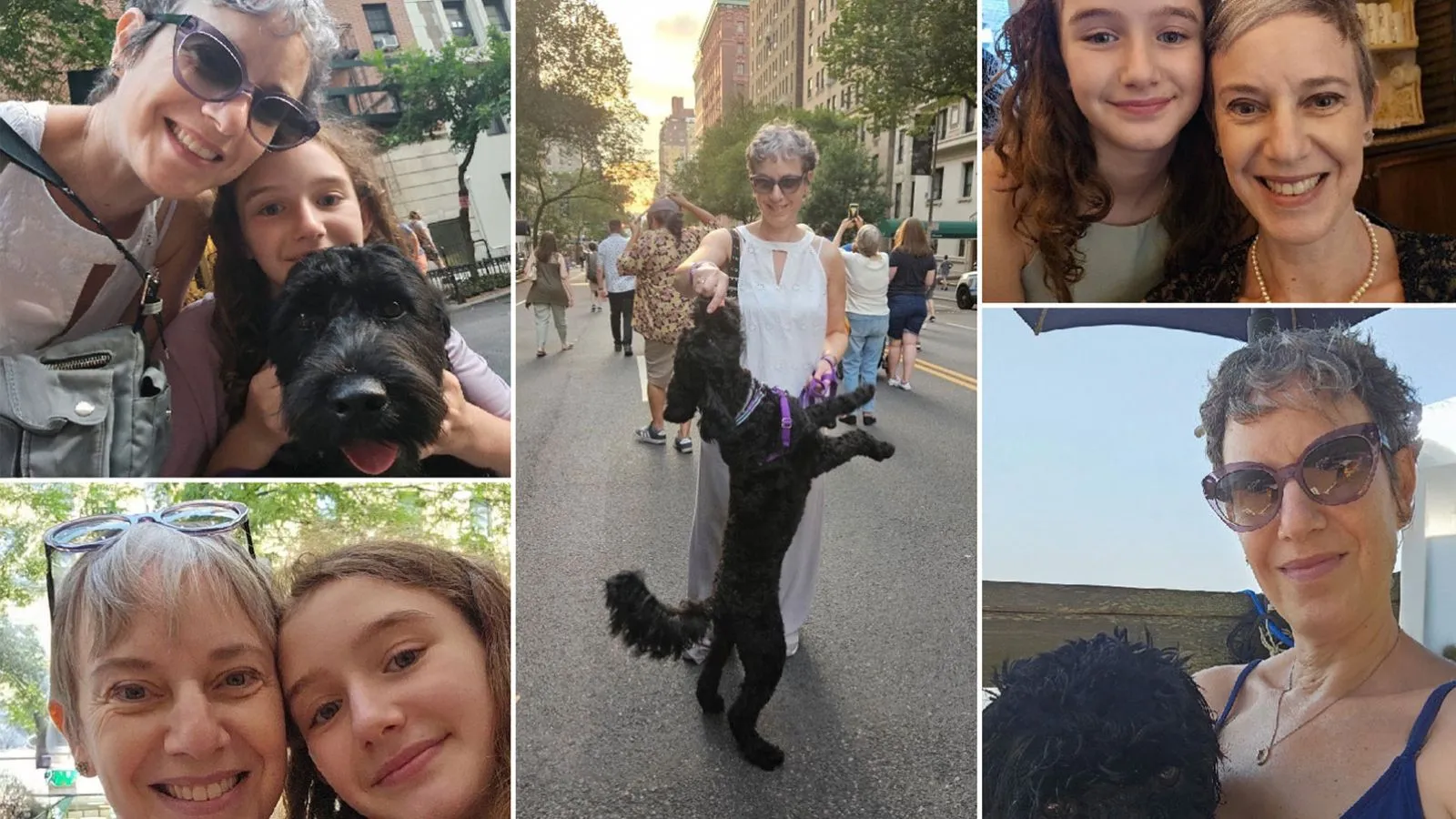
- Protecting my time. As a mom, I’m learning to establish clear boundaries between my work and my personal life. Now, I’m even more intentional about those boundaries. I adjust my work schedule so I can pick my daughter up from school, and that time brings me a lot of joy. Throughout the day, I put a block on my calendar for health breaks, so that I get up and walk around. And my dog — Coco Chanel — needs regular walks, which gets me outside and helps me engage with nature. The dog has been an amazing addition to my family. We got her as a puppy while I was going through chemo. I wasn’t sure it was the right decision at the time, but she’s been a strong support for me, my daughter, and even my mom when she visits.
- Finding the glimmers. Soon after my diagnosis, I read an article on glimmers versus triggers. Whereas triggers are associated with negative experiences, glimmers are positive. For example, I had a horrible commute to work the other day. I got on a train that wouldn’t move, and then I tried to get on the bus, but it was too packed, so I walked something like 20 blocks to the next train. And instead of focusing on the negative, I found the glimmer: “Gosh,” I said, “I’m so grateful it’s not raining right now.” It reset my whole day, and after that, everything went great. I try to remind myself to look for glimmers every day.
- Knowing what I’m fighting for. My daughter is my driving force. She’s what I am truly living for, and I remind myself of that every day. It’s really important to me that I see her get into college. It’s also important to me that I find things that I’m grateful for, and one of those things is that my daughter is healthy. I tell myself I’m grateful it’s me who has this disease, and not her. Because I just can’t live in a world where it’s her.