
'Science Has Kept Me Here': How Biomarker Research is Shaping the Future of Cancer Care
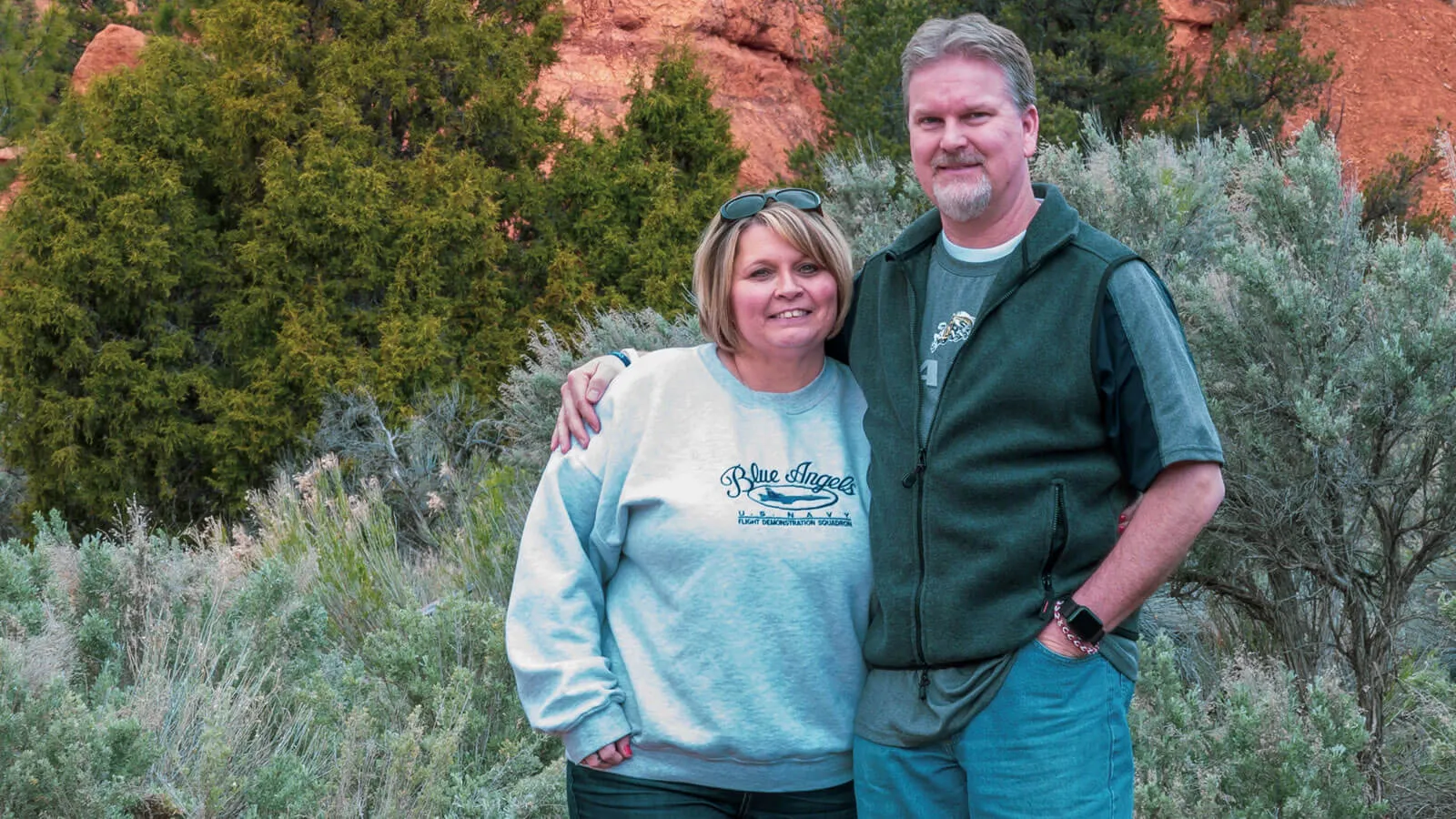
Debbie Pickworth developed a cough she couldn’t shake after a bout with bronchitis. She went to see her doctor multiple times, explaining that she was struggling to breathe, but nothing seemed to help.
Then, tests revealed the unthinkable: Debbie had lung cancer. She was 43 years old.
Lung cancer was nothing new to Debbie’s family. Just 16 years earlier, her mother died from the same disease; her grandmother also died from lung cancer. Now, Debbie was afraid she was on the same path. She thought about her husband and their four adult children, the youngest of whom was 22 years old. She thought about her two young grandchildren. She wondered how this could happen.
In the months that followed, she sought out a second opinion and had a battery of tests, including biomarker tests. She learned she had non-small cell lung cancer (NSCLC), and the biomarker tests revealed that she had a rare cancer mutation called BRAF V600E. Her doctor told her the cancer was stage 4, with a poor prognosis.
“I was told there were no targeted treatments available for this mutation at that time; however, there was a trial coming down the line,” she says. For about two years, she underwent chemotherapy. Then she joined a BRAF clinical trial and later had radiation.
Advancing targeted treatments
Around the world, lung cancer is the leading cause of cancer-related deaths,1 and 80 to 85% of lung cancers are NSCLC.2 The BRAF V600E mutation is found in about 1-2% of those cases.3 Historically, patients with this type of cancer had poor outcomes with standard chemotherapy. But developments in targeted treatments are now providing options.4
For more than a decade, Pfizer has been a leader in biomarker-directed lung cancer treatment.
“In any type of cancer, a tumor cell creates a kind of fingerprint called a biomarker,” says Karin Tollefson, Chief Oncology Medical Officer at Pfizer. “Biomarker testing can be an important tool to help doctors understand more about a patient’s cancer and may enable them to choose a treatment that is directed to the specific characteristics of a person’s cancer. It enables clinicians to move beyond treating cancer based only on a location to treating it based also on the unique molecular characteristics of the tumor. These therapies have the potential to extend lives.”
“Science has kept me here”
Today, as Debbie continues to receive treatment, she often thinks about what survival means. She’s grateful that in the years since her diagnosis, she’s had the opportunity to watch her family grow.
“I have been able to witness the birth of three more grandkids. Two of my kids have gotten married, and my youngest is engaged to be married,” she says. “To me, survival means I’m not missing out on this. It means that science is getting better than it was when my mom and my grandmother had lung cancer.”
She’s also found meaning in advocacy. Through her work with several organizations, Debbie shares her story, promotes lung cancer awareness, and encourages people to get screened for lung cancer. She also founded a non-profit organization, called BRAF Bombers, which aims to educate, empower, and engage patients with a BRAF mutation.
When she speaks to people who have recently been diagnosed with lung cancer, she encourages them to talk to their care team about biomarker testing. “Make sure you go to a hospital system that does research if you can, because they will be the ones who will do the testing for any biomarkers, not just the ones with available treatments,” she says. “And make sure you get a comprehensive biomarker test done.”
She’s also determined to correct misperceptions about lung cancer that can result in stigma and delayed or even missed diagnoses. Debbie grew up in a household of smokers and was exposed to secondhand smoke; however, she only smoked cigarettes sporadically as a teen, and it was never a habit.
Additionally, she worked in automotive industry factories, where she may have been exposed to toxic chemicals. Yet, she didn’t meet the guidelines for lung cancer detection screening, which recommend low-dose CT screening for people ages 50 to 80 who smoke or used to smoke and have a history of smoking the equivalent of a pack of cigarettes a day for 20 years, or two packs a day for 10 years.5 In fact, she had to advocate for herself to have a low-dose CT scan, which led to her diagnosis. “My hope for the future is that people quit seeing lung cancer as only a smoking disease that could have been avoided,” she says. In her advocacy, she reminds people that anyone with lungs can get lung cancer.
Debbie feels deeply thankful for the life she’s lived and looks ahead with hope. Her greatest wish is for a brighter future—not just for herself, but for her children and grandchildren. As a third-generation lung cancer patient, she’s determined to break the cycle.
“I am grateful every day for the time I’ve been given, but I’m selfish and want more time. I am not alone in this. This is not just my story. It’s everyone’s story who has been diagnosed with lung cancer. It’s every caregiver who walks through this journey with us. It’s every child who loses a parent to this disease,” she says. “Science has helped keep me here this long, and I am hoping it will keep me here a lot longer.”


