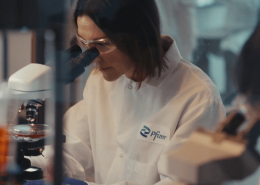
For this Pfizer Scientist, Cancer Research is Personal

For Shuo Wang, cancer research isn’t just a job - it’s personal.
Wang, a scientist in Pfizer’s oncology research unit, remembers when one of her close friends was diagnosed with stage four lung cancer shortly after giving birth to her second child. The experience happened early in her career, and deepened Wang’s determination to make a meaningful impact.
Wang and her team spend their days planning experiments, analyzing data, and working together to help advance cancer treatments. Along with researchers around the world, they’re making progress. A 2026 report published in “CA: A Cancer Journal for Clinicians” found that 4.8 million cancer deaths were averted between 1991 and 2023, thanks in part to breakthroughs and improved treatments.1
Still, it’s estimated that more than 2 million people will develop cancer in the United States in 2026.1
To continue making a difference for those impacted by cancer, Wang and other Pfizer scientists are focusing on three key modalities that could potentially improve outcomes for patients with cancer. Here’s a look at their work in small molecules, antibody drug conjugates (ADC’s) and non-ADC biologics called bispecific antibodies, as they work to bring about the next breakthroughs.
Small molecules
Small molecule drugs are a type of targeted therapy. They work by getting inside cancer cells and targeting proteins that control the way the cells grow and progress.2
Antibody-drug conjugates
ADCs can be described as special delivery drug units, because they’re designed to target tumors, while limiting damage to healthy cells.3
Bispecific antibodies
Bispecific antibodies help the body’s immune system destroy cancer cells.4 These therapeutics consist of two arms: one that attaches to cancer cells and one that attaches to immune cells. When the two cell types are pulled together, the immune system can more effectively respond to the cancer.5 Today, bispecific antibodies are a powerful tool that can target certain types of cancer, and Pfizer is developing the next wave to help treat patients.
When it comes to cancer, time is everything. That’s why scientists like Wang think about patients around the clock in their research. “We are giving 100 to 120% to make the breakthroughs that can change patients’ lives,” Wang shared in the video.
Learn more about how Pfizer is accelerating new medicines and bringing new hope to patients.