
How Innovative Diagnostics Are Supporting a Potential Approach to C. difficile
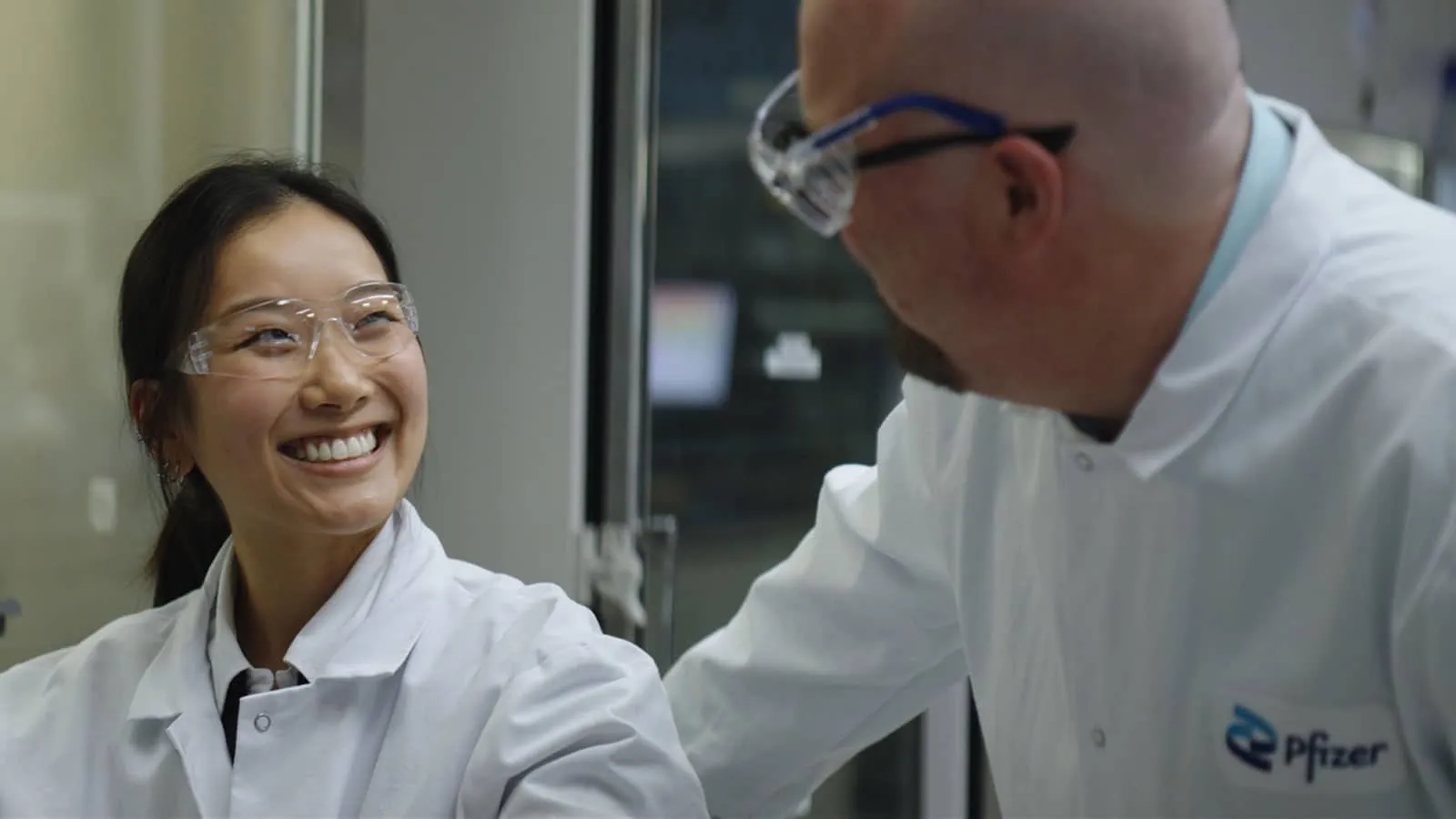
When scientists design a new vaccine candidate, they must also identify diagnostic tests that can be used to measure how effective that vaccine is. Those tests are often as unique and innovative as the vaccine candidate itself, says Michael Pride, Pfizer’s Vice President, Bacterial Vaccines.
“Just as there’s no one-size-fits-all-pathogens vaccine, every diagnostic test is different, depending on the organism you want to detect,” says Pride.
Recently, Pfizer developed and validated a test for use in a clinical trial that’s studying what could be the first vaccine to be used against Clostridioides difficile infection (CDI). The two-step test is the first of its kind used in the industry, and it’s designed to capture data that can help instill confidence in the vaccine candidate, now in Phase 3 clinical development and aimed at helping prevent the disease caused by C. difficile. “We’re using the most sensitive tests available, and that will give us an even deeper understanding of the effectiveness of our vaccine,” says Pride.
Understanding the infection
C. difficile is a type of bacteria that can exist relatively harmlessly in a person’s digestive system, specifically the intestines or colon. It is part of the normal gut bacteria flora of approximately 3-5% of the general population.1 Pride says that in healthy individuals, millions of "good" bacteria in the gut microbiome keep C. difficile levels under control, preventing it from causing harm. However, under certain conditions (e.g. older adults who have been treated with antibiotics, who have had long hospital stays, and/or have frequent visits to healthcare settings, among other risk factors), C. difficile bacteria release toxins that can cause mild or severe intestinal illness, sepsis or even death.1 Determining whether or not a person has CDI involves testing stool samples for the presence of C. difficile and toxins, alongside clinical diagnosis, says Pride. Therefore, to test the efficacy of Pfizer’s vaccine candidate, the Pfizer team needed to decide which diagnostic tests to use when working with the samples.
As a starting point, they spoke with various key opinion leaders and scoured research on the topic. One of the things they learned was that when patients tested positive for both C. difficile and the associated toxins in their stool, they were more likely to have longer-lasting and more severe disease, CDI-related complications, hospitalization, and death, compared to patients who tested positive for C. difficile alone.
“The outcome of two large independent studies revealed that detecting both C. difficile organisms and toxins is really a critical component of CDI diagnosis,” says Pride.2,3 Further, he says, different countries, including the U.S., have established guidelines based on those studies that recommend a two-step testing algorithm to confirm the presence of CDI. So, Pfizer incorporated this algorithm in support of its Phase 3 efficacy study.
Designing the diagnostics
In devising a precise diagnostic test, Pride knew that his team must first determine whether or not C. difficile organisms were present in a person’s stool sample. For that, they used a commercially available, FDA-approved polymerase chain reaction (PCR) test. Using that test, if a stool sample did indeed prove to be positive for the presence of C. difficile bacteria, then a second step was needed that would measure if any toxins were present. The most sensitive assay for detecting C. difficile toxins is called the cell cytotoxicity neutralization assay (CCNA), says Pride. However, this method has not been standardized and requires a fair amount of time and expertise to interpret the results. To address these issues and use this assay in a large Phase 3 efficacy study, Pride says scalability, accuracy and precision would be key. So Pfizer developed its own highly sensitive, automated CCNA test. “That sensitivity is important,” says Pride, “because you could potentially pick up more cases, or milder cases, as opposed to missing those infections altogether.”
Through this two-step process, researchers are now able to accurately determine who is positive for the presence of C. difficile (known as carriage), and who is positive for a C. difficile infection — a critical distinction. Previous vaccine efficacy studies, says Pride, have revolved around the first step but not the second.
“If we based our results on PCR tests alone, we wouldn’t be getting accurate results,” says Pride. “We’ve seen time and again that only a portion of those PCR positives are also toxin positive. And in this kind of research, it’s essential to know the difference.”
CDI is highly contagious and can be difficult to treat.4 A successful vaccine has the potential to help protect people from becoming severely ill—and could even save lives, says Pride. But before it can reach those who need it, research and testing are crucial. At Pfizer, designing innovative tools that prioritize precision is a critical part of the process.