How Pfizer Is Rethinking What’s Possible in Cancer Care
For people living with cancer and those who love them, every moment matters. Cancer remains one of the greatest healthcare challenges of our lifetime, and Pfizer is working with urgency to transform scientific advances into potential life-changing medicines.
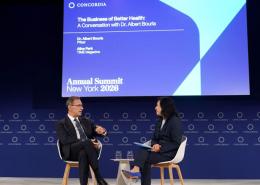
In a sponsored interview, Jeff Legos, Pfizer’s Chief Oncology Officer, sat down with Jessica Sibley, CEO of TIME, to discuss why this mission is personal for him, the responsibility he feels as Pfizer works toward its ambition of delivering eight cancer breakthroughs by 2030, and the role AI will play in the fight.
“It gives us the opportunity to take years, if not decades, of leadership, legacy, experience, expertise, and data across all cancers to be able to truly learn and ultimately predict what could be the next best molecule, scientific target, or possible medicine,” Legos says.
AI is already helping Pfizer researchers identify promising molecules and targets, while conducting simulations to help determine which clinical-trial approaches have the highest probability of success. Pfizer is also embedding AI into clinical-trial design and execution, with some processes that once took years happening roughly 50% faster, all for the benefit of patients.
“We have an enormous responsibility that we carry on our shoulders every single day. Patients are waiting and families are counting on us.”