Here’s How Pfizer is Fighting Cancer – and How You Can, Too

Every year on the fourth day of February, the world comes together to raise awareness of cancer and to encourage its prevention, detection, and treatment. It’s World Cancer Day.
Most of us are aware of cancer already. Cancer has touched many of us in deeply personal ways, through the diagnosis of a friend or family member, or even our own. Statistics prove the toll that cancer takes: One in five people around the world will develop cancer in their lifetime.1
This is why Pfizer is all-in on cancer research.
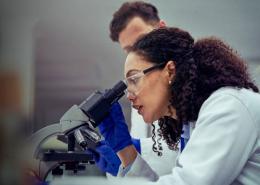
We’re fighting toward a big goal: eight cancer breakthroughs by 2030. But breakthroughs don’t happen all at once. Progress is a game of inches; breakthroughs are achieved through daily work and determination. Our fight includes more than 90 clinical trials at more than 4,000 study sites around the world, and more than 50 programs dedicated to creating new and more effective cancer treatments.
Every one of those trials and programs and eventual breakthroughs matters. And every day that we devote to this work, we bring ourselves closer to the next cancer breakthrough.
Breakthrough treatments are only part of the equation, however. Early detection remains one of our most powerful tools in the fight against cancer. Biomarker tests are another crucial element, which can allow doctors to match patients to advanced cancer treatments. Here are three actions you can take to learn more about Pfizer’s fight against cancer, and to discover how you can join us.
1. Contact your HCP to schedule your needed cancer screenings now.
Early detection is one of the most powerful ways to fight cancer. When a screening catches cancer early, the results speak for themselves: Early-stage treatments are more likely to slow the cancer’s growth or even to cure it.2 This is true for some of the most common types of cancer, including colorectal, lung, cervical, breast, and prostate. Some screenings can even detect growths before they become cancerous.3 Yet 65% of adults who are 21 years and older in the U.S. are behind on at least one cancer screening.4 (Screenings are for eligible patients and some screenings need a referral by an HCP.) And studies show Americans are more likely to be current on their car’s oil changes than they are on their cancer screenings.4 We want to make it easier for people to learn which screenings they need, to understand the importance of these screenings, and to know where to get them. This awareness and access will save lives.
You can find screening and scheduling information at PfizerForAll.com/Screenings
2. Learn about biomarker tests.
Biomarker tests are an exciting development in cancer research and treatments. Not all tumors behave the same way or respond to treatments similarly. For example, not all lung cancers should be treated with the same therapies, nor should all colon cancers. A biomarker test can reveal crucial information about a specific tumor type, which may give doctors the information they need to match the most effective treatment to a particular tumor.5
Biomarker testing can be helpful to people who don’t have cancer, too. These tests can analyze someone’s cancer risk, which would inform their screening recommendations.6
Prioritize your health and look into available biomarker testing at PfizerForAll.com
3. Share this information with your family and friends.
Awareness can be just as powerful as action. Many people fall behind on their cancer screenings simply because they don’t know where to start. Of those who are behind on their screenings, 43% reported that they didn’t understand that they needed to be screened.4 Others may not be aware of how important these screenings are.
After you check your own eligibility, reach out to someone you care about. Share the information. Start a conversation. Send a link to resources such as resources available at PfizerForAll.com. That small reminder could help them schedule a screening and could make a life-changing difference.
Every screening matters. Yours. And theirs. The sooner we join the fight against cancer, the sooner we will see results.
[1] Global Cancer Burden Growing, Amidst Mounting Need for Services. World Health Organization. Feburary 1, 2024. Accessed January 30, 2026. https://www.who.int/news/item/01-02-2024-global-cancer-burden-growing--amidst-mounting-need-for-services
[2] Cancer Screening Overview (PDQ) Patient Version. National Institutes of Health: National Cancer Institute. October 20, 2023. Accessed January 27, 2026. https://www.cancer.gov/about-cancer/screening/patient-screening-overview-pdq
[3] Screening Tests. National Institutes of Health: National Cancer Institute. September 27, 2024. Accessed January 26, 2026. https://www.cancer.gov/about-cancer/screening/screening-tests
[4] U.S. Adults Are Still Behind on Routine Cancer Screenings—But Reasons Why Vary by Race. Prevent Cancer Foundation. April 1, 2024. Accessed January 25, 2025. https://preventcancer.org/news/u-s-adults-are-still-behind-on-routine-cancer-screenings-but-reasons-why-vary-by-race/
[5] Biomarker Testing for Cancer Treatment. National Institutes of Health: National Cancer Institute. December 14, 2021. Accessed January 25, 2026. https://www.cancer.gov/about-cancer/treatment/types/biomarker-testing-cancer-treatment
[6] Biomarker Tests and Cancer Treatment. American Cancer Society. September 21, 2022. Accessed January 25, 2026. https://www.cancer.org/cancer/diagnosis-staging/tests/biomarker-tests.html