
Article
Featured Articles
Read our latest stories on the people and scientific innovations making a difference in patients’ lives.
Science & Innovation
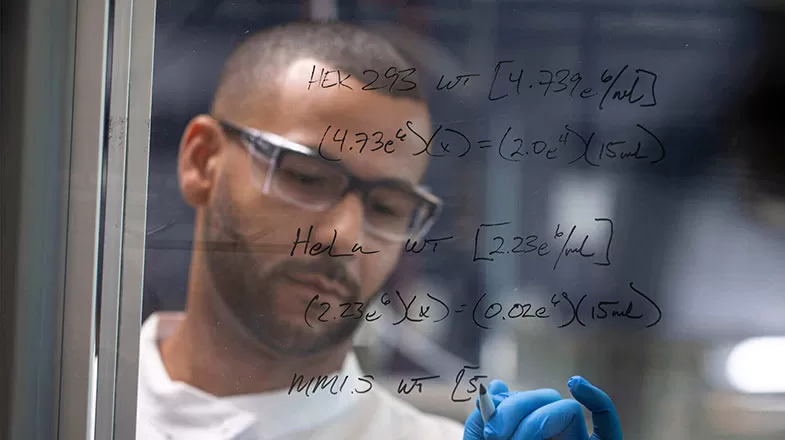
Behind the Breakthroughs: The Scientists Behind Pfizer’s Cancer Research
Have you ever wondered what makes a cancer researcher tick, or how the pursuit of life-changing treatments became their life’s work? How about what keeps them up at night, and what goes through their mind when an experiment fails? And what about the things that inspire and motivate them every day in the lab? Click on the videos below to find out, and to get to know the talented scientists at Pfizer who are working to deliver the next wave of cancer breakthroughs. Meet Our Scientists
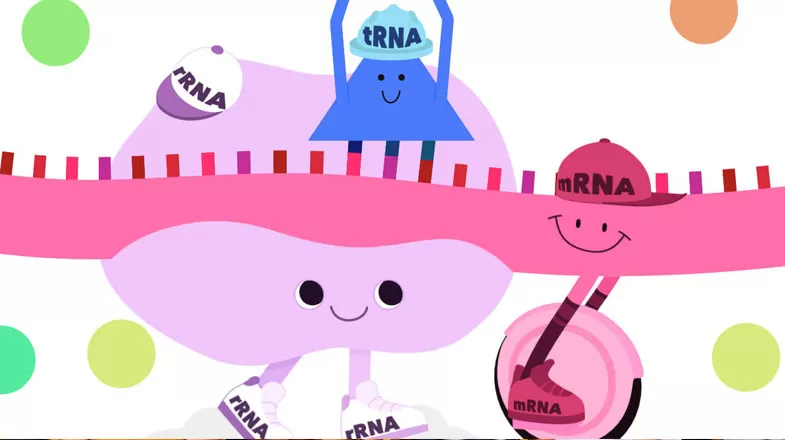
The Rise of RNA: The Cellular Workhorse Behind a New Class of Next-Gen Therapies
In a new Get Science series, we’re exploring how recent insights into RNA’s role in a variety of biological processes are helping scientists develop promising scientific breathroughs that may lead to new medicines for diseases, such as cancer and autoimmune conditions. A workhorse in the factory Among RNA’s most important roles is the transcription and delivery of genetic instructions from the nucleus to the cytoplasm where proteins are made. RNA also has catalytic, structural and regulatory...
Living & Wellbeing
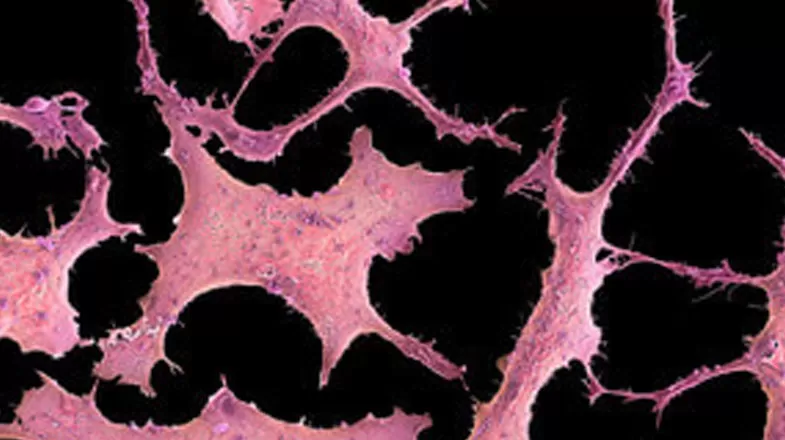
Using ‘Omics to Understand the Rise in Breast Cancers Among Young Asians
By Get Science Staff - This article originally published on Get Science Asian women, compared to their counterparts in western countries, are diagnosed with breast cancer at earlier ages and face a worse prognosis. In an effort to better understand this patient population, scientists from Pfizer and Samsung Medical Center (SMC) in Seoul, Korea, have embarked on a multi-phase project to do multi-omic profiling of the tumors of some 187 younger Korean breast cancer patients. Multi-omics refers...
Science & Innovation
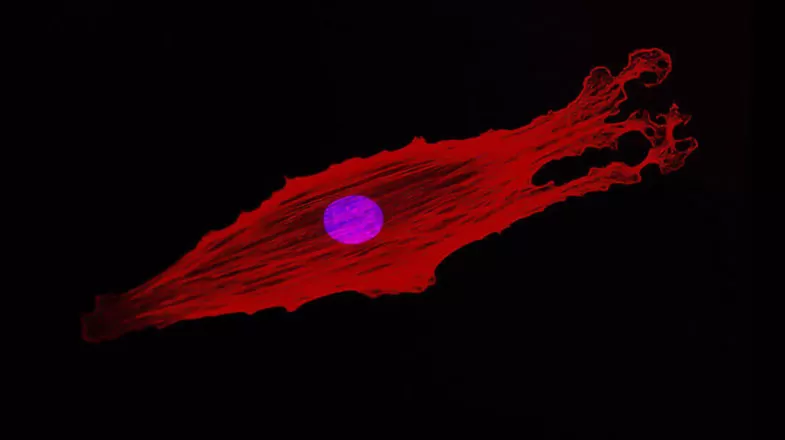
Attacking Cancer Cells That Develop Resistance
By Get Science Staff - This article originally published on Get Science When cancer patients receive therapy for an extended time, they often face the specter of drug resistance as tumor cells mutate and find ways to evade the cancer-killing medicines. Exploring new ways to disarm rogue cells that have developed resistance is a major field of modern cancer research. One way to address the issue of resistance is to attack cancer through the fundamental processes that drive their core mission —...

Purpose & Ideals
Steps to a Stronger Doctor-Patient Relationship
ul.custom-margin { margin-top: 15px; } We’re dedicated to sharing the perspectives of people affected by chronic inflammatory conditions like rheumatoid arthritis (RA). That’s why we created Arthritis.com, a place where people living with RA can find inspiration, lifestyle advice, tools and disease information. Following is an article from Arthritis.com contributor and editorial board member Ara Dikranian, M.D. Dr. Dikranian was compensated by Pfizer to share his perspective as a...

Living & Wellbeing
Four Things to Know About Managing Your Rheumatoid Arthritis with Your Doctor
We’re dedicated to sharing the perspectives of people affected by chronic inflammatory conditions like rheumatoid arthritis (RA). That’s why we created Arthritis.com, a place where people living with RA can find inspiration, lifestyle advice, tools and disease information. Following is an article from Arthritis.com contributor and editorial board member Ara Dikranian, M.D.Managing a chronic condition like rheumatoid arthritis (RA) requires an equal partnership between doctors and patients. Here...

The Table of Everything: A Scientist’s Quest to Make Human Genetic Data More User-Friendly
Since the human genome was first sequenced in 2003, scientists have collected a wealth of genetic information that could potentially be used to help create new medicines. Remarkably, as sequencing technology gets faster and cheaper, the amount of human genetic data now doubles every seven months. But in order to keep pace with the rapid generation of genetic information and to make use of it in drug discovery, this information needs to be made more accessible for scientists of all stripes, not...

Partnering to Turn the 'Undruggable' into Promising Targets
In the world of drug discovery, “undruggable” targets are like the stubborn children of biology, proteins that are considered too challenging to bind with conventional molecules. With the rapid pace of scientific advancement, however, the “undruggable” targets of yesterday now represent a promising new area of research. Such is the case with deubiquitinating enzymes (DUBs), a family of some 100 proteins that play a role in regulating the right balance of proteins in cells. In 2017, academic...

Living & Wellbeing
Three Things to Know About Venous Thromboembolism and Cancer
Venous thromboembolism (VTE) can be a dangerous, potentially deadly medical condition that is a leading cause of death and disability worldwide and the third most common cause of vascular death after heart attack and stroke.1 VTE encompasses two serious conditions: deep vein thrombosis (DVT), a blood clot in a deep vein, and pulmonary embolism (PE), a potentially life-threatening condition in which a blood clot blocks a blood vessel in the lungs. Despite the potential dangers of this condition...
Cachexia Insights: Helping Improve Quality of Life in Chronically Ill Patients
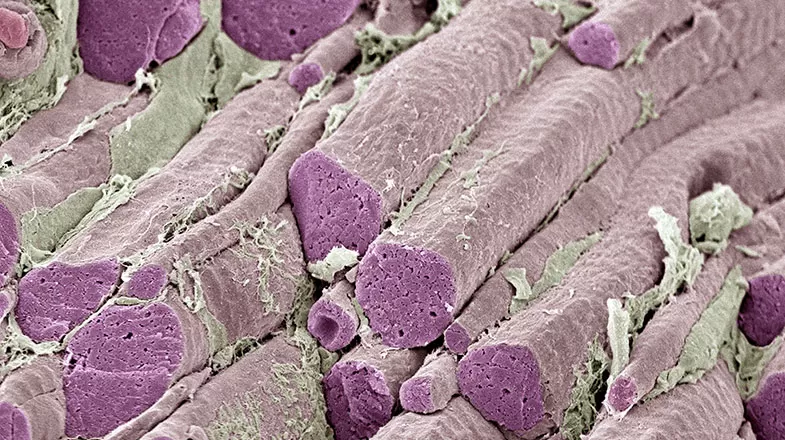
It’s an experience familiar to almost anyone with a family member or friend who has fought a terminal illness, such as cancer or heart failure. In the final stages of life, it can seem as though their loved one is wasting away. This dramatic loss of muscle and fat is caused by cachexia, a wasting disorder that afflicts patients in the late stage of nearly every chronic illness. It’s the immediate cause of death in nearly 20 to 40 percent of cancer patients. “So many people can relate to someone...

From Nĭ Hăo to Better Potential Medicines: How Language Translation Technology Is Being Applied to Drug Design
This is the first in a two-part series. If you’ve ever used Google Translate, you’ve seen how the app can effortlessly translate between two very different languages, such as going from English to Chinese. Now, the same technology is being applied to a new challenge: building better medicines. This technology, known as sequence-to-sequence (Seq2Seq), is a type of machine learning framework behind many of the language-processing apps we use today — from Siri and Alexa to customer service...

Real People
New Podcast, ‘The Antigen,’ Takes a Deep Dive into the Story of Vaccines
When we decided to create a podcast about vaccines, Yasmeen Agosti, MD was a natural choice to host . For many years, vaccines have been an enormous part of Agosti’s life, first as a pediatrician, now as the global medical affairs lead for viral vaccines at Pfizer. In our new audio series, called “The Antigen,” she delves into in the fascinating world of immunization, exploring the science and story behind vaccines, the rise of the anti-vaccination movement and the many social, cultural and...
Media Resources & Contact Information
Anyone may view our press releases, press statements, and press kits. However, to ensure that customers, investors, and others receive the appropriate attention, Pfizer Media Contacts may only respond to calls and emails from professional journalists.