
Articles
Featured Articles
Read our latest stories on the people and scientific innovations making a difference in patients’ lives.
Living & Wellbeing
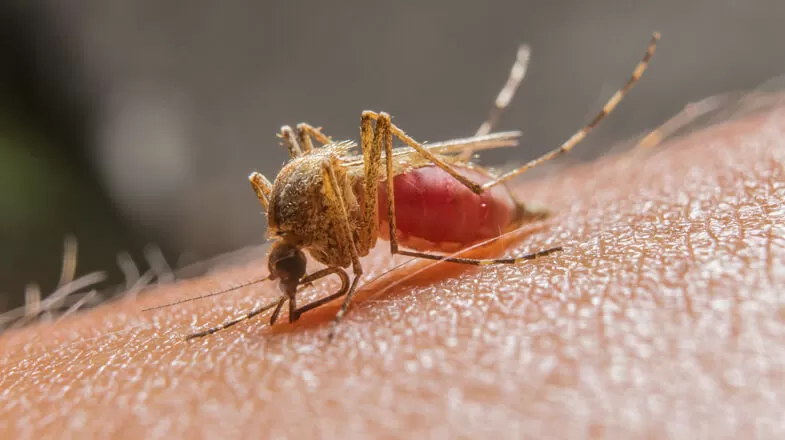
6 Mosquito Diseases That Can Be Deadly
Mosquitoes won’t just ruin a cookout or leave angry red welts on your skin after a blood meal; the little buzzers might also transmit serious diseases. Mosquitoes are "silent" feeders; their siphon-like mouthparts can quickly pierce human skin and feed on blood without causing any notice, says Patrick Kelly PhD, director of Global Epidemiology for Tick Borne Diseases for Pfizer. He calls it “highly efficient feeding that has been fine-tuned over millions of years.” Mosquitos have taken...
Living & Wellbeing
5 Things Worth Knowing About Biosimilars and Interchangeability
Biologic drugs have revolutionized disease management for many serious and chronic conditions including cancer, rheumatoid arthritis, Crohn’s disease, and psoriasis.1 Versions of biologic drugs, known as biosimilars, have helped improve access to these critical medicines for a wider patient population and lowered healthcare costs.2As biosimilars continue to hit the market in greater numbers, you’ll be hearing more about this class of drugs, as well as the “interchangeability” designation that...

Living & Wellbeing
How Wearable Technology is Helping Scientists Better Understand Patients and Diseases
Like many people, Tim McCarthy, PhD, wears a watch that tracks his steps and monitors his activity levels. That watch also represents something else for McCarthy, who is Pfizer’s Head of Digital Medicine & Translational Imaging, which is part of Early Clinical Development in the company’s Worldwide Research, Development, and Medical Organization. For him, wearable technology could hold the power to better understand patients and diseases to improve healthcare. McCarthy acknowledges it’s still...
Living & Wellbeing
For Education, Support, and Assistance, Patient Advocacy Groups Can Help
A medical diagnosis can raise countless questions and concerns. One way that patients can empower themselves with knowledge and surround themselves with support is by finding an advocacy group that focuses on that particular condition or disease and the challenges that may surround it. “The work of patient advocacy groups is very important to provide education and support; sometimes these groups have social workers on staff that can provide that psychosocial support to people, and and advocate...

Living & Wellbeing
Empowerment Through Patient Education: How to Play an Active Role in Your Healthcare
The phrase “knowledge is power” rings true in healthcare encounters as much as it does in day-to-day life. “Patient education is important so that patients can make informed decisions in their care and treatment plans,” says Mike Zincone, Senior Director of Patient Advocacy at Pfizer. Research has shown that patient education significantly improves adherence with taking prescribed medications.1 One of the big challenges when it comes to patient education, says Zincone, is determining where to...

Living & Wellbeing
Why Raising Health Literate Children Is Important
Annlouise Assaf’s grandmother didn’t speak much English when she left Lebanon for the United States in the early 1900s. The language barrier forced Assaf and her siblings — who were just kids — to stand in as the chief interpreters during doctors’ appointments. As her grandma’s health hung in the balance, Assaf soon found herself juggling much more than two dialects. “The doctor would ask us all these questions,” recalls Assaf. “But first, we had to understand what the doctor was asking us.” T...

Living & Wellbeing
The Truth About COVID-19 and Black Fungus
The novel coronavirus has recently been linked to two serious fungal infections: COVID-19 associated pulmonary aspergillosis (CAPA) and COVID-19 associated mucormycosis (CAM).1 The resurgence of these rare fungal infections has medical personnel concerned. A 2021 study found that more than 47,000 cases of CAM were reported in just three months in India. And with the Delta variant spreading worldwide, reports suggest that the number of cases is likely much higher.2 Aspergillosis and...

Living & Wellbeing
Do You Have What It Takes to Join a Phase 1 Clinical Trial?
“Life's most persistent and urgent question is: What are you doing for others?” ~ Martin Luther King, Jr. For some, volunteering at their local food bank is a preferred way to give back. Some donate money to organizations or non-profits they believe in. Others donate blood. But there is another way people can give back that may not be as top of mind: Participating in clinical trials. Clinical trials are critical to the progression of medical research and they rely on people who are willing...

Living & Wellbeing
Tackling the Complex Challenges of Hard-to-Treat Blood Cancers
Blood cancers remain one of the greatest health challenges of our lifetime. In 2020, more than 1 million people worldwide were diagnosed with a blood cancer.[1] And while no two blood cancers are alike – whether leukemia, lymphoma, or myeloma -- treatments vary greatly.[2]What Makes Blood Cancers Unique?Oncologists categorize cancers as solid tumors or blood cancers. Blood cancers, also known as hematologic cancers, are cancers of the blood cells, while solid tumor cancers are cancers of any of...

Living & Wellbeing
Health Screenings Every African American Man Should Know
Men’s ChecklistWhat African American Men Should KnowWhat is the Most Common Cancer for African American Men?For many men, cancer is a word you would rather avoid. Yet, learning about cancer may help you keep your health in check. The three top cancers for men are:Did you know about 30,000 African American men will be told they have prostate cancer this year? African American men and Caribbean men of African ancestry face a higher risk for being diagnosed with prostate cancer. They are also more...

Living & Wellbeing
Empowering Patients by Closing the Health Literacy Gap
When people understand basic concepts about their health, they’re better able to make more informed decisions.This common-sense idea is a fundamental tenet of personal health literacy, defined by health.gov as "the degree to which individuals have the ability to find, understand, and use information and services to inform health-related decisions and actions for themselves and others."1 And while it sounds like a simple notion, in practice it’s actually an enormous challenge. According to the Ce...

Living & Wellbeing
In His Shoes (or Hiking Boots): William’s epic solo adventure to help fellow hemophilia patients in need
When it comes to making the world a better place for people living with hemophilia—a rare disease characterized by inadequate blood clotting—William Addison doesn’t just talk the talk.1,2 And he doesn’t just walk the walk, either. William hiked the Appalachian Trail—all 2,200 miles of it—to raise funds for a charity dedicated to improving care for people with hemophilia and other bleeding disorders in developing countries. He completed the solo trek in about half the average time, all while...
Media Resources & Contact Information
Anyone may view our press releases, press statements, and press kits. However, to ensure that customers, investors, and others receive the appropriate attention, Pfizer Media Contacts may only respond to calls and emails from professional journalists.