
Article
Featured Articles
Read our latest stories on the people and scientific innovations making a difference in patients’ lives.
Immunity’s Double-Edged Sword
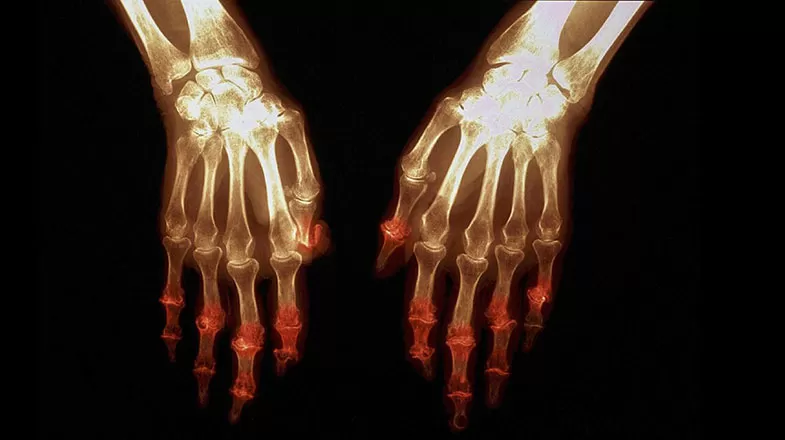
Human’s complex immune system is the vanquisher of pathogens, but it can also turn on itself. In a stroke of “evolutionary brilliance,” according to Pfizer immunologist Aaron Winkler, humans and other higher organisms developed specialized immune systems that protect us from the vast diversity of pathogens found in nature, from flu viruses to pinworms. Through random genetic variation, our bodies constantly generate millions of new white blood cells, the foot soldiers of the immune system, each...

Diagnosing Disease by Voice
Detecting the occurrence of many diseases can be challenging without a blood test or other reliable screening tool. So researchers are now listening for the sounds of disease. Speech is a complex process that requires coordination with our brain, muscles, and respiratory system. Recent research shows that subtle changes in speech, for example slurring or vocal cord tremors, may be early signs of disease or illness like Parkinson’s disease, depression, cardiac problems, and concussion. People...

Flashback: Spanish Flu Mask
(Topical Press Agency/Stringer) At the close of WWI, an estimated 50 million people died from the Spanish flu. Masks were the uninfected’s main line of defense. Patient zero of the Spanish flu may have been a soldier in WWI, who accidentally carried his virus back into the densely packed military encampment in Fort Riley, Kansas. From there, the infected would have marched across the battlefields of Europe and beyond, carrying the disease with them. In the end, Spanish flu infected a full...

advancing-medical-research
Meet Your Body’s Energy Thermostat
AMPK controls hunger, helps burn calories and fat, and may help treat diabetes and cancer. It’s almost lunchtime. Your stomach is growling and you can’t stop thinking about your next meal. We’ve all experienced the sensation of hunger, but ever wonder how your body turns on and off its hankering for food? Scientists from Daegu Gyeongbuk Institute of Science and Technology (DGIST) in Korea have recently provided additional evidence to show how an enzyme produced in a part of our brain called...

Science & Innovation
One Family’s Hemophilia Journey
This microdocumentary shares the moving story of a family with two young sons who have severe hemophilia, giving us a glimpse into their history and treatment routine. Hemophilia is a rare bleeding disorder in which the body is unable to properly create a blood clot. Beyond external bleeding, like a cut, people with hemophilia also bleed internally and in their joints, which can lead to crippling arthritis later in life. The story highlights the significant progress made in this therapeutic...

Good Guy/Bad Guy: Macrophages vs. Pinworms
In the battlefield that is our human bodies, pathogen-chomping macrophages face off against harmful intruders that include the likes of parasitic pinworms. Bad Guy: This foe seems like something out of a horror film, a parasitic worm named Enterobius vermicularis (above right), commonly called a pinworm. Pinworms hatch in the small intestine after its eggs are accidentally, and unknowingly, ingested after contact with fecal matter and improper hand-washing. The pinworm is particularly...

Flashback: Iron Lung
A medical miracle made of metal helped polio sufferers to breathe in the 1900s. The tank respirator, or iron lung, reads like a medical curiosity in modern times thanks to vaccines for the polio virus created by Jonas Salk and Albert Sabin in the 1950s and 1960s. But prior to that, for the nearly one in every 200 patients infected with the virus that suffered paralysis, including of the respiratory system, it was the surest way to survive until they could recover and breathe again on their own...

Science & Innovation
4 Breakthroughs in Breast Cancer Treatment
One out of eight women will develop invasive breast cancer in her lifetime. (Science Photo Library)Advances in genetic testing, immunotherapy, and other areas are transforming the way we treat breast cancer.Survival rates for breast cancer have improved in recent decades. That’s good news for the approximately 250,000 women expected to be diagnosed in the U.S. in 2016. In recent years, scientists have been harnessing genetics, immunotherapy, and other innovative treatments to more precisely...

Growing a Tiny Gut
A miniature version of a working gut, grown in a lab. (Meritxell Huch) Creating a miniature intestine in a lab — called an organoid — can help researchers see how real guts will react to disease and medicine.Organoids sound like the stuff of Dr. Frankenstein’s mind — body parts grown in labs, created for scientific experimentation. What they are in reality are living tissues, grown from seed cells, that can tell researchers a lot about the way human organs will react to diseases and the medicines that may treat them. Tiny TitansThough some researchers are growing...

Good Guy/Bad Guy: B-Cells vs. Ebola
(CDC/Dr. Frederick A. Murphy; Steve Gschmeisserner/Science Photo Library) In the fight for immunity, our B-cells play the role of watchful attack dogs. A virus like Ebola has other ideas. Unbeknownst to most of us most of the time, there are death matches on the microscopic level going on in our bodies most every minute of every day, instigated by everything from paper cuts to viral infections. This new series we call Good Guy/Bad Guy offers a close-up look at the battlefield that is our...

Meet the Common Viruses Now Used to Help Combat Cancer
Common viruses are now being engineered to seek out and destroy cancer cells.Herpes, the virus behind the common cold sore, is moving up in the world. Thanks to scientific engineering, it’s no longer just a nuisance virus but also the latest weapon in the fight against cancer.Last fall, in a first-of-its-kind move, the Food and Drug Administration approved a genetically-engineered herpes virus to treat late-stage melanoma, the deadliest form of skin cancer. It was the first oncolytic virus...

Flashback: Carbolic Acid Sprayer
(Science Photo Library) Joseph Lister revolutionizes the world of surgery with an antiseptic idea. Upon reading Louis Pasteur’s work on putrefaction as a result of germs in 1865, budding Scottish physician Joseph Lister was struck with a eureka moment: He wanted to stop the outrageously high rate of deaths, a full 40 percent in the case of amputations, from infection acquired as a direct result of surgery. By 1867, he’d decided that carbolic acid (or phenol, a derivative of coal tar)...
Media Resources & Contact Information
Anyone may view our press releases, press statements, and press kits. However, to ensure that customers, investors, and others receive the appropriate attention, Pfizer Media Contacts may only respond to calls and emails from professional journalists.