
Articles
Featured Articles
Read our latest stories on the people and scientific innovations making a difference in patients’ lives.

Living Longer with Cancer: Redefining What It Means to Survive
The sixth season of Science Will Win, Pfizer's award-winning podcast, focused on cancer. The six episodes explored the disease from every angle, from its rising incidence in younger populations to the precision medicine tools helping clinicians catch it earlier and treat it more effectively. Host Dr. Raven Baxter delved deep into each topic, interviewing doctors, scientists, researchers, and Pfizer colleagues to glean their insights and discuss the ongoing effort to conquer cancer.To further...
Pfizer's 2025 Impact Report Highlights Progress Across Patients, Planet, and Responsible Business
Here at Pfizer, we are in the business of breakthroughs, and while our focus is on making advancements that impact patients’ lives, we are also aware of our work’s broader impact on the world. Every year, we take stock of the impact our work has on the world, the environment, and people themselves in our Impact Report.The 2025 Impact Report provides an overview of Pfizer's priorities and goals related to responsible business growth, which are aimed at contributing to long-term value creation and...

Multiple Myeloma: Shedding Light on a Rare but Complex Blood Cancer
Donna is more than a cancer patient: Donna is a wife, mother, grandmother, sister, and friend who has a full life outside of treatment. Her journey with multiple myeloma has revealed depths of resilience and strength that have long served her in all of those roles.“We have multiple myeloma…but that should not define us,” Donna shared in a recent video interview.It’s a message that Max Merz MD, MHBA, hematologist/oncologist and associate attending physician at Memorial Sloan Kettering Cancer...

Menstrual Migraine Explained: Why They Happen and What Can Help
For some people, migraine attacks aren’t random. Instead, they follow predictable hormonal rhythms that unfold over time. Menstrual migraine is a common type of migraine, yet it’s still a condition many aren’t familiar with.1Compared with other types of migraine, menstrual-related migraine may cause more severe symptoms.1 Understanding how and why these migraine attacks occur can help you anticipate symptoms before they begin and work with your doctor to better manage them.Understanding...
Decoding the Complex Science of Obesity
GLP-1. GIP. Amylin. Incretins. Peptides. NuSH.It’s not hard to see why the language surrounding modern obesity research sometimes feels like an alphabet soup of scientific terms. But behind each is a growing understanding of how the body regulates hunger, metabolism, energy use, and weight. It’s shaping what we know about how those systems might contribute to obesity.Recent research suggests that more than 1 billion people worldwide are now living with obesity, and that number is estimated to...
May Social Media Round-Up—ASCO, Q1 2026 Results, and More
Summer’s approaching fast, but here at Pfizer the work doesn’t stop. So before you get outside to enjoy the warmer weather, catch up with the latest activity on our social channels.May has been chock full of highlights—from sharing the latest data across our cancer work at ASCO 2026 to a feature in TIME highlighting how we bring science from the lab to life, we’re offering looks behind the science of Pfizer’s research. Next, review Pfizer’s first quarter results, courtesy of CEO Albert Bourla...

Turning Silence Into Advocacy: Women Reshaping Cancer Conversations
The sixth season of Science Will Win, Pfizer’s award-winning podcast, focused on cancer, with each episode tackling a different aspect of the fight against the disease. Host Dr. Raven Baxter delved deep into a variety of topics within oncology, interviewing doctors, scientists, researchers, and Pfizer colleagues to glean their insights and discuss their efforts to eventually conquer cancer.To further the conversation, each of the five podcast episodes was accompanied by a full-length video...

For this Pfizer Scientist, Cancer Research is Personal
For Shuo Wang, cancer research isn’t just a job - it’s personal.Wang, a scientist in Pfizer’s oncology research unit, remembers when one of her close friends was diagnosed with stage four lung cancer shortly after giving birth to her second child. The experience happened early in her career, and deepened Wang’s determination to make a meaningful impact.Wang and her team spend their days planning experiments, analyzing data, and working together to help advance cancer treatments. Along with...
Lung Cancer: Real Risks, Common Myths, and Why Screening Matters
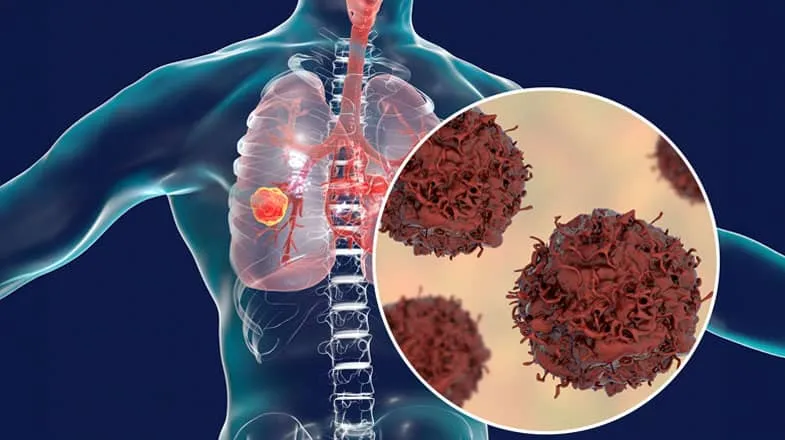
Can you name the top three cancer diagnoses affecting Americans? Did you guess breast (#1), prostate (#2), or colon (#4)? Those are good picks, but there’s another type of cancer that takes the number three spot: lung.1Lung cancer is the third-most diagnosed type of cancer in the country.2 Smoking remains the No. 1 risk factor for developing lung cancer,3 but 10 to 20 percent of lung cancers occur in people who have never smoked before (or who have smoked fewer than 100 cigarettes in their whole...

Building an AI-Fluent Organization: How Pfizer is helping colleagues understand, embrace, and apply AI
Pfizer has been utilizing artificial intelligence (AI) across our business for some time, but recent advancements in technology combined with advancements in biology are converging to create a scientific renaissance set to transform health as we know it. That reality is already upon us.According to Pfizer CEO Albert Bourla, the biggest barrier to unlock this potential is fear of the unknown. "It is not a question of technology," Bourla said in a recent conversation with Nikolai Tangen of the...

Research Rising: Recognizing Clinical Trials Day 2026
Before a breakthrough reaches a patient, it moves through years of research, which is shaped by questions, tested through data, and strengthened by collaboration.At Pfizer, that work is always in motion. Across diseases, geographies, and phases of clinical trial development, our teams are advancing research with urgency. Clinical trials are a critical part of that effort. They connect science with real-world impact, helping us understand how potential medicines and vaccines perform and how they...

Pfizer’s New San Diego R&D Hub Accelerates the Next Wave of Cancer Innovation
A state-of-the-art campus designed to turn scientific ambition into breakthroughs for people with cancerFor more than two decades, Pfizer has pushed the boundaries of cancer care, developing medicines that have helped transform treatment for some of the world’s most challenging cancers. That progress continues to fuel an ambition to keep expanding what’s possible – an ambition brought to life in San Diego, where a new state-of-the-art campus has been purpose-built to help advance science and...
Media Resources & Contact Information
Anyone may view our press releases, press statements, and press kits. However, to ensure that customers, investors, and others receive the appropriate attention, Pfizer Media Contacts may only respond to calls and emails from professional journalists.