
Articles
Featured Articles
Read our latest stories on the people and scientific innovations making a difference in patients’ lives.

Pfizer’s Institute of Translational Equitable Medicine Addresses Equity in Health Research
When it comes to healthcare, the terms “equitable” and "access" often go hand-in-hand. In order to prevent, treat, and identify diseases that disproportionately impact underserved and minority populations, Pfizer believes that research must be directed to the root causes of healthcare disparities. The recently-launched Institute of Translational Equitable Medicine (ITEM) is intended to do just that: work toward a more equitable future of health care. For Aida Habtezion, M.D., who is Pfizer’s...

How Wearable Technology is Helping Scientists Better Understand Patients and Diseases
Like many people, Tim McCarthy, PhD, wears a watch that tracks his steps and monitors his activity levels. That watch also represents something else for McCarthy, who is Pfizer’s Head of Digital Medicine & Translational Imaging, which is part of Early Clinical Development in the company’s Worldwide Research, Development, and Medical Organization. For him, wearable technology could hold the power to better understand patients and diseases to improve healthcare. McCarthy acknowledges it’s still...

Thanking Rod MacKenzie for his countless contributions to Pfizer
Thanking Rod MacKenzie for his countless contributions to Pfizer, the industry and patients around the globe. After 35 years of outstanding service to Pfizer, Rod MacKenzie, PhD, Chief Development Officer and Executive Vice President, has informed me of his intent to retire early next year. This is a bittersweet time for me and for all those colleagues who have worked with Rod over the course of his career. I will miss working with my friend, but I am excited to see the wonderful things he...

On the Record: Pfizer Leaders Share Career Advice for Young Professionals
Payal Sahni did not expect – or plan -- to work for a multi-national corporation. In fact, when a college professor asked her if she’d ever considered a corporate career, she replied, “absolutely not.” At the time, Sahni was pursuing a graduate degree in psychology. She believed corporate America was “stuffy” and “political,” and “wanted nothing to do with it,” she says. But she told her professor she was open to exploring and applied for a summer internship at Pfizer, a pharmaceutical and...

For Education, Support, and Assistance, Patient Advocacy Groups Can Help
A medical diagnosis can raise countless questions and concerns. One way that patients can empower themselves with knowledge and surround themselves with support is by finding an advocacy group that focuses on that particular condition or disease and the challenges that may surround it. “The work of patient advocacy groups is very important to provide education and support; sometimes these groups have social workers on staff that can provide that psychosocial support to people, and and advocate...

Empowerment Through Patient Education: How to Play an Active Role in Your Healthcare
The phrase “knowledge is power” rings true in healthcare encounters as much as it does in day-to-day life. “Patient education is important so that patients can make informed decisions in their care and treatment plans,” says Mike Zincone, Senior Director of Patient Advocacy at Pfizer. Research has shown that patient education significantly improves adherence with taking prescribed medications.1 One of the big challenges when it comes to patient education, says Zincone, is determining where to...
The Antigen Podcast
The Antigen is an eight-part audio-documentary style podcast about the scientific, cultural, and political elements of vaccination. We start with the basic science, review vaccine history, explore the many facets of their global impact, and the public sentiment about vaccines around the world. Hear from leading experts about the past, present, and future of this important innovation, as well as people whose families have been impacted by vaccine-preventable diseases. Host: Jasmeen Agosti M.D...

Data Doctors: How Biostatisticians Play a Critical Role in Discovering and Developing Medicine
When you think of a statistician, you may picture a math whiz hastily scrawling formulas on a white board in the halls of academia or the trading floors of finance. But statisticians—specifically, biostatisticians—play a critical role in discovering and developing new medicines. “If we want to get the most from the data, analysis, and experiment, more often than not, it requires early partnership between scientists and biostatisticians in the design and analysis plan,” says Vice President, Head...

Why Raising Health Literate Children Is Important
Annlouise Assaf’s grandmother didn’t speak much English when she left Lebanon for the United States in the early 1900s. The language barrier forced Assaf and her siblings — who were just kids — to stand in as the chief interpreters during doctors’ appointments. As her grandma’s health hung in the balance, Assaf soon found herself juggling much more than two dialects. “The doctor would ask us all these questions,” recalls Assaf. “But first, we had to understand what the doctor was asking us.” T...

The Truth About COVID-19 and Black Fungus
The novel coronavirus has recently been linked to two serious fungal infections: COVID-19 associated pulmonary aspergillosis (CAPA) and COVID-19 associated mucormycosis (CAM).1 The resurgence of these rare fungal infections has medical personnel concerned. A 2021 study found that more than 47,000 cases of CAM were reported in just three months in India. And with the Delta variant spreading worldwide, reports suggest that the number of cases is likely much higher.2 Aspergillosis and...

Ramcess Jean-Louis Is Ready to Build on Pfizer’s Longtime Commitment to Diversity, Equity, and Inclusion
As the new Global Chief Diversity, Equity, and Inclusion (DEI) Officer at Pfizer, Ramcess Jean-Louis is betting that the global biopharmaceutical company that delivered a COVID-19 vaccine in nine months will support the mission of his office with a similar urgency and can-do spirit. “I feel as if I’ve joined an organization that has the mentality and philosophy that nothing is impossible. When we apply that same urgency and attention to the area of diversity, equity and inclusion, the...
Where Do Pandemics Come From?
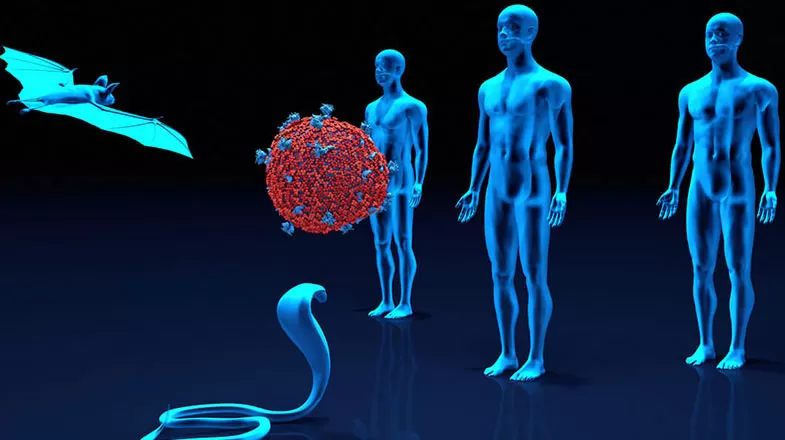
Fleas seem like just an itchy nuisance for your pets, yet they were responsible for two of the most devastating plagues in human history. The bacteria Yersinia pestis, carried by fleas from rodent to rodent, was responsible for the Plague of Justinian in the sixth century and the Black Death in the 14th century. The Plague of Justinian cost 100 million lives in the Roman Empire, while the impact of the Black Death was as high as 200 million souls across medieval Europe. Now classified as a...
Media Resources & Contact Information
Anyone may view our press releases, press statements, and press kits. However, to ensure that customers, investors, and others receive the appropriate attention, Pfizer Media Contacts may only respond to calls and emails from professional journalists.