
Articles
Featured Articles
Read our latest stories on the people and scientific innovations making a difference in patients’ lives.

Thanking John Young for His Years of Service to Pfizer – and to Patients
It is with mixed emotions that I share the news that John Young, Pfizer’s Chief Business Officer, will retire in early 2022, following a distinguished 34-year career at Pfizer. John’s list of significant accomplishments at Pfizer is long, but perhaps none is more important than his essential role in cultivating the collaborations that led to the successful development and delivery of the Pfizer-BioNTech COVID-19 vaccine. During his time at Pfizer, John has led many large-scale transformations...

Translating Technical Language into Plain Language for Clinical Trials
"Adjuvant therapy." "Pharmacologic effect." "Standard-of-care." These aren't terms used by most people in everyday conversation. But this kind of medical terminology has long been a part of clinical trial summaries, making it daunting for many people to understand what they're reading. Pfizer is working to change this by releasing results of clinical trial studies to the general public in language that’s meant to be understood by people of all backgrounds: plain language. The goal of the...

New Hope for a Once Neglected Disease: Advances in Sickle Cell Treatments
In the early 2000s, Kelly Knee was in graduate school at Wesleyan University in Middletown, Conn. studying Molecular Biophysics. And at the time, she found it nearly impossible to secure grant funding for research on sickle cell disease, a rare blood disorder that historically has been a neglected area of medical research. But hearing stories from patients suffering from severe pain episodes and frequent hospitalizations kept her going. “I’ve been working on this since I started graduate school...

Do You Have What It Takes to Join a Phase 1 Clinical Trial?
“Life's most persistent and urgent question is: What are you doing for others?” ~ Martin Luther King, Jr. For some, volunteering at their local food bank is a preferred way to give back. Some donate money to organizations or non-profits they believe in. Others donate blood. But there is another way people can give back that may not be as top of mind: Participating in clinical trials. Clinical trials are critical to the progression of medical research and they rely on people who are willing...

Tackling the Complex Challenges of Hard-to-Treat Blood Cancers
Blood cancers remain one of the greatest health challenges of our lifetime. In 2020, more than 1 million people worldwide were diagnosed with a blood cancer.[1] And while no two blood cancers are alike – whether leukemia, lymphoma, or myeloma -- treatments vary greatly.[2]What Makes Blood Cancers Unique?Oncologists categorize cancers as solid tumors or blood cancers. Blood cancers, also known as hematologic cancers, are cancers of the blood cells, while solid tumor cancers are cancers of any of...

Health Screenings Every African American Man Should Know
Men’s ChecklistWhat African American Men Should KnowWhat is the Most Common Cancer for African American Men?For many men, cancer is a word you would rather avoid. Yet, learning about cancer may help you keep your health in check. The three top cancers for men are:Did you know about 30,000 African American men will be told they have prostate cancer this year? African American men and Caribbean men of African ancestry face a higher risk for being diagnosed with prostate cancer. They are also more...

Empowering Patients by Closing the Health Literacy Gap
When people understand basic concepts about their health, they’re better able to make more informed decisions.This common-sense idea is a fundamental tenet of personal health literacy, defined by health.gov as "the degree to which individuals have the ability to find, understand, and use information and services to inform health-related decisions and actions for themselves and others."1 And while it sounds like a simple notion, in practice it’s actually an enormous challenge. According to the Ce...

Advances in Cytomegalovirus Vaccine Development
While it may not be a household name, cytomegalovirus (CMV), a member of the herpes virus family, is incredibly common—many people acquire it as toddlers or adolescents, and a majority are infected by adulthood.1 In most people, CMV is harmless and causes no or few symptoms.2 However, it can pose a danger to babies infected in the womb along with immunocompromised adults.2 Roughly one out of every 200 babies are born with congenital CMV each year in the U.S., and 20 percent of those will...

Doing Better: Increasing Diversity in Clinical Trials
Diversity in clinical trials is key to equitable health outcomes. Increasingly, clinicians, researchers and patients are realizing that a lack of diversity in clinical trial participants may contribute to the stubborn persistence of health disparities, such as the fact that Black Americans are 30% more likely than whites to die prematurely of heart disease.1 After all, if a clinical trial for a new nonalcoholic steatohepatitis (NASH) drug doesn’t include an adequate number of Black participants...

Improving Metastatic Breast Cancer Care for Underserved Populations
Globally, breast cancer continues to be the most common invasive cancer in women, and one of the most common forms of cancer overall.1 While significant advances have been achieved, especially in metastatic disease, challenges beyond treatments remain, especially disparities created by structural, socioeconomic, socio-environmental, and biological factors. A recent 2021 publication reveals both the challenges facing underserved patient populations with metastatic breast cancer (mBC) in Europe...
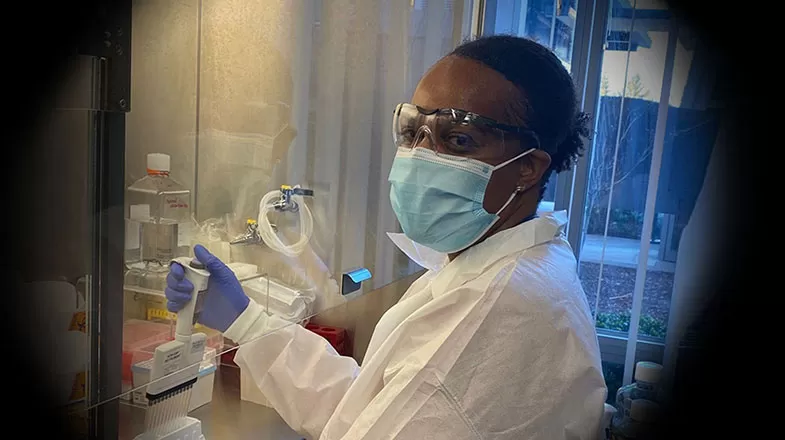
Meet Dacia Young, a Senior Scientist within the Vaccine Research and Development Group at Pfizer
Meet Dacia Young, a Senior Scientist within the Vaccine Research and Development Group at Pfizer. Dacia has worked as a Scientist at Pfizer for more than 14 years, leading the assay development for our meningococcal disease vaccines since 2013. As a scientist working on vaccines in the middle of a pandemic, Dacia understands firsthand the tangible impact vaccines can have on public health. Now she’s discussing why she finds developing vaccines so rewarding, and explaining why she believes...

In His Shoes (or Hiking Boots): William’s epic solo adventure to help fellow hemophilia patients in need
When it comes to making the world a better place for people living with hemophilia—a rare disease characterized by inadequate blood clotting—William Addison doesn’t just talk the talk.1,2 And he doesn’t just walk the walk, either. William hiked the Appalachian Trail—all 2,200 miles of it—to raise funds for a charity dedicated to improving care for people with hemophilia and other bleeding disorders in developing countries. He completed the solo trek in about half the average time, all while...
Media Resources & Contact Information
Anyone may view our press releases, press statements, and press kits. However, to ensure that customers, investors, and others receive the appropriate attention, Pfizer Media Contacts may only respond to calls and emails from professional journalists.