
The body depends on blood for many essential functions, including transporting oxygen from the lungs to cells, maintaining a consistent core temperature, and moving immune cells to help fight infection.1 Blood diseases, sometimes called blood conditions or hemotologic diseases, can stop blood from performing these jobs.2,3
Some blood diseases are acute,4 meaning they begin suddenly and worsen rapidly.5 Others are chronic,4 meaning they last for three or more months, may worsen over time,6 and may not be curable.3 People can inherit certain blood conditions, while others form because of co-existing diseases. Certain medications or nutritional deficiencies can lead to blood conditions.4
What are blood diseases?
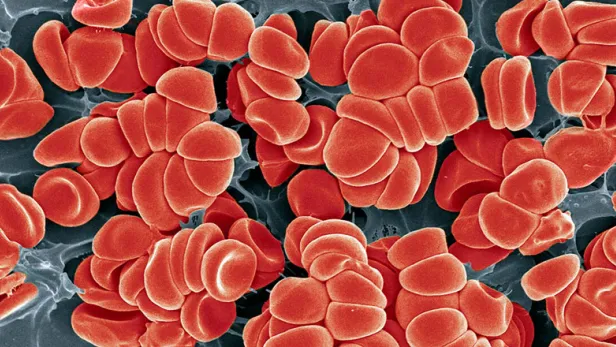
Blood comprises liquids and solids. The liquid, which accounts for more than half of our blood, is called plasma. It consists of water, proteins, and salts. Solids in the blood are platelets, white blood cells, and red blood cells.3
Blood diseases can affect any of these parts.3 Although several broad categories of blood conditions exist, all can inhibit blood from playing any one of its critical roles.4 Types of blood conditions include:
- Platelet or clotting disorders, which can cause blood to clot too easily or insufficiently4,7
- Anemia, which occurs when there are not sufficient red cells or there may be problems with hemoglobin, which results in a failure to distribute oxygen throughout the body4
- Certain blood cancers4
- Disorders of immune cells, such as eosinophils4,8
How do blood diseases affect the body?
Blood diseases can harm the body by afflicting either or both the solid and liquid components of blood.3 Symptoms vary depending on the type of blood condition and are often numerous.9 Some common effects include:
- Excessive bleeding that may be spontaneous or as a result of injuries or trauma10
- Nosebleeds that are difficult to stop10
- Fatigue11,12
- Bleeding or swelling in the joints10,11
- Joint pain10
- Dizziness or shortness of breath12
- Swollen lymph nodes13
- Problems with fighting infections14
- Sudden episodes of intense pain due to the blood cells sticking together and stopping blood flowing through small blood vessels.15
- References
- What does blood do? National Library of Medicine. https://www.ncbi.nlm.nih.gov/books/NBK279392/. Updated August 29, 2019. Accessed May 15, 2023.
- Blood disorders. American Society of Hematology. https://www.hematology.org/education/patients/blood-disorders. Accessed May 17, 2023.
- Blood diseases. National Institute of Diabetes and Digestive and Kidney Diseases. https://www.niddk.nih.gov/health-information/blood-diseases. Accessed May 15, 2023.
- Blood disorders. MedlinePlus. https://medlineplus.gov/blooddisorders.html. Updated June 2, 2016. Accessed May 15, 2023.
- Acute. National Cancer Institute. https://www.cancer.gov/publications/dictionaries/cancer-terms/def/acute. Accessed May 15, 2023.
- Chronic disease. National Cancer Institute. https://www.cancer.gov/publications/dictionaries/cancer-terms/def/chronic-disease. Accessed May 15, 2023.
- Platelet disorders. MedlinePlus. https://medlineplus.gov/plateletdisorders.html. Updated January 15, 2020. Accessed May 15, 2023.
- Eosinophilic disorders. MedlinePlus. https://medlineplus.gov/eosinophilicdisorders.html. Updated March 29, 2017. Accessed May 15, 2023.
- Symptoms of blood disorders. Merck Manual. https://www.merckmanuals.com/home/blood-disorders/symptoms-and-diagnosis-of-blood-disorders/symptoms-of-blood-disorders. Updated September 2022. Accessed May 17, 2023.
- What is hemophilia? Centers for Disease Control and Prevention. https://www.cdc.gov/ncbddd/hemophilia/facts.html. Updated August 1, 2022. Accessed May 15, 2023.
- Sickle cell disease. Symptoms. National Heart, Lung, and Blood Institute. https://www.nhlbi.nih.gov/health/sickle-cell-disease/symptoms. Updated July 14, 2022. Accessed May 15, 2023.
- Signs and symptoms. Leukemia & Lymphoma Society. https://www.lls.org/leukemia/acute-lymphoblastic-leukemia/signs-and-symptoms. Accessed May 15, 2023.
- Signs and symptoms of non-Hodgkin lymphoma. American Cancer Society. https://www.cancer.org/cancer/non-hodgkin-lymphoma/detection-diagnosis-staging/signs-symptoms.html. Accessed May 15, 2023.
- Treatment of aplastic anemia & myelodysplastic syndromes. National Institute of Diabetes and Digestive and Kidney Diseases. https://www.niddk.nih.gov/health-information/blood-diseases/aplastic-anemia-myelodysplastic-syndromes/treatment. Updated July 2020. Accessed May 22, 2023.
- Finding new options for sickle cell disease pain. National Institutes of Health HEAL Initiative. https://heal.nih.gov/news/stories/new-options-sickle-cell-disease-pain. Updated November 10, 2022. Accessed May 17, 2023.


Related Articles