
Article
Featured Articles
Read our latest stories on the people and scientific innovations making a difference in patients’ lives.

Pfizer Launches VaxAssist, to Help Individual’s Assess Respiratory Vaccine Eligibility
As more respiratory vaccinations have become available in recent years, the Centers for Disease Control and Prevention (CDC) continues to provide annual guidelines for common respiratory illnesses—COVID-19, pneumococcal pneumonia, influenza (the flu), and respiratory syncytial virus (RSV)—to help ensure eligible populations are seeking vaccinations, especially during respiratory illness season.1,2,3,4,5,6 Pfizer has launched VaxAssist, an online tool that helps adults 18 and older check their...

ASH 2023: Advancing Potential Breakthroughs for Patients with Hematologic Disorders
This weekend, Pfizer will be joining the hematology/oncology community at the 65th Annual Meeting of the American Society of Hematology (ASH), the premier professional society of clinicians and scientists dedicated to conquering blood diseases.Blood diseases can disrupt a broad range of essential functioning – from providing the body with oxygen and nutrients, to fighting the growth of cancer, to preventing excessive bleeding. Pfizer is advancing novel approaches to blood diseases with next...
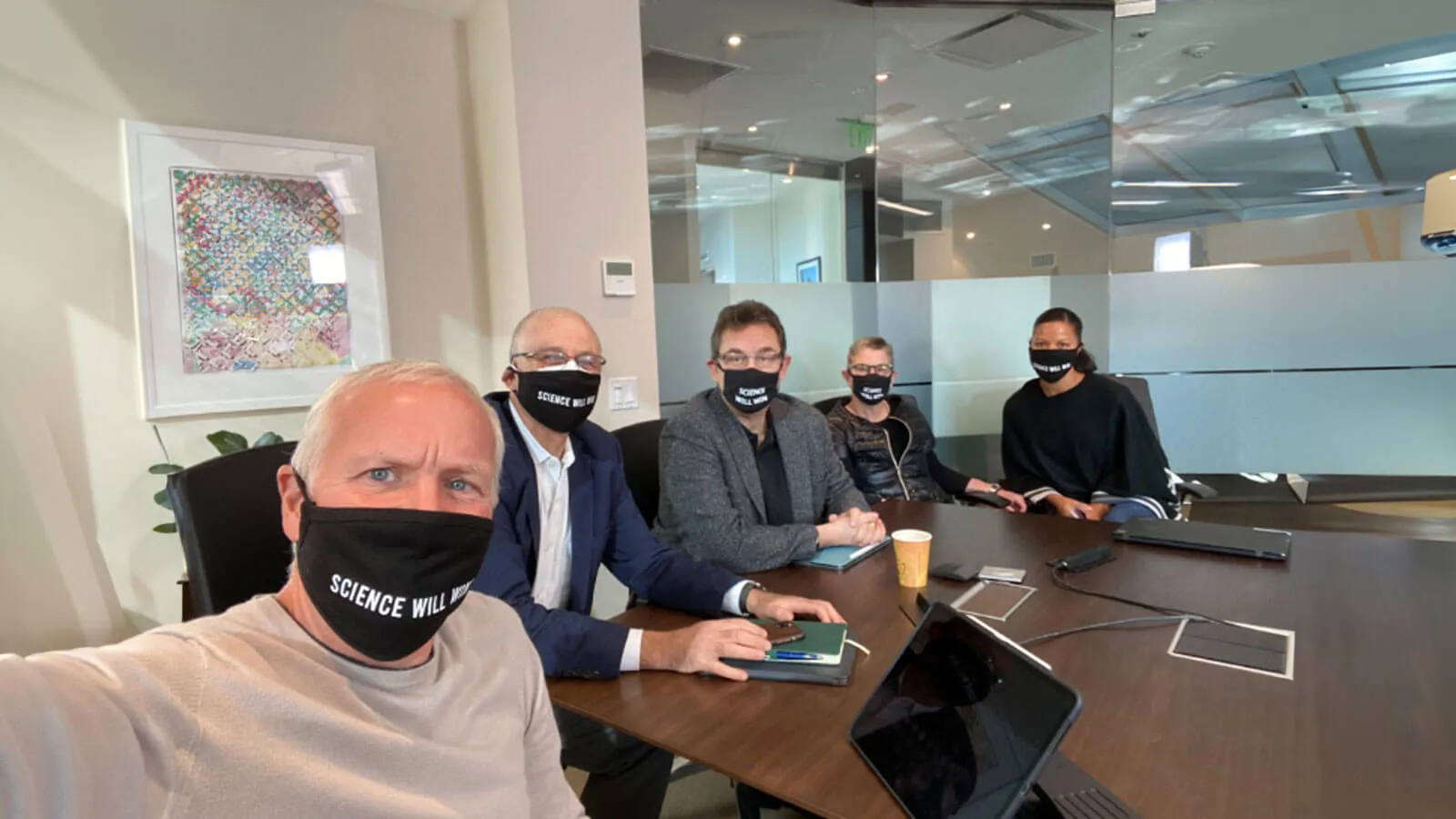
November Social Media Round-Up—Vaccine Anniversary, Transgender Awareness, and the Corporate Equality Index
Thanksgiving may have kicked off the holiday season, but November was chock full of things to celebrate all month long, including Transgender Awareness Week and Veterans Day. On social media, Pfizer’s leadership reflected on those occasions, and our CEO considered the cure for the epidemic of exclusion and celebrated the three-year anniversary of the moonshot heard around the world.Get caught up below with November’s social media round-up!From Our LeadershipCEO Albert Bourla reflects on the...

Pfizer’s 2-in 1 At-Home Test Enables Convenient Testing for both COVID-19 and the Flu
When we think of winter, hot chocolate, cozy fireplaces, and catching up with friends and family often come to mind. But 'tis also peak respiratory virus season1, with viruses like the flu and COVID-19 making the rounds at holiday parties and gatherings everywhere. To further complicate matters, symptoms of COVID-19 and the flu present very similarly: fever, cough, runny nose, sore throat, and body aches2. These similarities in symptoms can make it difficult for people to differentiate between...

Listen Now: Award-Winning ‘Science Will Win’ Podcast Explores Antimicrobial Resistance
This week, season three of Pfizer’s signature Science Will Win podcast—which debuted as one of the top 1% podcasts globally—returns with a look at antimicrobial resistance (AMR), one of healthcare’s greatest threats, and the innovative ways doctors and scientists are leveraging emerging technology to fight it.The ambitious new season follows last year’s award-winning foray into the latest advancements in cancer treatment. In last season’s episodes, host Adam Rutherford and a variety of guests...

Pfizer CEO Albert Bourla Discusses Curing the Epidemic of Exclusion at APEC CEO Summit
This week, the annual APEC CEO Summit was held in San Francisco, California. The Summit brought CEOs, entrepreneurs, thought leaders and other stakeholders together with senior political leaders from the Asia-Pacific region for two days of dialogue. This year’s Summit focused on “Creating Economic Opportunity” via sustainability, inclusion, resilience, and innovation.On Thursday, Pfizer CEO Albert Bourla delivered one of the Summit CEO Spotlight speeches, with remarks focused on “Curing the...

The Importance of Returning Clinical Trial Data to Participants
Clinical trial participants are at the heart of medical research, and it’s with their help that Pfizer is able to bring life-changing treatments to patients.But, until recently, clinical trial sponsors like Pfizer have not been equipped to provide participants with their own personal clinical trial data when a trial ends. Pfizer’s team of clinical trial experts have worked for many years to change that by launching the Clinical Trial Participant Data Return Initiative.This first-of-its-kind...

October Social Media Round-Up—Israel-Hamas War, COVID-19 Treatment News, and Pfizer Makes Forbes List
October was an eventful month, both around the world and here at Pfizer. In this edition of the monthly social media round-up, our leadership weighs in on both. CEO Albert Bourla expresses sadness and resolve over the geopolitical upheaval in the middle east, which has far-reaching implications, including impact on many employees in the Pfizer family. He also spreads the news about our new deal with the U.S. government regarding the COVID-19 antiviral oral treatment. And our Chief Marketing...

Pfizer's COVID-19 Oral Antiviral Treatment Transitioning from Government Distribution
As COVID-19 continues to impact our communities, and winter approaches—bringing with it increases in respiratory infections—it’s important to stay vigilant and up to date on vaccines and to understand how to access treatment when appropriate. Pfizer’s oral antiviral COVID-19 treatment has been an important tool against the virus since its authorization in December 2021. Thanks to an agreement with the U.S. government, it will soon be easier for eligible patients to access Pfizer’s COVID-19...

The Power of Partnership in our Mission to Better Connect the Patient Health Journey
Since the start of the COVID-19 pandemic, we have known that it would take unprecedented collaboration across multiple industries to tackle the virus. As we have strived together to bring breakthrough science to the world, a constant in our work has been collaborating with other organizations on solutions that streamline the patient journey and simplify the ways in which people learn about vaccines and treatment. I was proud to highlight these efforts on behalf of Pfizer during a recent...

Mathematical Sandbox: How Quantitative Systems Pharmacology Steers Safer, Faster Drug Development
Fear and anxiety swirled when Dr. Cynthia J. Musante’s husband contracted COVID-19. He faced agreater risk of coming down with a severe case since he was already unwell.But all their worries vanished in just 24 hours.Dr. Musante recalls that her husband soon started to feel better after being prescribed an investigational oral treatment for those with COVID-19. “It felt like a miracle,” he said. “I had felt so horrible.”As relief settled in, Dr. Musante felt something else: pride.After all, from...

From Math to Medicine: What Are Mathematical Models and How Do They Predict Pharmacology?
It sounds strange, but predicting how medications impact diseases and the body is a lot like forecasting the weather.To understand why, imagine opening a weather app on your smartphone to check the forecast for the upcoming weekend. You see that it’ll be sunny, 72 degrees, with a slight breeze—perfect weather. But how did scientists predict those precise physical conditions so far in the future?The answer: mathematical models.Scientists across disciplines use mathematical models to make...
Media Resources & Contact Information
Anyone may view our press releases, press statements, and press kits. However, to ensure that customers, investors, and others receive the appropriate attention, Pfizer Media Contacts may only respond to calls and emails from professional journalists.