
Article
Featured Articles
Read our latest stories on the people and scientific innovations making a difference in patients’ lives.
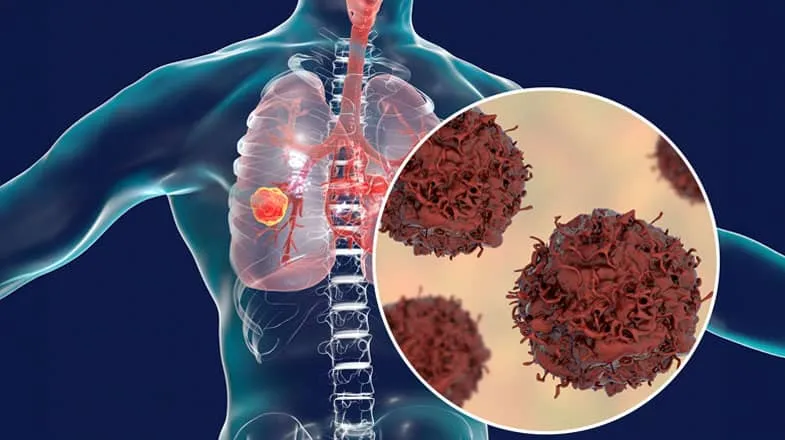
Lung Cancer: Real Risks, Common Myths, and Why Screening Matters
Can you name the top three cancer diagnoses affecting Americans? Did you guess breast (#1), prostate (#2), or colon (#4)? Those are good picks, but there’s another type of cancer that takes the number three spot: lung.1Lung cancer is the third-most diagnosed type of cancer in the country.2 Smoking remains the No. 1 risk factor for developing lung cancer,3 but 10 to 20 percent of lung cancers occur in people who have never smoked before (or who have smoked fewer than 100 cigarettes in their whole...

Building an AI-Fluent Organization: How Pfizer is helping colleagues understand, embrace, and apply AI
Pfizer has been utilizing artificial intelligence (AI) across our business for some time, but recent advancements in technology combined with advancements in biology are converging to create a scientific renaissance set to transform health as we know it. That reality is already upon us.According to Pfizer CEO Albert Bourla, the biggest barrier to unlock this potential is fear of the unknown. "It is not a question of technology," Bourla said in a recent conversation with Nikolai Tangen of the...

Research Rising: Recognizing Clinical Trials Day 2026
Before a breakthrough reaches a patient, it moves through years of research, which is shaped by questions, tested through data, and strengthened by collaboration.At Pfizer, that work is always in motion. Across diseases, geographies, and phases of clinical trial development, our teams are advancing research with urgency. Clinical trials are a critical part of that effort. They connect science with real-world impact, helping us understand how potential medicines and vaccines perform and how they...

Pfizer’s New San Diego R&D Hub Accelerates the Next Wave of Cancer Innovation
A state-of-the-art campus designed to turn scientific ambition into breakthroughs for people with cancerFor more than two decades, Pfizer has pushed the boundaries of cancer care, developing medicines that have helped transform treatment for some of the world’s most challenging cancers. That progress continues to fuel an ambition to keep expanding what’s possible – an ambition brought to life in San Diego, where a new state-of-the-art campus has been purpose-built to help advance science and...
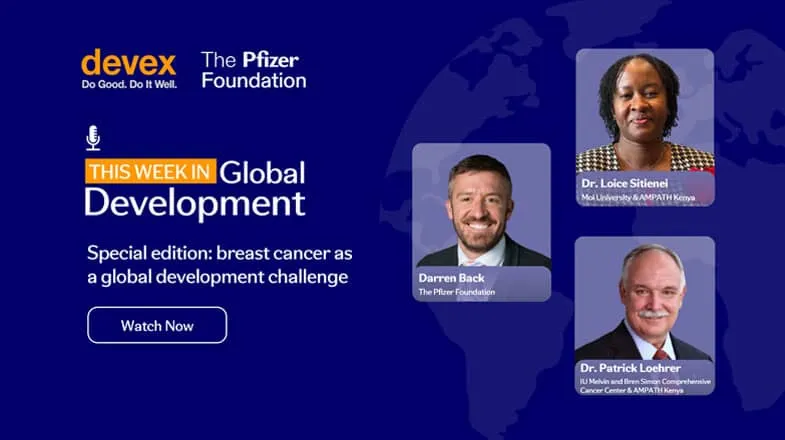
Podcast Highlights Pfizer Foundation’s Mission to Improve Breast Cancer Outcomes
For over 75 years, the Pfizer Foundation, a charitable organization, has worked toward the mission of helping build healthier communities around the world. By investing in locally led organizations and applying a community-centered approach, the Foundation aims to address today’s complex global health challenges, respond to urgent health needs, and empower Pfizer colleagues to make a positive impact where they live, work, and beyond.Launched in 2025, The Pfizer Foundation’s Action & Impact...

Not Quite Out of the Woods: Risk for Lyme Disease Prevails in Suburban Environments
When many people think about places associated with tick exposure and risk for getting Lyme disease, they may picture a hike in the country or a camping trip in the woods. But encounters with infected ticks that can cause Lyme disease can happen doing routine activities around the yard, and common outdoor activities in your everyday life can put you at heightened risk for tick bites and, in turn, contracting Lyme disease.1Lyme disease is a bacterial infection transmitted to humans through a bite...

April Social Media Round-Up—Trailblazer Cancer Research Grants, World Health Day, and More
April has come to a close and we are barreling towards the summer. Before you head outside to enjoy spring, take a moment to catch up with Pfizer’s social channels, which have been on fire.In April, Pfizer colleagues were honored in the list of 2026 Healthcare Businesswomen’s Association (HBA) Luminaries and Rising Stars, we recognized vaccines’ impact during World Immunization Week, and Pfizer scientists highlighted our research efforts.CEO Albert Bourla recognized Pfizer scientists who were...

Making Progress Against Cancer - From Cancer Research to Prevention and Screening
Advances in cancer care often begin with incremental steps in the lab that, over time, have the power to drive transformative breakthroughs. That’s why scientists are working around the clock to develop potential treatments that could help patients live longer, healthier lives. At Pfizer, Sharsti Sandall is one of those scientists.An executive director in Pfizer’s oncology research division, Sandall leads the antibody drug conjugate (ADC) group, which is a targeted treatment that delivers cancer...

How Biomarker Testing Helped a Lung Cancer Patient Get the Treatment She Needed
Earlier this month, Science Will Win, Pfizer’s award-winning podcast, wrapped up another successful season. Launched in February, season 6 included five episodes, each one focused on a different aspect of the fight against cancer, wrapping with last week’s season finale about AI’s impact on cancer care.All season long, each podcast episode has been accompanied by a full-length video conversation between host Dr. Raven Baxter – a molecular biologist and science educator – and one of her guests...
Science Will Win season finale explores AI in cancer care with Pfizer Chief Oncology Officer Jeff Legos
In February, Pfizer launched the sixth season of Science Will Win, our flagship podcast which recently reached 3 million downloads.The season finale focuses on the future of technology and artificial intelligence (AI) —and what they could mean for cancer research and care. Cancer research is moving faster than ever, but that progress is not always reflected in the patient experience. AI may be starting to change that. The last episode of Science Will Win Season 6 follows the human journey, from...

How AI Is Already Reshaping Cancer Care
When treating cancer, few things are more precious than time. Jeanine Bortel, Vice President and Head of AI Portfolio Development at Pfizer, who has developed clinical trials at Pfizer for more than two decades, remembers when she first witnessed the transformative potential of artificial intelligence (AI) put into practice to help address the needs of patients enrolled in cancer clinical trials.For years, Bortel’s work had run up against an inherent challenge: Many cancer patients miss out on...

Ever Wonder How Medicines Get Their Names?
Naming a medicine is more than just a creative exercise. It’s a critical, complicated, and collaborative step in bringing innovative treatments to patients.Some medicine names may sound unfamiliar, but there’s a lot of intention behind every syllable. Long before a treatment reaches patients, its name goes through a careful, highly regulated process designed to help prevent confusion and support safe use in real world healthcare settings.From early lab identifiers to globally recognized generic...
Media Resources & Contact Information
Anyone may view our press releases, press statements, and press kits. However, to ensure that customers, investors, and others receive the appropriate attention, Pfizer Media Contacts may only respond to calls and emails from professional journalists.