
Article
Featured Articles
Read our latest stories on the people and scientific innovations making a difference in patients’ lives.

Calling All Creatives! We need YOU to design for science!
More of us than ever need science to restore not just the health of our loved ones, but life as we remember it. The power of science is the key to unlocking the answers to the world’s most challenging medical questions. Embodied by our “Science Will Win” campaign, Pfizer is at the forefront of the vital research being conducted to find treatments, cures and preventive medicines to the diseases that currently confound us.Low health literacy can be one of the biggest barriers to improving the...

Meet The People of PGS: Ken
Over the next few months, we will spotlight the names and faces behind the great work we do in PGS. First up is Ken, who operated the forklift carrying the first doses of the COVID-19 vaccine out of the Kalamazoo site.As a Senior Logistics Operator at the PGS site in Kalamazoo, Ken loads critical medicines into pallets and onto trucks to be delivered around the world. Millions of vials of product have passed through his hands in his 23 years at Pfizer, but recently he loaded one product that...
Government Price-Setting Is Not the Answer
Making sure that medicines are accessible and affordable for patients is a goal we all share. But Congress is considering a dangerous proposal that could jeopardize the development of lifesaving medicines, vaccines, and treatments. The proposal calls for implementation of a government price-setting model that could undermine Medicare protections that provide patients robust choice and access to the medicines they need.The proposal would allow the government to dictate the price of medicines for...
Wisconsin is Ready for Cures
Pfizer is focused on increasing treatment options for patients through research and development as well as innovative, technically advanced manufacturing practices. We’re proud to be strengthening our capacity to develop and produce more advanced medicines that can help improve the lives of patients. As part of that effort, we recently announced an $18 million expansion of Pfizer’s distribution center in Pleasant Prairie, Wisconsin.Pfizer’s Pleasant Prairie facility is key to distributing Pfizer...
Michigan is Ready for Cures
Pfizer is focused on increasing treatment options for patients through research and development as well as innovative, technically advanced manufacturing practices. We’re proud to be strengthening our capacity to develop and produce more advanced medicines that can help improve the lives of patients. As part of that effort, we recently announced a $450 million expansion of Pfizer’s largest manufacturing facility in Kalamazoo, Michigan.Pfizer’s Kalamazoo Portage campus is a primary global...

What Are Biosimilars and How Do They Expand Treatment Options for Patients?
If you’ve experienced sticker shock in the pharmacy and considered not filling a prescription because of the cost, you’re not alone. Recent data shows that almost 13 million Americans delayed filling a prescription or didn’t fill it at all because of the cost.1 In an era of rising drug prices, getting lower-cost medicines in the hands of more people who need them is critical not only for the pharmaceutical industry, but also, and most importantly, for patients. Biosimilars make cutting-edge...

Albert Bourla Reflects on the One Year Anniversary of the COVID-19 Pandemic
One year. That’s how long it has been since the World Health Organization declared COVID-19 a global pandemic. Sometimes it feels like the year went by in the blink of an eye. More often, however, it feels more like five years have gone by since many of us last gathered with loved ones, went to a movie theater or grabbed coffee with colleagues at the office. But regardless of how long it has felt to each of us, I think we can all agree it has been a year defined by loss, learning and an...
Pfizer Statement on Results of Second Annual Pay Equity Study Among Colleagues Worldwide
New York, N.Y., February 25, 2021 – Pfizer Inc. (NYSE:PFE) stated today that, for the second year in a row, a recognized compensation expert confirmed equitable pay practices for employees at Pfizer.The study assessed pay for gender worldwide and for minorities in the U.S. based on compensation data including base pay, merit increases and bonuses. The study measured the difference between similar groups of employees when adjusting for factors such as role, grade, job level, and location.The...

Some older people living with cancer aim for remission but lack needed resources to help make treatment decisions, global survey reveals
Every year, World Cancer Day, an initiative led by the Union for International Cancer Control, is about taking action. The theme, “I Am and I Will,” charges us as a cancer community to rally together and better serve those living with the disease and their support systems. At Pfizer, one way we’ve been supporting the community is by helping to eliminate barriers to optimal care, particularly for those over the age of 65, who research has shown may not always receive the best care available.1,2,3...
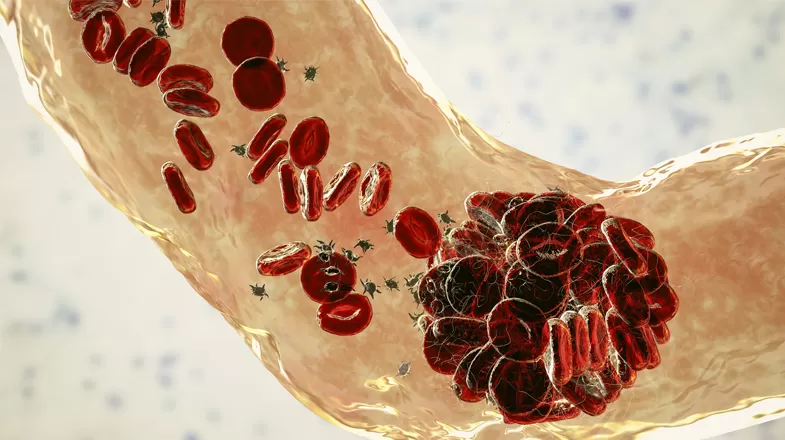
Are You at Risk for a Blood Clot?
NBC News war correspondent David Bloom was the image of health. In 2003, he was a 39-year-old avid tennis player. His work brought him to Iraq, where he was embedded with the 3rd Infantry Division, advancing toward Bagdad. Ultimately, it wasn’t the war, but a blood clot that killed Bloom, according to a TODAY.com account of his death.1One night, he went to sleep out under the stars on a tank fender. He called his wife, Melanie, and mentioned that he had leg cramps. The symptom appeared natural...

Eczema vs. Psoriasis: What’s Causing My Itchy Skin?
Getting patches of red and itchy skin that may come and go could have you wondering: Is it eczema or psoriasis, and what’s the difference? Eczema and psoriasis are two distinct skin diseases that may require different treatment plans.1Although they may be difficult to tell apart, a dermatologist (a doctor who specializes in skin conditions) can spot the differences between these two non-contagious and common skin conditions. That’s why it’s important to speak to your healthcare provider to get...

Albert Bourla On Ensuring Equitable Access to COVID-19 Vaccines
We have crossed another milestone in the fight against COVID-19. I am proud to announce that Pfizer and BioNTech have signed an advanced purchase agreement with COVAX for up to 40 million doses of our COVID-19 vaccine in 2021, subject to the execution of additional agreements under the COVAX structure. Since the very beginning of our vaccine development program, Pfizer and BioNTech have been firmly committed to equitable and affordable access of COVID-19 vaccines for people around the world...
Media Resources & Contact Information
Anyone may view our press releases, press statements, and press kits. However, to ensure that customers, investors, and others receive the appropriate attention, Pfizer Media Contacts may only respond to calls and emails from professional journalists.